
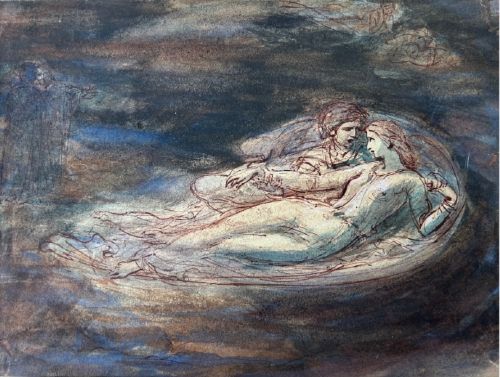
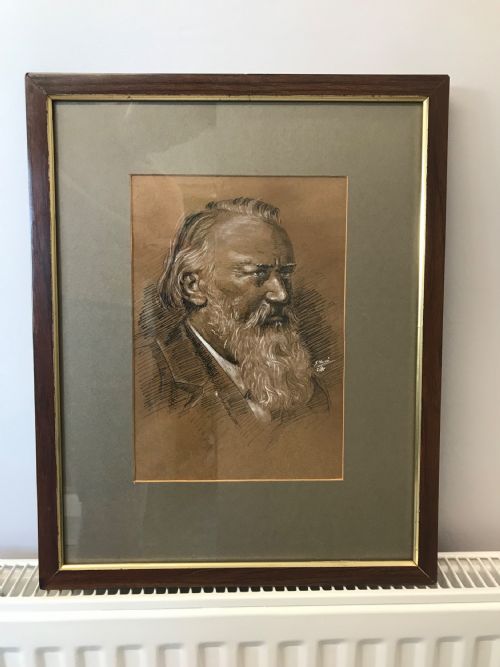
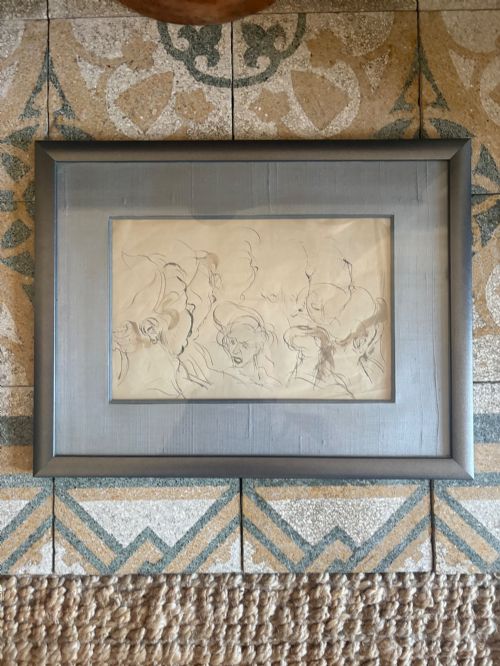

![Pen and Ink Sketch - Female Nudes by William Edward Frost [1810-1877]](https://www.sellingantiques.co.uk/photosnew/dealer_kendallhouse/dealer_kendallhouse_full_1758970795762-8493507346.jpg)


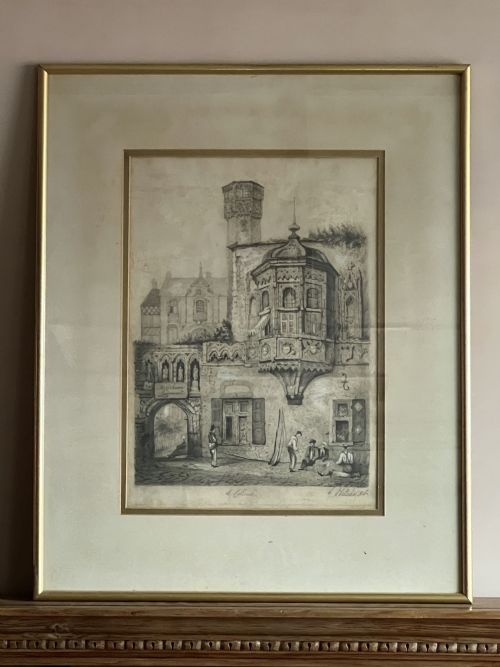


19th Century Ink Sketch
A 19th century ink sketch captures the immediacy of period draughtsmanship, offering buyers intimate studies on paper ranging from quick architectural drafts to detailed portraits.
19th Century Ink Sketch
A 19th century ink sketch encompasses original works on paper executed primarily with pen and ink, frequently accompanied by wash, graphite, or watercolour. Buyers will encounter portraiture, architectural drafts, landscape studies, and historical figure drawings originating from British, French, and Colonial-American contexts.
The pieces on this page span the 19th century, featuring Victorian academic works, Gothic Revival subjects, and Pre-Raphaelite compositions. Forms range from framed wall art and preparatory studies to detailed book illustrations and theatrical character pieces.
Materials and technique
These works rely on paper supports treated with ink applied by pen, often combined with wash techniques to build tonal depth and shadow. Artists frequently integrated graphite for initial underdrawing and gouache or watercolour for targeted highlights.
Framing typically involves wood and glass to protect the delicate paper surface from environmental damage. Many drawings survive within period gilt or wooden frames that complement the monochrome or tinted palettes.
Listings feature paper supports combined with ink, wash, graphite, gouache, and watercolour across French and British styles.
Assessing the work
Quality rests in the confidence of the draughtsmanship and the purpose of the sheet, distinguishing rapid compositional notes from finished gallery works. Preparatory studies reveal the artist's working process, whereas signed historical portraits demonstrate controlled line work and anatomical precision.
The interaction between ink and wash defines the visual strength of the piece, with superior examples maintaining crisp linework beneath transparent layers of diluted pigment. Conservation state and the presence of original framing or secure provenance further elevate individual pieces.
Alfred Dehodencq·William Edward Frost·H. H Wyatt·Theobald Chartran·Henri Josephe Hesse·Thomas Monro·Thomas Lound
The 19th Century Ink Sketch Glossary
- Wash
- A technique where diluted ink or watercolour is brushed across paper to create smooth tonal gradients and shadows. It provides depth behind the sharper lines of the pen.
- Preparatory study
- A preliminary drawing executed by an artist to plan a larger painting, mural, or architectural project. These sheets often display spontaneous line work and compositional changes.
- Gouache
- An opaque water-based paint used alongside ink to add solid highlights and body to a drawing. It differs from transparent watercolour through its chalky density.
- Gothic Revival
- An architectural and artistic style popular during the period, characterised by medieval motifs and pointed arches. It appears frequently in church and building studies.
19th Century Ink Sketch: Frequently Asked Questions
What is a 19th century ink sketch?
A 19th century ink sketch is an original drawing on paper utilising pen and ink, often enhanced with wash or watercolour by artists of the era.
These pieces range from rapid preparatory studies for larger paintings to finished portraits and architectural drafts.
How should I frame and display these works?
Ink and paper are sensitive to direct sunlight, so these sketches require mounting behind glass with UV-filtering properties.
Display them in rooms with stable humidity and away from bright windows to prevent the paper from yellowing and the ink from fading.
How do I date a 19th century drawing?
Dating relies on signatures, dated inscriptions, stylistic markers like Victorian academic conventions, and the watermark or type of paper used.
Archival records, costume details, and artist biographies provide further chronological context for unsigned works.
What is the difference between a sketch and a study?
A sketch is typically a quick, spontaneous record of a scene or idea, capturing movement or light swiftly.
A study is a more deliberate, detailed investigation of a specific subject, such as a figure or architectural element, intended to inform a finished work.