
19th Century Glazed Door
A 19th century glazed door provides clear storage for books and display pieces while bringing period character to a room.
19th Century Glazed Door
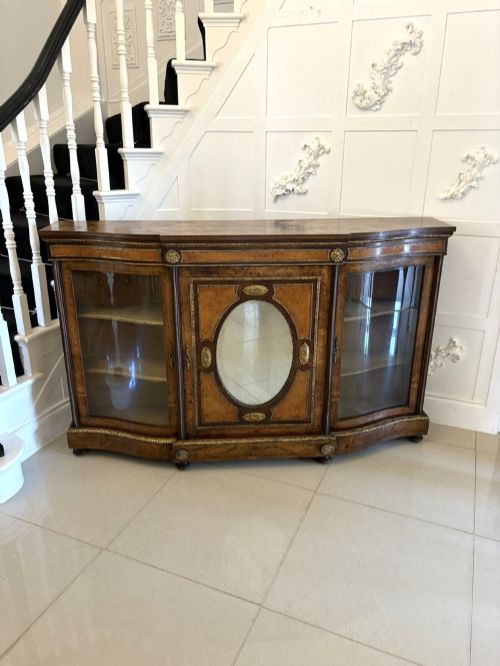
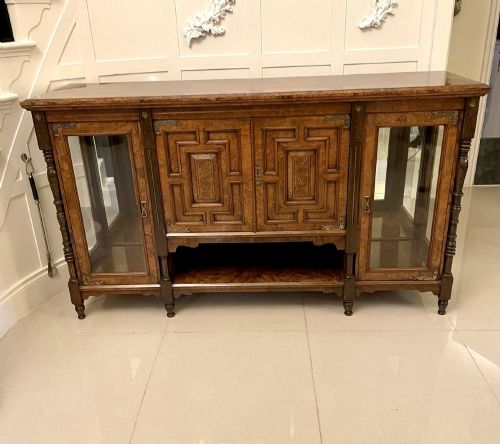
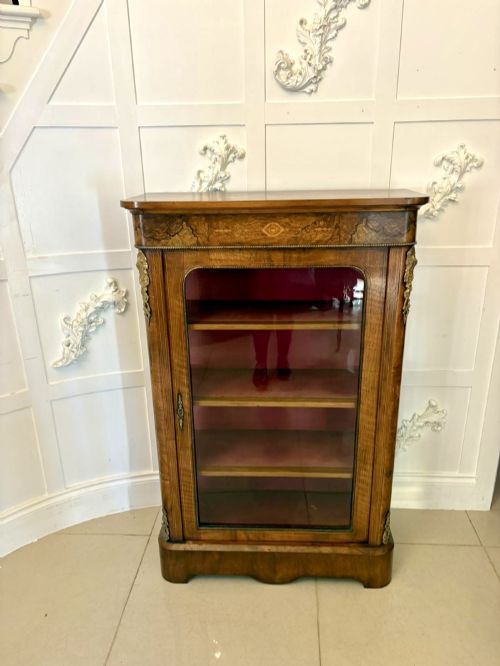
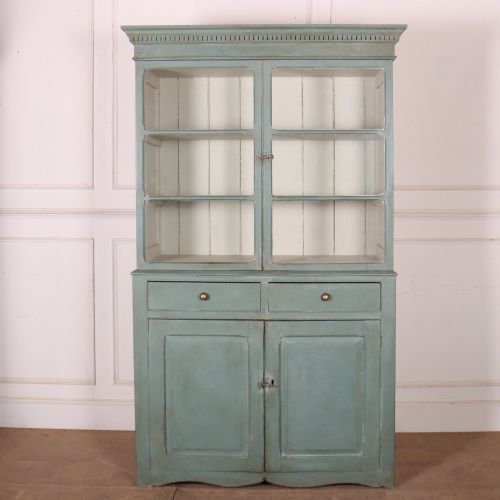
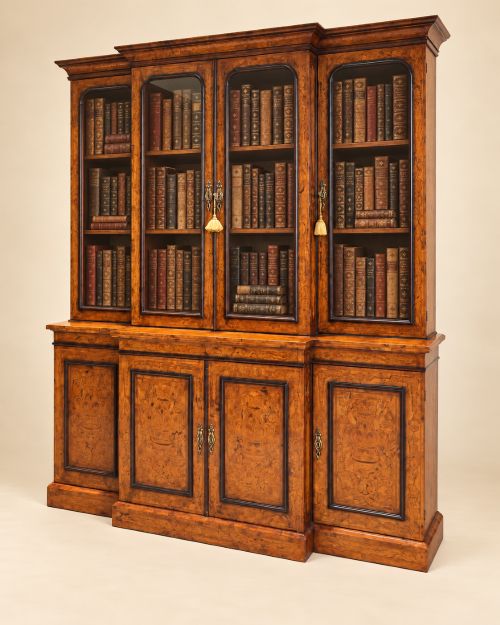
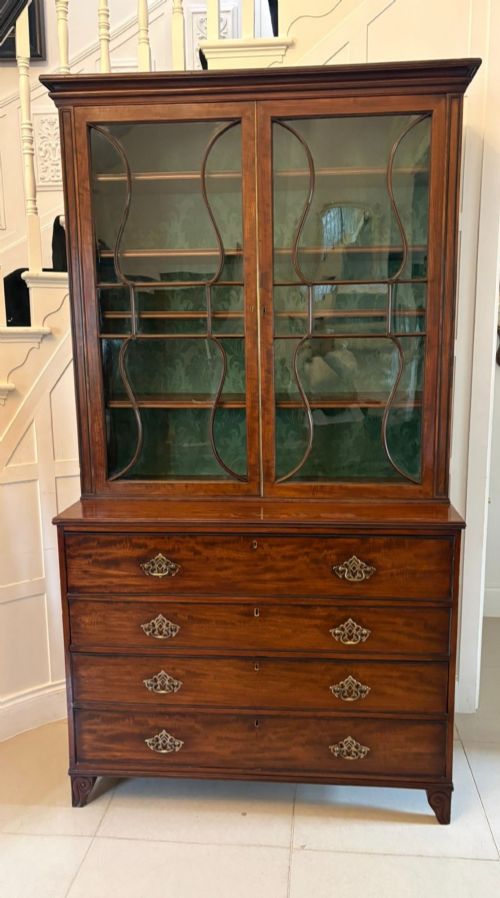
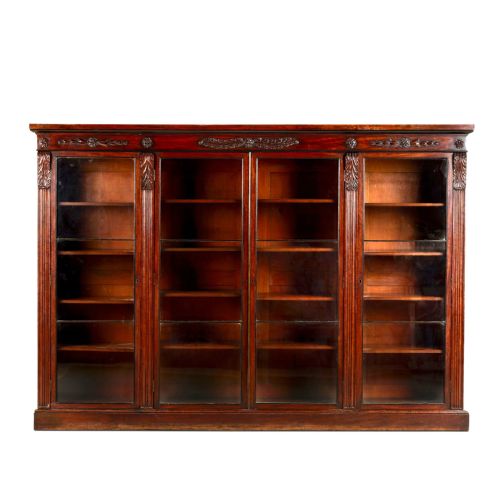
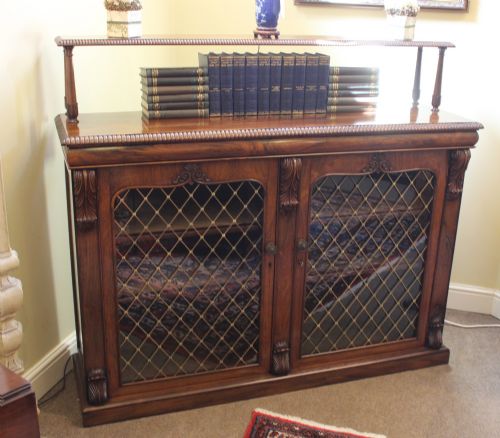
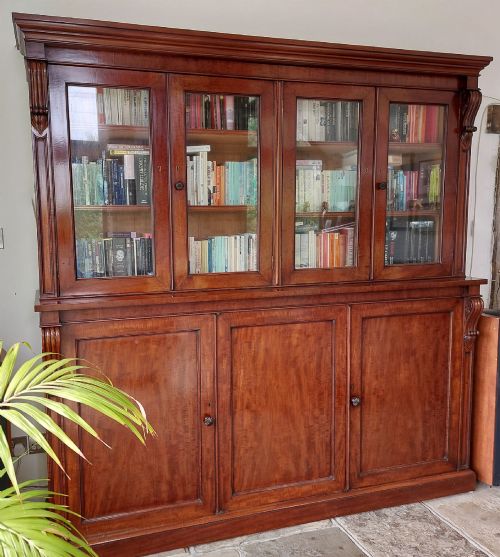
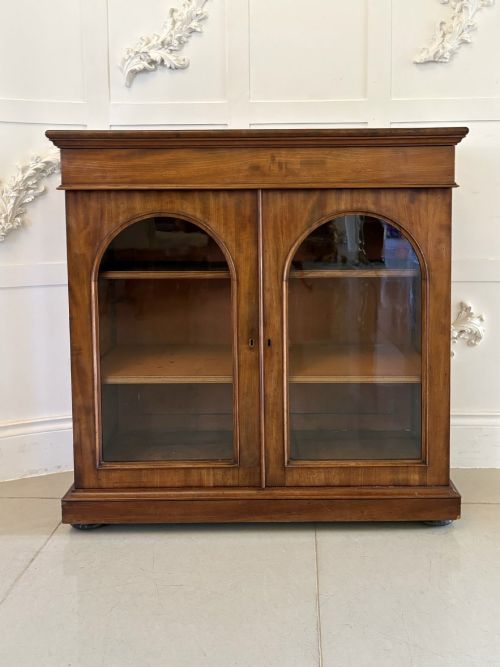
A 19th century glazed door typically forms part of a larger piece of furniture such as a bookcase, display cabinet, credenza, or kitchen cupboard.
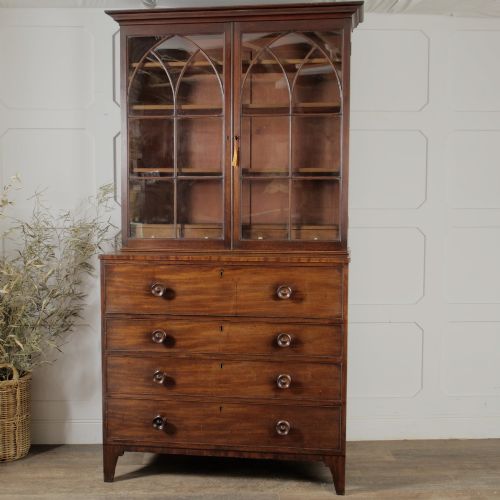
Mahogany and walnut predominate among the items, spanning periods from the Regency and William IV eras through the Victorian period.
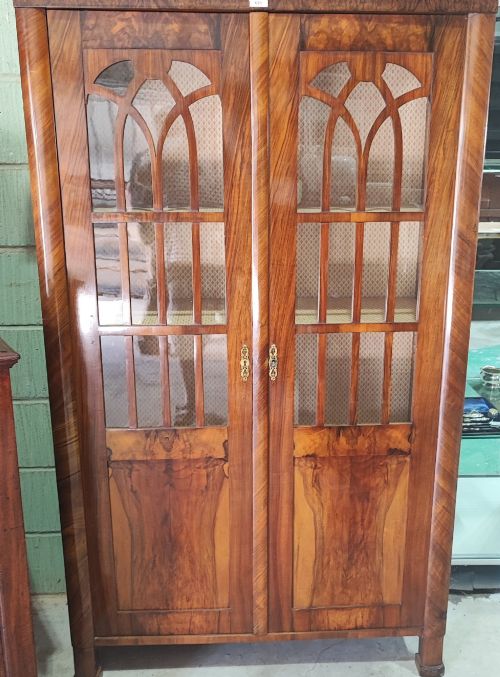
Continental pieces include French painted cupboards and Biedermeier display cabinets alongside standard British library furniture.
Craftsmanship and Proportion
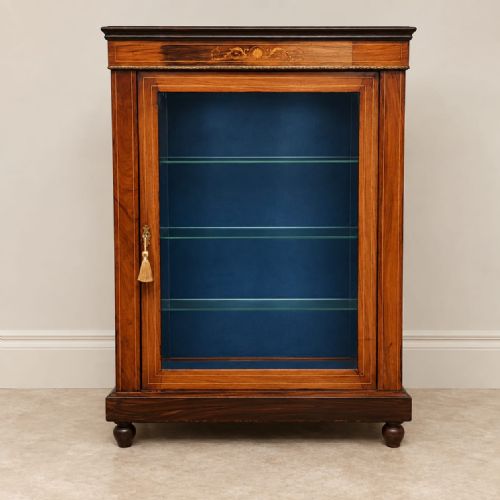
Quality rests upon the selection of figured timbers, such as flame mahogany or burr walnut, and the precision of inlaid marquetry details.
Structural harmony, including the balance of door proportions and the refinement of brass or ormolu mounts, separates standard items from finer examples.
One longcase clock even squeezes in an astragal glazed trunk door alongside its musical chimes.
The 19th Century Glazed Door Glossary
- Ormolu
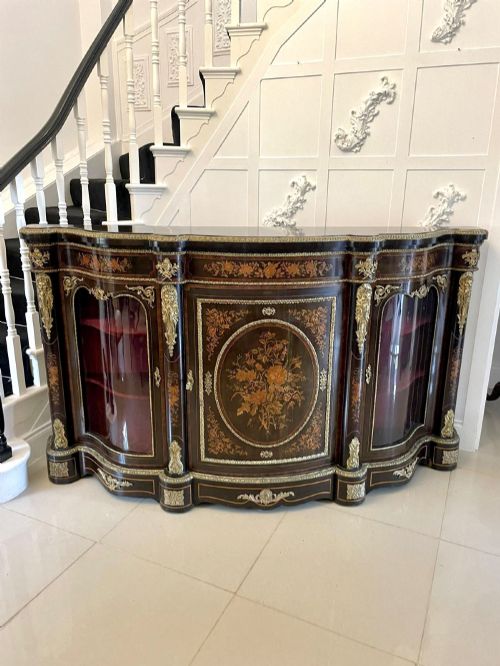
- Gilded bronze mounts applied as decorative ornaments. These metal details appear frequently on Victorian credenzas.
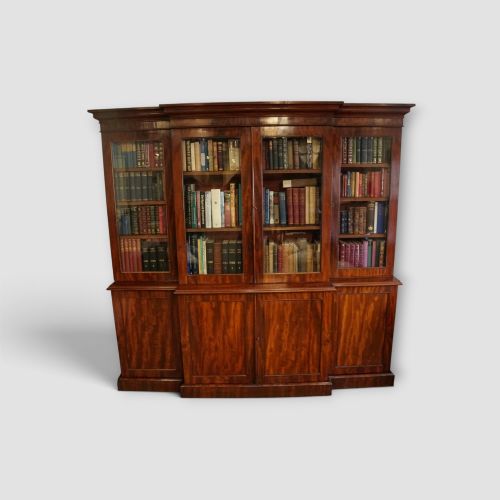
- Breakfront
- A cabinet design where the central section projects forward from the flanking wings. This architectural layout adds depth to large bookcases.
- Pier Cabinet
- A low display cabinet designed to sit against a wall space between windows. They often feature single glass doors and inlaid timber surfaces.
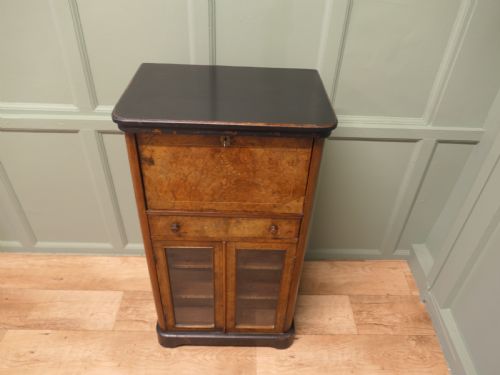
- Secretaire
- A cabinet incorporating a pull-down writing drawer with a fitted interior. These hybrid pieces combine a desk with glazed upper shelving.
19th Century Glazed Door: Frequently Asked Questions
How do I identify a Victorian piece?
Victorian examples often utilise dense timbers like burr walnut or flame mahogany, sometimes enhanced by floral marquetry or ormolu mounts. Cabinet designs from this era frequently adopt serpentine shapes or rich dark finishes.
Comparing construction methods and hardware styles helps distinguish mid-century items from later Victorian productions.
Are shelves adjustable?
Many library bookcases and display units feature adjustable wooden shelving supported by rack-and-pinion systems or traditional wooden fillets. This allows the internal height to adapt to varying book sizes.
Earlier cupboards sometimes feature fixed shelving integrated directly into the carcase structure.
How should I clean the glass?
Clean the glass panels using a gentle glass cleaner applied to a soft cloth rather than directly spraying the surface. This prevents moisture from reaching the surrounding timber frame or antique veneers.
Regular dusting with a dry lint-free cloth maintains the polish of the mahogany or walnut surrounds.