
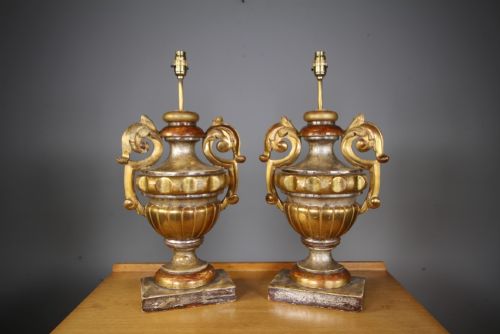

19th Century Gilt Table
A 19th century gilt table brings reflective warmth and architectural elegance to an interior, combining gilded surfaces with the distinct forms of the period.
19th Century Gilt Table
When searching for a 19th century gilt table, a buyer encounters a diverse range of forms designed for formal display, writing, and daily use.
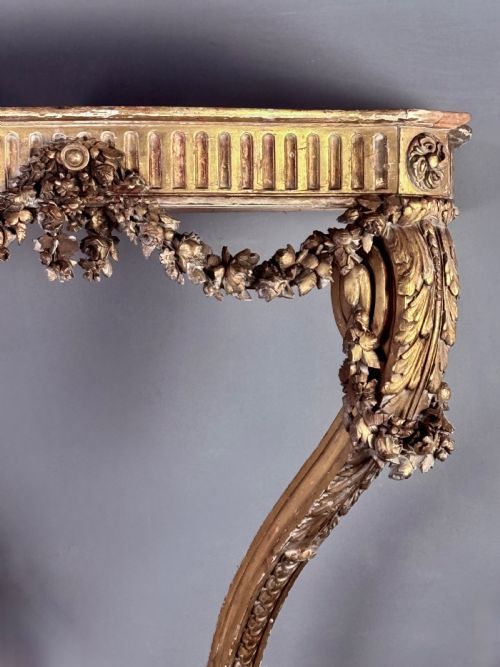
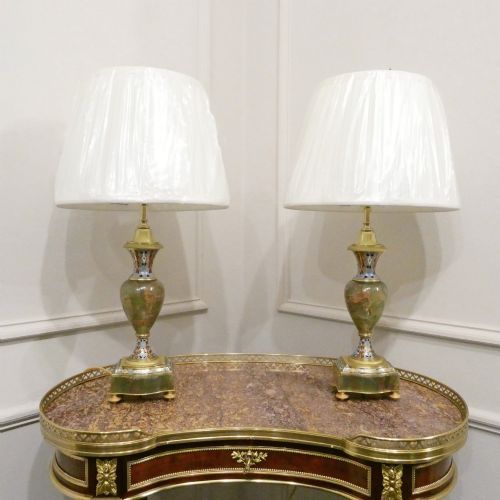
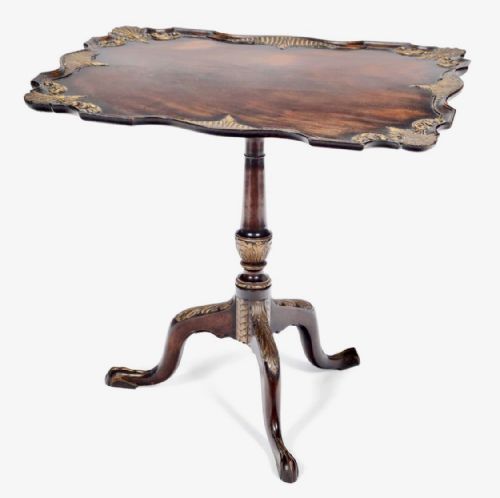
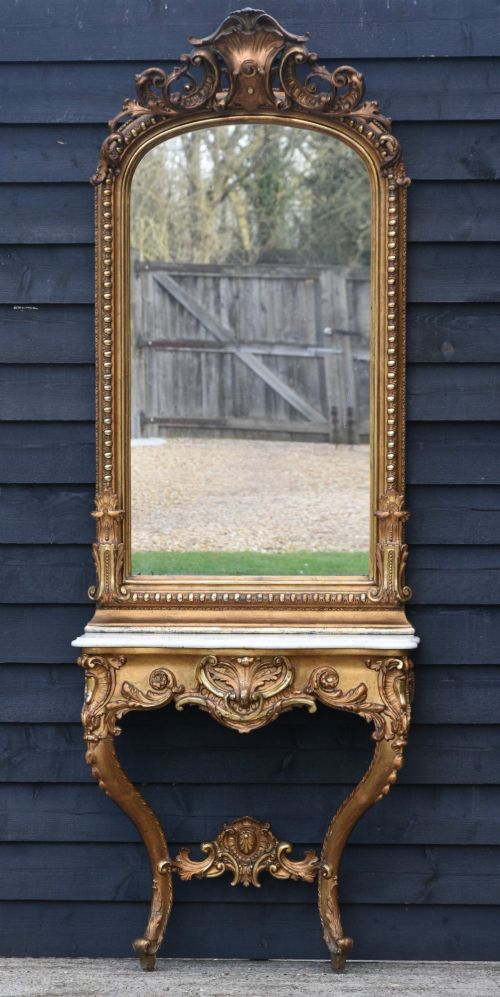
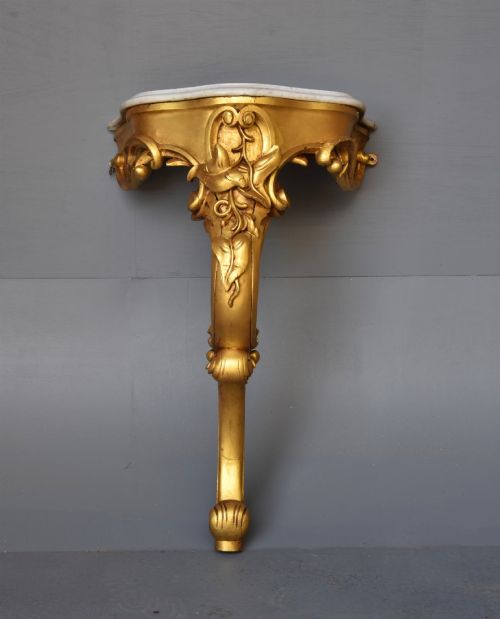
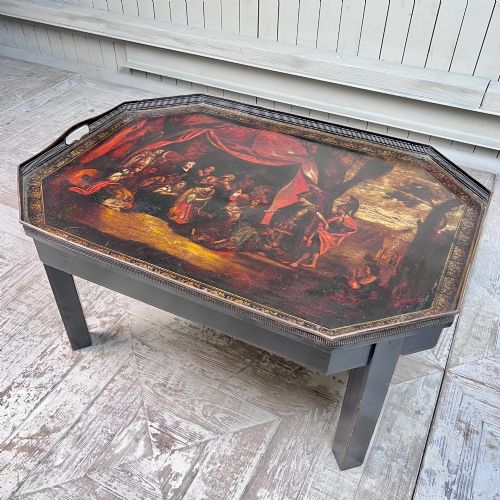
Console tables and centre tables dominate the selection, frequently featuring carved wood frames, applied metallic finishes, and shaped marble tops.
Occasional pieces, desks, and writing tables also appear, spanning styles from French Rococo Revival and Louis XVI Revival to Regency and Neoclassical.
Materials and Construction
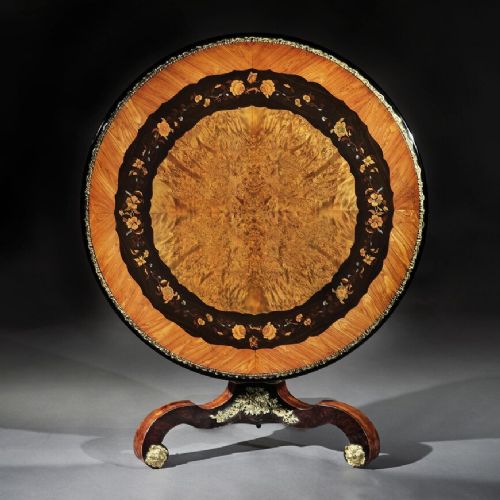
Maker workshops utilised solid timbers such as mahogany, kingwood, and walnut, frequently applying veneers, marquetry, and parquetry patterns to visible surfaces.
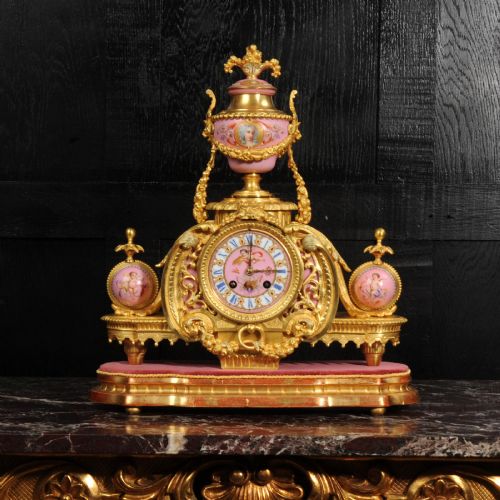
Gilding techniques involved laying gold leaf over gesso and carved wood, or mounting cast ormolu and gilt bronze details to the structural elements.
Marble slabs, including breccia and white varieties, were shaped to fit the upper profiles of console and centre tables, secured by the underlying wooden framing.
Some nineteenth-century tables feature secret drawers operated by hidden wooden springs designed to outsmart inquisitive guests.
Evaluating the Pieces
The standard of a piece rests in the crispness of its carved ornament and the precision with which mountings, such as ormolu or gilt bronze, fit the wooden carcass.
Finer examples display careful timber selection, articulate joinery, and intact original gilding or patination, whereas lesser versions rely on heavier, less detailed casting and coarser assembly.
Edward Holmes Baldock·Achille Brocot·Japy Freres·Henry Marc·Francois Linke·Paul Sormani·Felix Alfred Ternisien·Gervais Durand·Jonas Frisk
The 19th Century Gilt Table Glossary
- Ormolu
- A gilt bronze finish applied to decorative mounts, hardware, and decorative fixtures on furniture. This technique involves amalgamating gold and mercury onto a bronze base.
- Console table
- A wall-mounted or freestanding table designed to sit against a vertical surface, frequently topped with marble. Such pieces often accompanied large matching pier mirrors.
- Marquetry
- The art of applying decorative pieces of veneer to a structure to form intricate patterns and pictorial designs. Craftsmen utilised various exotic and native woods for contrast.
- Gueridon
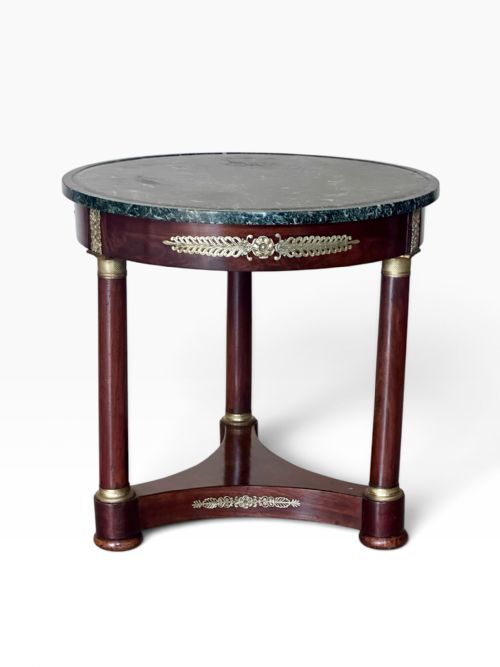
- A small circular occasional table supported by a central column or tripod base. The form originates from seventeenth-century French furniture design.
- Giltwood
- Timber that has been coated with thin sheets of gold leaf over a prepared gesso ground. This treatment creates a brilliant reflective surface on carved frames.
19th Century Gilt Table: Frequently Asked Questions
What is a 19th century gilt table?
A 19th century gilt table is a decorative or functional surface from the eighteen hundreds featuring a gold-leaf, ormolu, or gilt-bronze finish. These pieces include console tables, centre tables, and writing desks.
They reflect historical revival styles such as Louis XV, Louis XVI, and Regency. Artisans combined carved wood, marble, and metal mounts to create ornate furnishings for formal rooms.
How were console tables used?
Console tables served primarily as architectural display pieces in drawing rooms, hallways, and reception spaces. They were frequently paired with matching wall mirrors.
Because they were placed against walls, many lacked finished backs. Owners used their marble tops to display candelabra, clocks, and decorative objects.
Where should I place a gilt table?
A gilt table suits entrance halls, living rooms, or studies where its reflective finish can catch natural light. Console versions anchor well beneath large mirrors or artworks.
Freestanding centre tables require placement in open spaces to showcase their detailed joinery and mounts from all angles.
How do I identify French revival styles?
French revival styles are identified by specific decorative motifs and structural curves. Louis XV and Rococo pieces display asymmetrical scrolls and naturalistic floral carvings.
Louis XVI and Neoclassical examples feature straight tapered legs, fluting, and symmetrical geometric mounts. Ormolu accents and parquetry further define these workshop traditions.