




19th Century Garden Table
A 19th century garden table brings sturdy metalwork and stone surfaces into the open air to anchor a seating terrace with period weight.
19th Century Garden Table
A 19th century garden table unites heavy outdoor utility with domestic styling, appearing most frequently as a round or rectangular iron frame paired with a durable top. These pieces emerge from English, French, and Swedish workshops, often taking the form of side tables, bistro tables, or larger dining formats designed to withstand the elements.
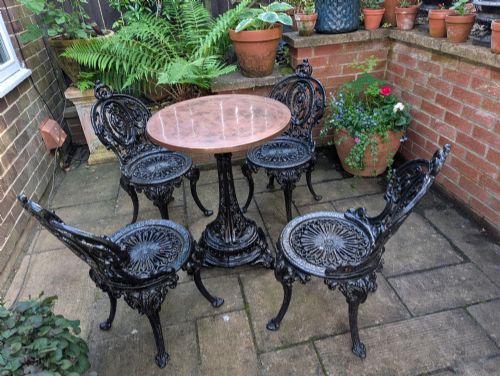
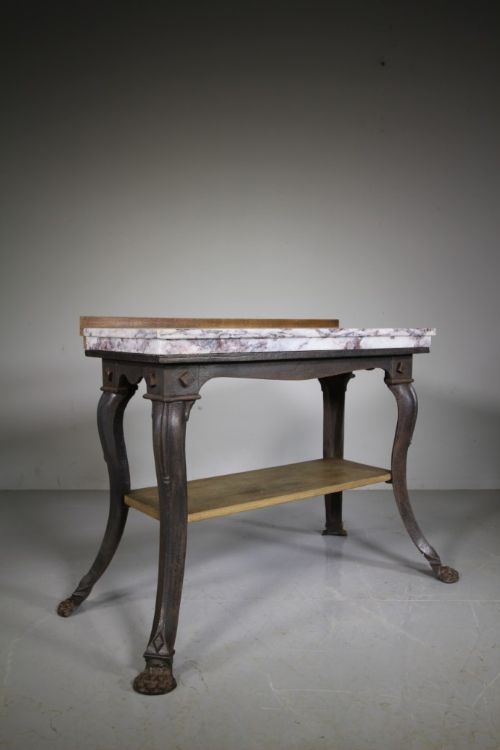
The most common examples on this page pair robust cast iron bases with white marble or painted wood surfaces. French bistro and Arras variants sit alongside English Victorian designs, showing the broad European appetite for ornamental yet utilitarian outdoor furniture during the period.
Materials and construction
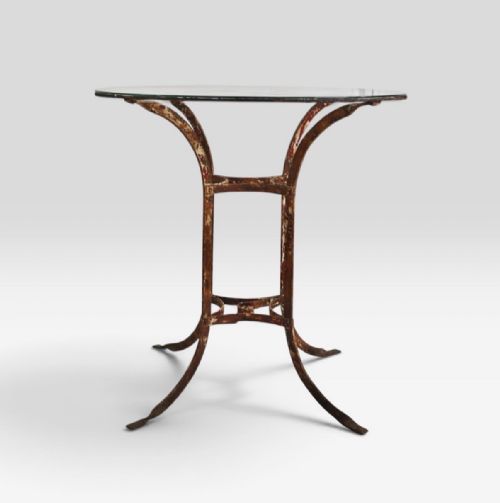
Foundries shaped molten metal into intricate scrollwork and structural tripod bases, utilising cast iron for its strength and capacity to hold fine mouldings. Wrought iron and wirework also appear, shaped by hand into lighter frameworks for folding or café use.
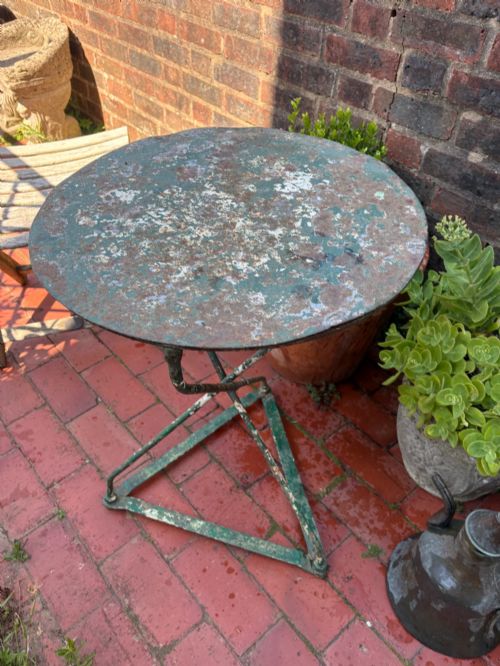
Table surfaces rely on contrasting materials, mounting heavy white marble slabs, solid timber planks, or painted pine onto the metal frames. These surfaces were often given protective coats of green or neutral paint to resist weathering in conservatory and garden settings.
Several tables share catalogue space with silver salt cellars shaped like miniature garden wheelbarrows, proving the era loved miniature agricultural equipment.
Distinguishing quality
Quality rests in the crispness of the foundry casting and the integrity of the structural joints. Superior pieces exhibit deeply detailed ironwork without surface pitting, alongside precisely fitted marble tops that sit flush within their metal retaining rims.
The degree of original surface preservation separates standard examples from exceptional survivals. Tables retaining early layered paint finishes or undisturbed stone patination show greater historical honesty than heavily restored or later-assembled equivalents.
Coalbrookdale
The 19th Century Garden Table Glossary
- Cast iron
- Molten metal poured into a mould to create rigid structural components. It allows for complex decorative relief patterns on table bases and pedestals.
- Arras
- A specific style of French metal garden furniture characterised by wooden lath slats and bolted iron strapwork. Pieces from this tradition often include curved legs and distinct maker plaques.
- Gueridon
- A small round occasional table supported by a single central pillar. These frequently feature in French bistro and conservatory settings.
- Hongmu
- A traditional Chinese term for dense hardwoods used in decorative furniture. Items in this material display rich dark grains and precise joinery.
- Wirework
- Structural framework constructed from heavy gauge metal wire bent and welded into geometric patterns. It provides a lighter alternative to solid cast iron for outdoor use.
19th Century Garden Table: Frequently Asked Questions
Were these tables meant for outdoor use?
Most surviving examples were engineered from heavy cast iron and stone specifically to endure damp conditions outdoors. However, many owners historically placed them inside glasshouses, orangeries, and conservatories to protect delicate marble surfaces.
Today, these pieces transition easily between sheltered patios and interior garden rooms. Their weather-resistant materials make them practical for everyday dining or display.
How do I identify French bistro tables?
French bistro pieces typically feature tripod cast iron bases designed to remain stable on uneven cobblestones or gravel. They often incorporate round wooden or marble tops scaled for compact outdoor terraces.
Look for slender pedestal stems and scrolled feet that distinguish continental café furniture from heavier English dining tables. The presence of slatted Arras ironwork further points to French manufacture.
Can I leave marble top tables outside?
Marble surfaces withstand open air well, but prolonged exposure to freezing moisture can cause stone to crack or absorb stains. Many historical pieces spent winters inside conservatories to preserve the polished top.
If kept outdoors year-round, covering the table during harsh winter months prevents moisture damage. Regular cleaning prevents moss and organic staining on the porous stone.
What is the difference between cast and wrought iron?
Cast iron is poured into moulds while molten, creating rigid, heavy components with detailed decorative patterns. It forms the sturdy pedestals and ornate aprons seen on most period garden tables.
Wrought iron is heated and hammered into shape by hand, resulting in a fibrous material that bends rather than snaps. It appears in lighter wirework frames and folding café tables.