




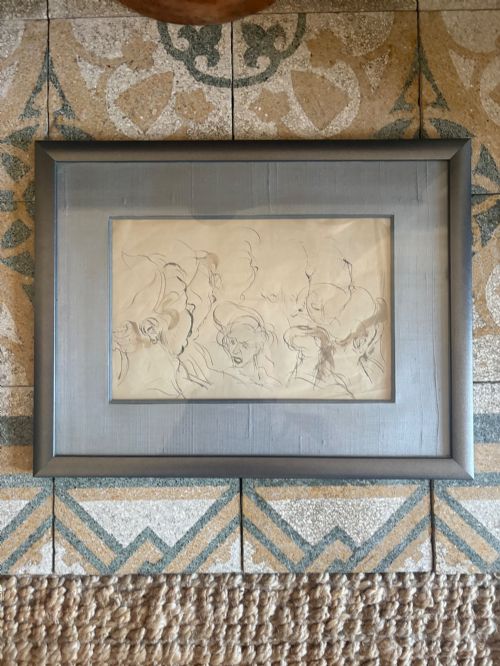


19th Century French Drawing
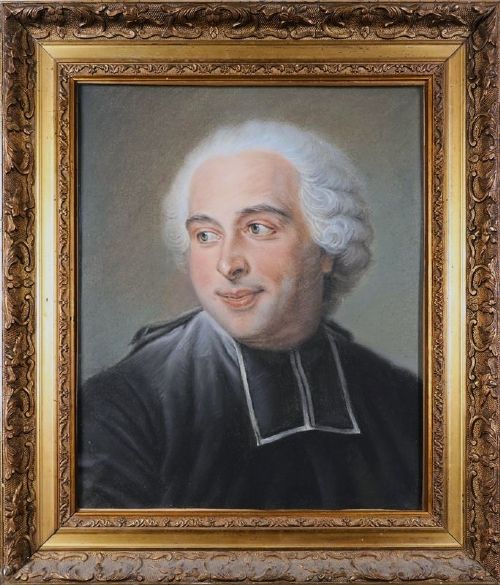
19th century french drawing captures the spirit of academic study and intimate portraiture through charcoal, pastel, and ink on paper.
19th Century French Drawing
A 19th century french drawing encompasses original works on paper, ranging from academic life studies of the human form to detailed portraiture and preparatory sketches.
Buyers encountering this selection will find works executed in charcoal, graphite, pastel, ink, and chalk, often preserved behind glass in period frames.
The material reflects diverse movements including academic realism, orientalism, and the Barbizon school, capturing figures, theatrical scenes, and landscapes.
Materials and Technique
Artists utilised media such as graphite, charcoal, and pastel applied directly to paper supports, occasionally heightened with white chalk to create depth and volume.
Preparatory studies and academic life studies relied on precise line work and shading to record anatomical accuracy and movement before the execution of larger oil paintings.
19th Century French Drawing Retail Price Guide 2026
Typical asking prices for 19th century french drawing among the pieces listed under this phrase on Sellingantiques today, from the lower quarter to the upper quarter. They describe what is for sale here now, not the wider market.
The inventory includes pieces dated across the 19th century, Victorian era, and early 20th century.
Evaluating Quality
Quality rests upon the strength of the draughtsmanship, the clarity of line in graphite and ink, and the preservation of delicate chalk or pastel pigments beneath glass.
Works attributed to identified academic artists or documented schools demonstrate superior anatomical precision and compositional control compared to anonymous student exercises.
Albert Ludovici Jnr·Henry Arthur Roberts·Alfred Dehodencq·Pierre Paul Prud hon·Theobald Chartran·Henri Josephe Hesse·Gaston Bouy·Alexandre Decamps·Henri Joseph Harpignies·Cecil CP Lawson
The 19th Century French Drawing Glossary
- Academic Realism
- A style of painting and drawing produced under the influence of European academies, prioritising accurate anatomy and classical subjects.
- Charcoal
- A dry drawing medium made from organic carbonaceous material that produces deep blacks and subtle tonal gradations on paper.
- Graphite
- A form of crystalline carbon used in pencils to produce fine lines and varied grey tones in preparatory sketches and finished works.
- Pastel
- A powdered pigment mixed with a binder and formed into sticks, allowing artists to blend rich colour directly onto the paper support.
19th Century French Drawing: Frequently Asked Questions
What defines a 19th century french drawing?
These works are original compositions executed on paper using media such as graphite, charcoal, pastel, and ink by artists trained in academic traditions.
Subjects range from figure studies and portraits to theatrical scenes and landscapes reflecting various nineteenth-century artistic movements.
How were these drawings used originally?
Many examples began as preparatory studies for larger oil paintings, academic exercises in life drawing, or finished portraits commissioned for salons and private collections.
Artists utilised these portable mediums to capture immediate observations or refine compositions before transferring them to canvas.
How should I care for a drawing on paper?
Drawings require protection from direct sunlight and high humidity to prevent the fading of graphite, charcoal, and pastel pigments on paper supports.
Framing with acid-free mounts and UV-filtering glass ensures the long-term preservation of delicate works.
How do I distinguish academic studies from other works?
Academic studies often focus on anatomical precision, featuring male or female nudes posed with props like staves within structured studio settings.
These sheets frequently show the hand of trained draughtsmen working under the rules of European art academies.