


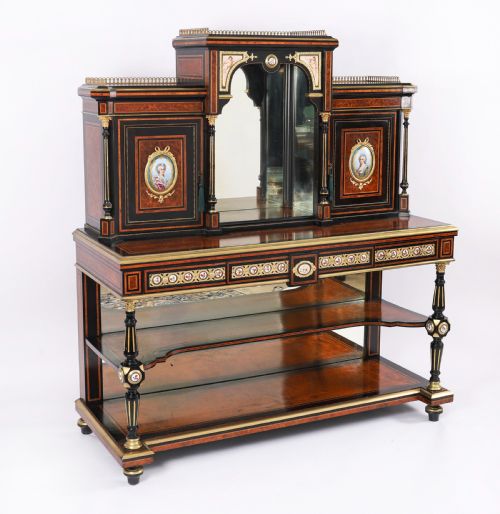


19th Century French Bonheur Du Jour
A 19th century French bonheur du jour offers a delicate writing space with raised compartments, prized for its refined proportions and decorative elegance.
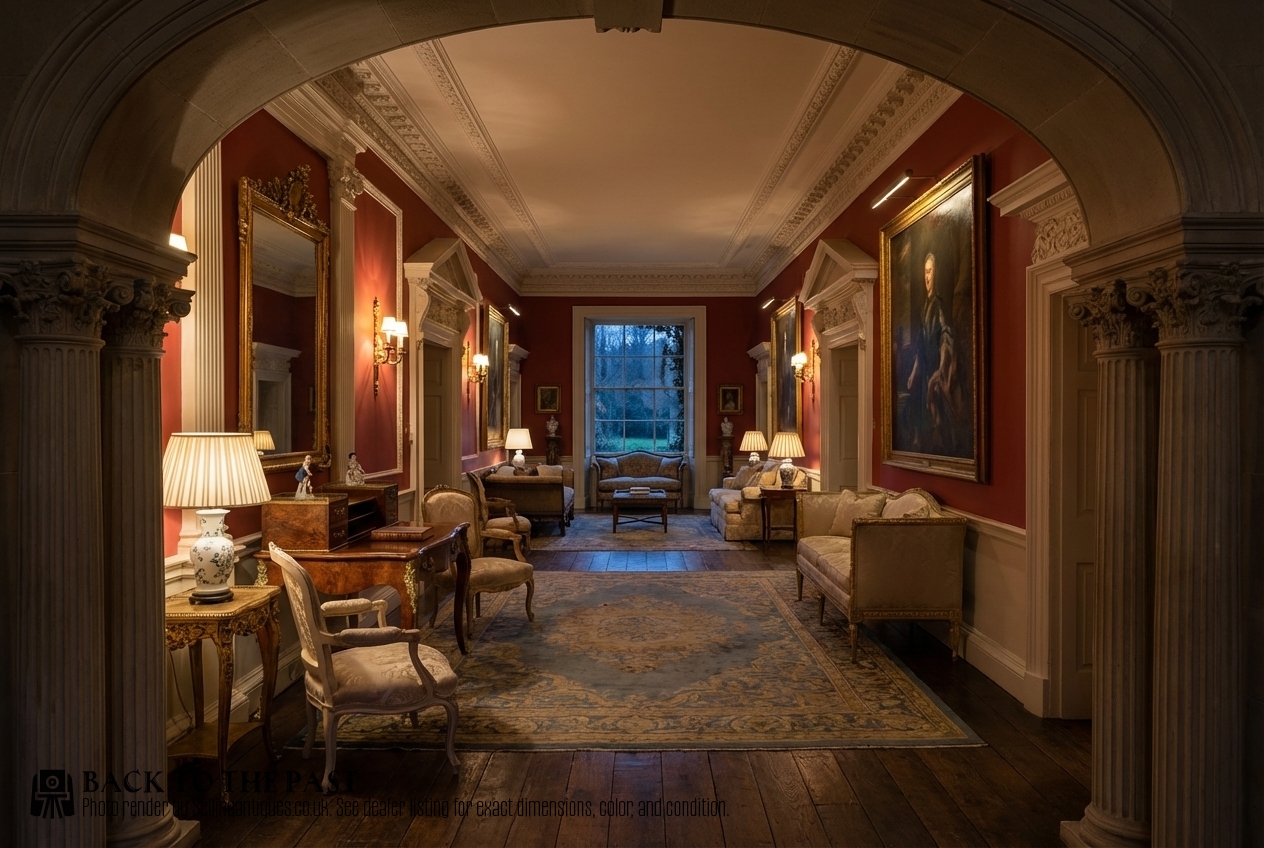
19th Century French Bonheur Du Jour
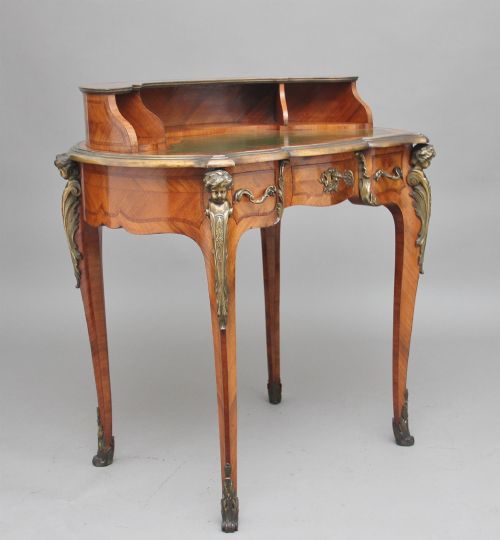
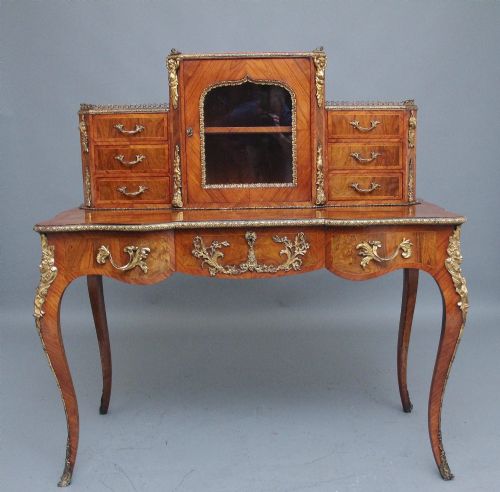
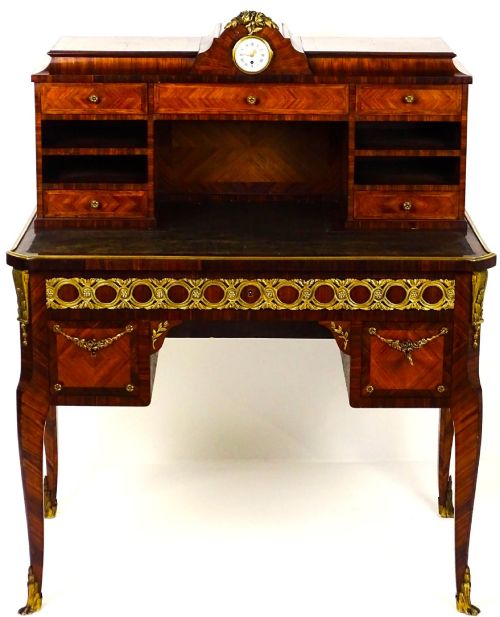
A 19th century French bonheur du jour is a small lady's writing desk featuring an upper tier of shelves, drawers or a cabinet. These pieces appear primarily in Louis XV and Louis XVI revival styles, along with Napoleon III and Victorian interpretations.
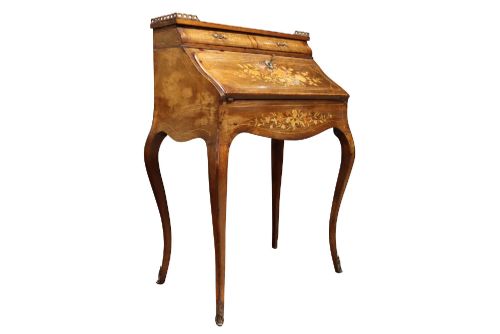
The form developed to serve correspondence and light private paperwork in private sitting rooms rather than formal libraries. Examples vary from simple walnut and fruitwood writing tables to elaborate cabinets inlaid with floral marquetry.
Makers adapted the historic French profiles during the decades between 1850 and 1900, producing compact writing furniture that incorporated enclosed compartments and small drawers.
Materials and Technique
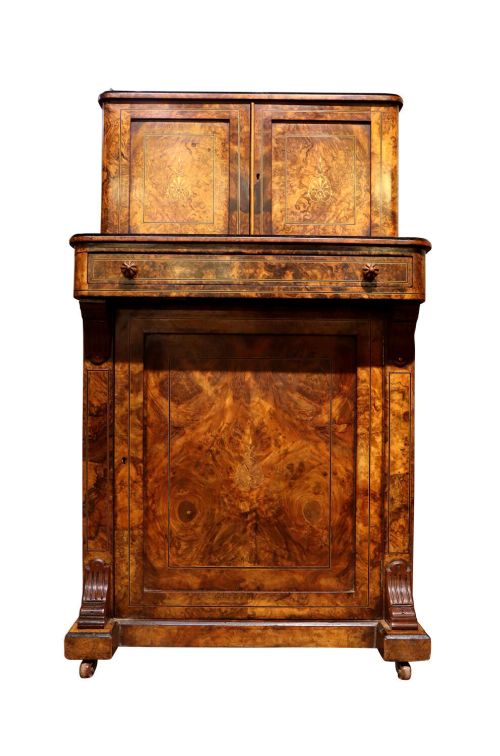
Cabinetmakers utilised dense exotic hardwoods such as kingwood, rosewood and burr walnut as foundational veneers over oak or pine carcases. Marquetry panels combined contrasting timbers to create floral or geometric picture panels across the fall-fronts and tabletops.
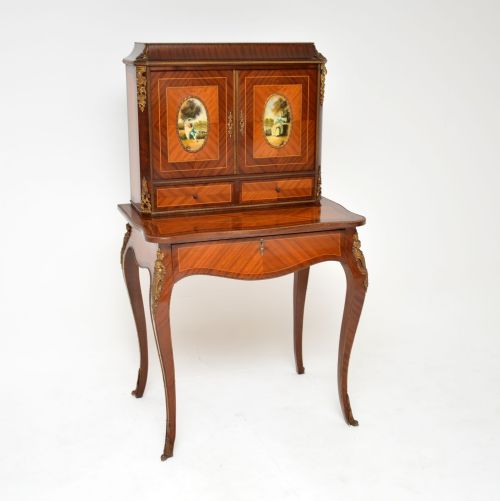
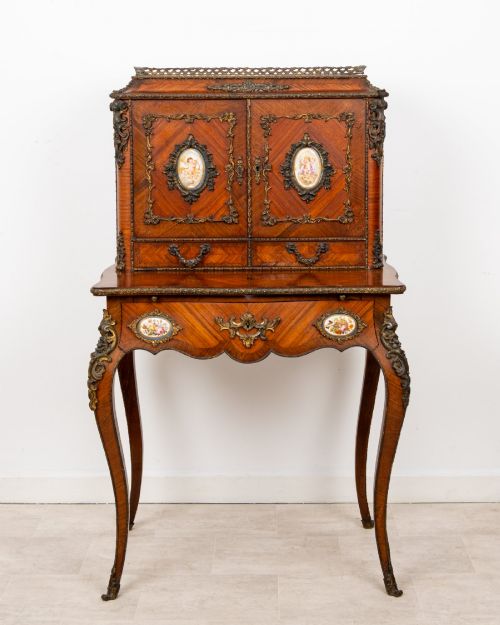
Gilt bronze ormolu mounts, cast and chased, edge the curves and corners of the framework to highlight the serpentine contours. Brass inlay, porcelain plaques and Vernis Martin painted panels frequently embellish the main writing surfaces and upper superstructures.
Many desks conceal tiny secret drawers behind the upper pigeonholes, built to hide love letters or jewellery.
Standards of Craftsmanship
Superior execution shows in the precision of the marquetry and the crispness of the cast ormolu mounts fitted to the wood. Hand-cut dovetails within the small drawers and the weight of the underlying timber signal higher workshop standards.
Simpler models rely on plain walnut or mahogany with minimal brass stringing, whereas elite examples integrate porcelain plaques, amboyna borders and signed bronze signatures on the internal hardware.
Paul Sormani·Edwards and Roberts·Gillows·John McLean
The 19th Century French Bonheur Du Jour Glossary
- Bonheur du jour
- A small lady's writing desk with an elevated superstructure containing pigeonholes, drawers or a small cupboard. The name translates directly to day's happiness.
- Ormolu
- Cast and gilded bronze mounts applied to furniture for decorative enrichment. The technique requires mercury gilding or electroplating on brass alloys.
- Marquetry
- Inlaid wood veneers assembled to form pictorial or geometric patterns across flat surfaces. Artisans select various tinted timbers to achieve natural shading.
- Vernis Martin
- A simulated Japanese lacquer technique developed in France, using successive layers of translucent varnish. It produced glossy painted panels depicting pastoral or floral scenes.
- Bureau de dame
- A lady's writing desk, often synonymous with the bonheur du jour or small slope-front writing cabinets. These forms prioritise compact dimensions and decorative finish.
19th Century French Bonheur Du Jour: Frequently Asked Questions
What is a bonheur du jour?
A bonheur du jour is a small, light writing desk with a tiered upper section designed for correspondence and keeping stationery.
Originating in France, these desks became popular during the eighteenth century and saw a major revival across the nineteenth century in various European workshops.
How were these desks used?
Owners used these pieces for writing morning letters, storing receipts, and displaying small porcelain objects or portrait miniatures on the upper shelves.
They stood in private boudoirs or drawing rooms rather than formal studies, serving as personal furniture for female members of the household.
Where do I place one?
These compact desks fit well into bedroom corners, entrance halls, or as accent pieces against a drawing room wall where floor space is limited.
Their finished backs on many higher-grade examples allow them to sit away from the wall and remain visible from multiple angles.
How do I identify periods?
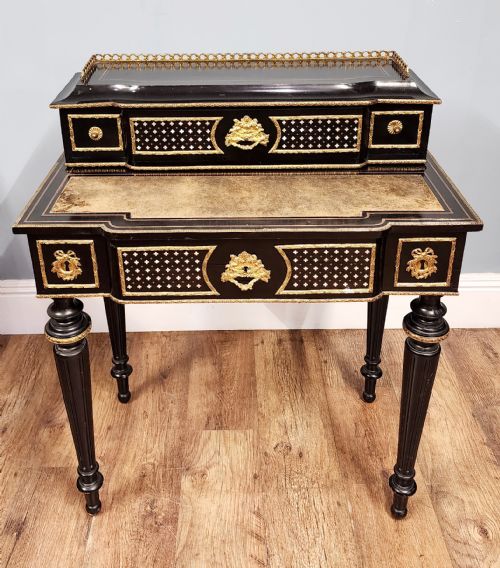
Stylistic details such as heavy ormolu mounts and ebonised finishes point toward the Napoleon III era, while floral marquetry and cabriole legs indicate Louis XV revival preferences.
Timber choices also guide identification, as kingwood and amboyna veneers dominated the high-end output of the mid to late nineteenth century.