

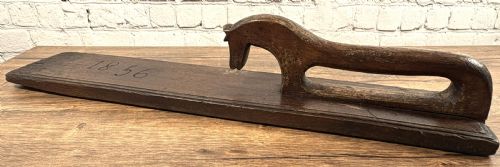


19th Century Folk Art Horse
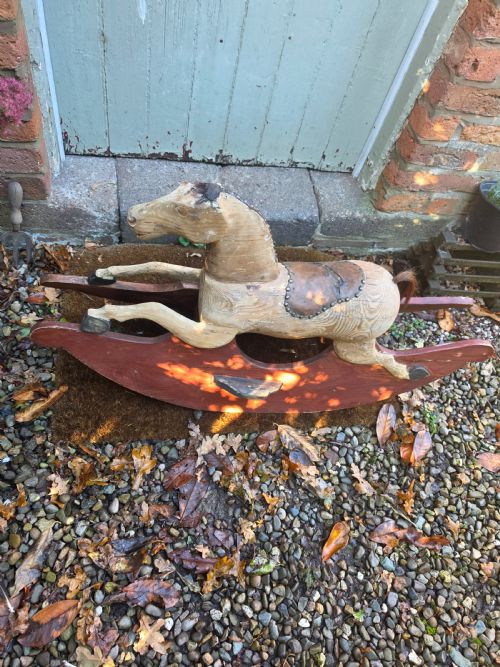
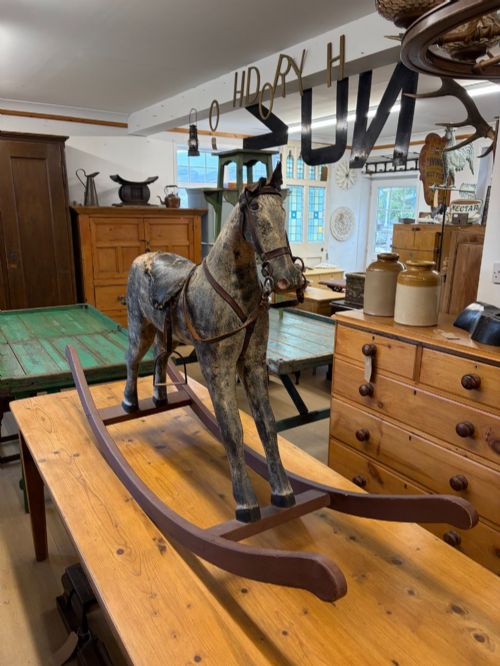
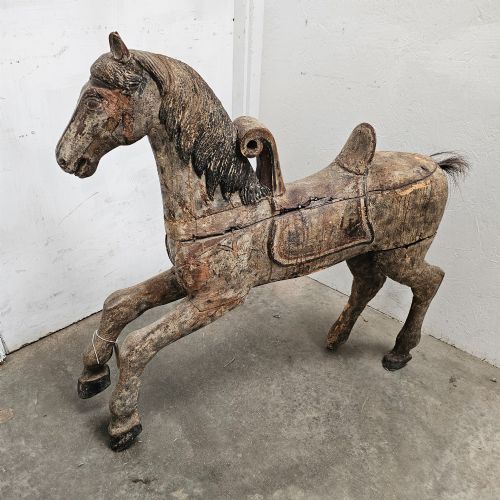
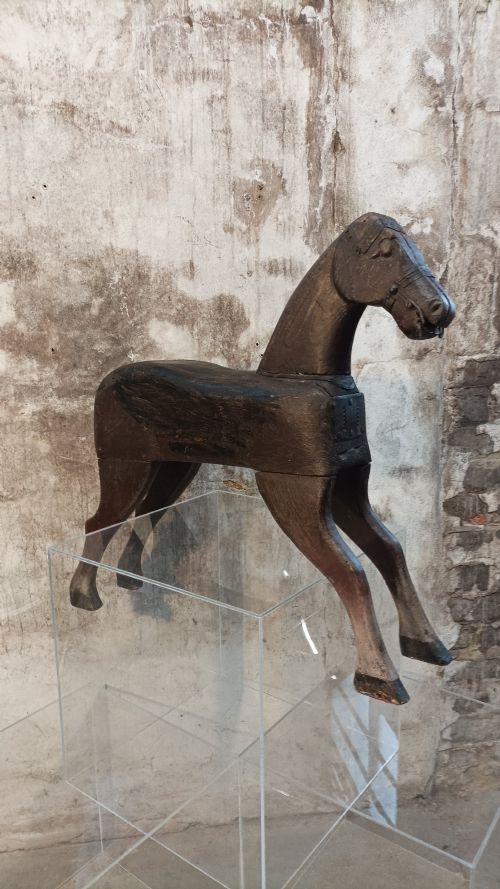
A 19th century folk art horse brings vernacular character into a room through carved wood, original paint and naive charm.
19th Century Folk Art Horse
When someone searches for a 19th century folk art horse, they encounter carved wooden sculptures, fairground figures, and utilitarian objects adorned with equine motifs. These pieces originate from diverse traditions spanning British, French, Spanish, Scandinavian, Indian, and South American workshops.
The selections available here range from substantial carousel horses and child-sized rocking horses to smaller decorative objects such as snuff boxes, earthenware figures, mangle boards, and rugs. Each item reflects the vernacular hand of rural artisans rather than academic academic training.
How they were made
Makers shaped these objects primarily from carved wood, utilising timber such as pine and hardwoods, often embellishing the surfaces with layered oil paint, gesso, or polychrome decoration. Additional textures appear through the incorporation of horsehair, leather bridles, and iron hardware.
Pottery examples employ earthenware with glaze, whilst textile pieces like rugs utilise woven wool depicting horses and riders. Artisans worked with simple hand tools to achieve expressive, primitive forms.
19th Century Folk Art Horse Retail Price Guide 2026
Typical asking prices for 19th century folk art horse among the pieces listed under this phrase on Sellingantiques today, from the lower quarter to the upper quarter. They describe what is for sale here now, not the wider market.
A Scottish potter once immortalised a highwayman and a lady on horseback in clay.
What varies in quality
The distinction in quality rests upon the strength of the carving and the preservation of the original surface decoration. Untouched paint layers and genuine patination elevate a piece above examples that have undergone heavy restoration or stripping.
Proportion and anatomical expression also differentiate the work, as naive carving ranges from stiffly geometric forms to pieces possessing striking movement and personality.
The 19th Century Folk Art Horse Glossary
- Polychrome
- Decoration employing multiple colours on a single surface. This finish often survives in fragments on older wooden carvings.
- Primitive
- A descriptive term for art produced outside formal academic traditions. Such work relies on direct, unpretentious execution rather than classical proportions.
- Flatback
- A ceramic figure moulded in three dimensions at the front whilst remaining flat and unglazed at the rear. These pieces were designed to stand against a wall on a mantelpiece.
- Mangle board
- A domestic wooden board used historically for pressing linen with a roller. The handles frequently feature carved animal heads.
- Naive
- An aesthetic style characterised by a childlike simplicity in perspective and form. It demonstrates the individual maker's direct interpretation rather than strict realism.
19th Century Folk Art Horse: Frequently Asked Questions
How were these wooden horses used?
Many served as children's toys, including rocking horses and carousel figures designed for active amusement. Others functioned as practical household items, such as carved mangle boards, gingerbread moulds, and snuff boxes.
Over time, utilitarian objects transitioned into decorative sculptures appreciated primarily for their sculptural form and patina.
How do I care for original paint?
Preserving original paint requires keeping wooden and earthenware pieces away from direct sunlight and excessive moisture fluctuations. Dust gently with a dry, soft cloth without applying chemical cleaning agents.
Allowing the surface to remain undisturbed protects the historical layers of pigment and wax accumulated over generations.
How can I tell the period?
Dating relies on tool marks, the composition of underlying woods, and the chemical nature of the paint layers. Regional styles and traditional construction methods also provide clues to the decade of origin.
Comparing surface wear against known historical artefacts helps confirm whether a piece dates to the Victorian era.