



19th Century Fireplace Accessories
These 19th century fireplace accessories bring functional hearth furniture and decorative metalwork into the modern interior.
19th Century Fireplace Accessories
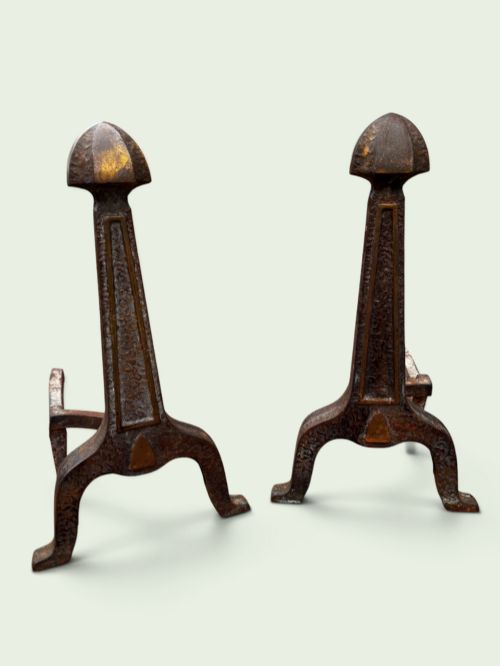
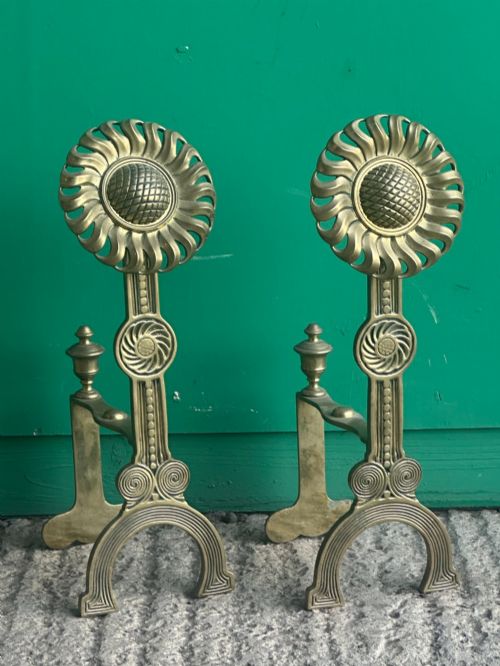
When searching for 19th century fireplace accessories, buyers encounter a diverse selection of hearth equipment spanning the Georgian, Regency, and Victorian periods. The inventory on this page consists predominantly of brass and steel andirons, copper log bins, coal scuttles, and matched sets of fire irons.
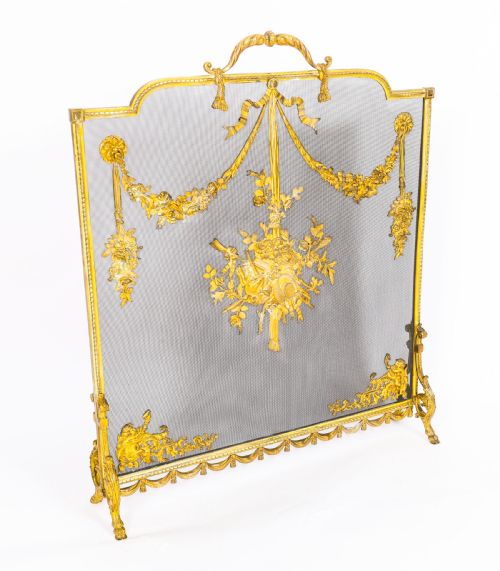
Practical items such as fenders, fireguards, and bellows sit alongside decorative pieces including fire screens and foot stoves. These objects reflect the heavy reliance on open fires for domestic heating during the nineteenth century, ranging from utilitarian cast iron grates to ornate gilt bronze chenets.
The selection includes specific regional designs, from English brass coal scuttles to French Louis XV-style bronze chenets and Dutch oak foot stoves. Buyers are most likely to find polished brass andirons, copper buckets, and steel tool sets dating from the middle to late decades of the century.
How they were made
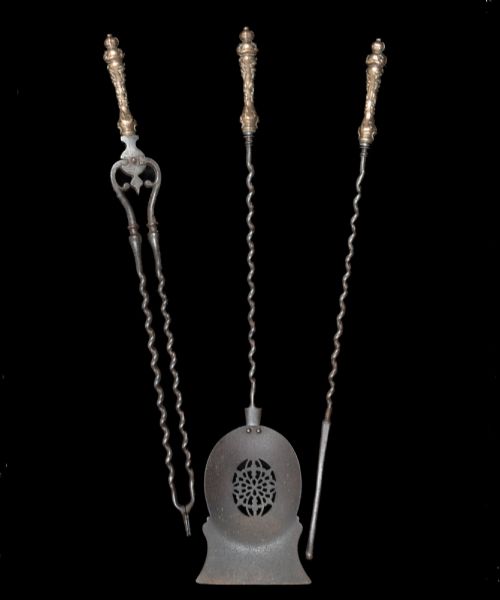
The production of these hearth items relies heavily on metalworking techniques such as casting, wrought iron forging, and burnishing. Makers utilised brass, cast iron, wrought iron, steel, copper, and bronze, frequently combining brass and steel within a single set of fire tools or fenders.
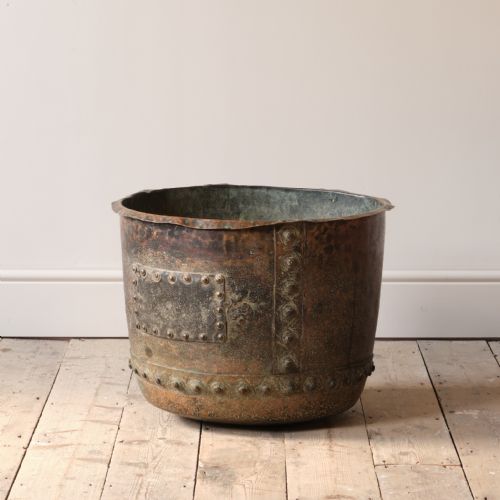
Decorative elements involve intricate casting, hand-carving in wooden pieces like oak foot stoves, and applied Chinoiserie decoration or floral and musical trophy motifs on bronze fire screens. Copper log bins and buckets often feature riveted seams and polished finishes that demonstrate period sheet metal craftsmanship.
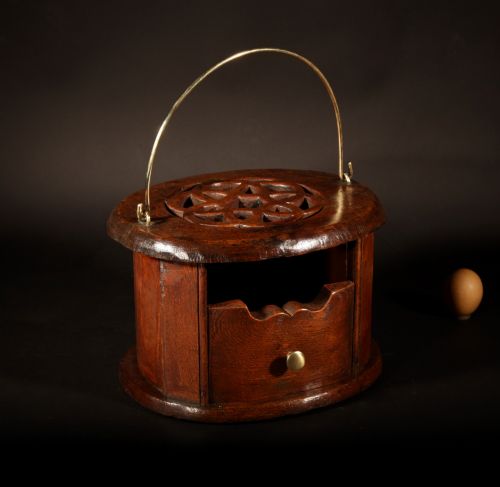
An oak foot stove warms cold feet by trapping the heat of hot embers beneath a intricately carved Turkish Knot pattern.
What varies in quality
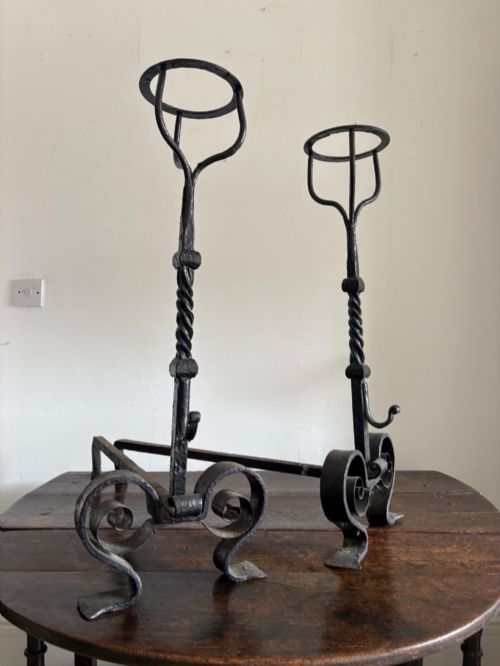
Quality in these hearth items is determined by the weight of the metal, the crispness of the cast details, and the integrity of construction. Heavy cast iron and monumental wrought iron andirons indicate substantial utility, while finely chased bronze chenets show superior artistic command.
The presence of original components, such as wooden coal scuttle liners and matching shovels, elevates a piece above those assembled later. Finish also dictates value, distinguishing between heavily worn utilitarian surfaces and carefully polished brass or patinated bronze.
Thomas Jeckyll·William Tonks
The 19th Century Fireplace Accessories Glossary
- Andirons
- Supports for logs in an open fireplace, typically made in matching pairs from iron, brass, or bronze. They often feature decorative fronts that remain visible when the hearth is unlit.
- Chenets
- The French term for andirons, frequently used to describe decorative ornamental firedogs cast in bronze or brass during the nineteenth century. These often display elaborate rococo or louis-style motifs.
- Fender
- A low metal guard placed on the hearth in front of an open fireplace to contain rolling embers and sparks. They are frequently constructed from brass and steel.
- Foot Stove
- A small enclosed box, often carved from oak, designed to hold hot embers for warming feet in cold rooms. They typically feature pierced wooden tops.
- Log Bin
- A large container, commonly fashioned from copper or wood, used to store firewood near the hearth. Many feature riveted construction and drop handles.
19th Century Fireplace Accessories: Frequently Asked Questions
How do I identify a Victorian coal scuttle?
Victorian coal scuttles are typically fashioned from polished brass or copper and often include an interior metal liner and a matching shovel.
They appear in helmet shapes or lidded bucket forms, sometimes featuring embossed decoration or ceramic handles characteristic of the period.
What is the difference between andirons and fire dogs?
Andirons and fire dogs are largely synonymous terms for the heavy metal supports used to hold logs off the floor of an open hearth.
While 'andirons' is common in general English use, 'fire dogs' occasionally describes heavier, utilitarian wrought iron versions designed for large inglenook fireplaces.
How were fire tool sets used?
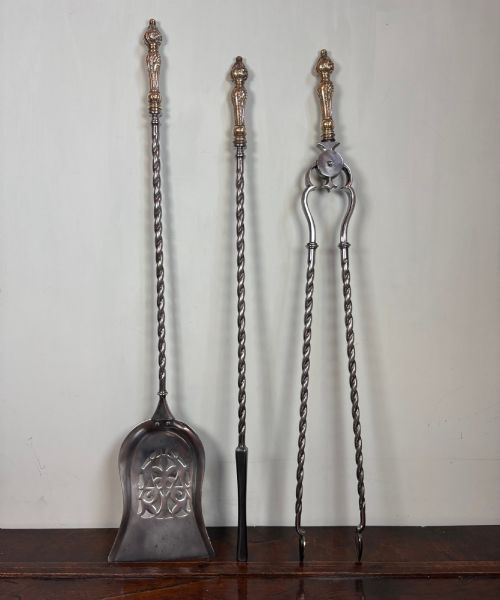
Fire tool sets generally comprise a shovel, tongs, and a poker, which were housed together near the hearth for managing the burning coal or wood.
The poker arranges the fuel, the tongs place new pieces on the fire, and the shovel clears ash from the grate.
Are these accessories suitable for modern fireplaces?
Many nineteenth-century accessories, such as brass fenders, coal bins, and tool sets, function effectively in modern domestic settings alongside open fires or wood-burning stoves.
Larger items like heavy andirons require adequately proportioned hearths to accommodate their dimensions and weight.