


19th Century Extension Table
A 19th century extension table brings adaptable scale and period character to dining rooms through clever mechanical leaves.
19th Century Extension Table
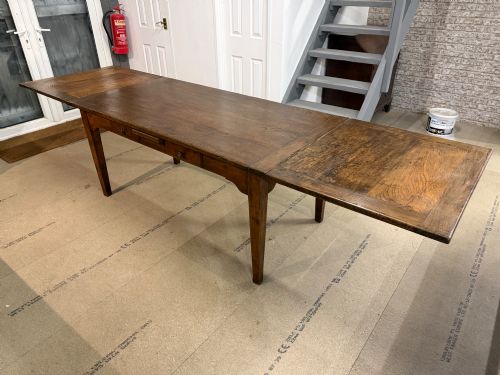
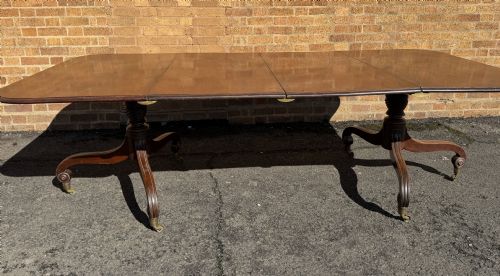
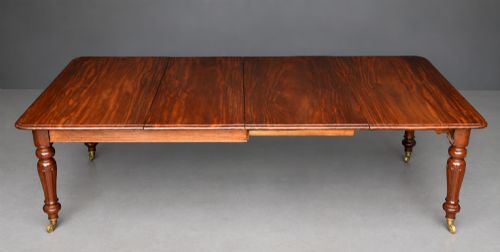
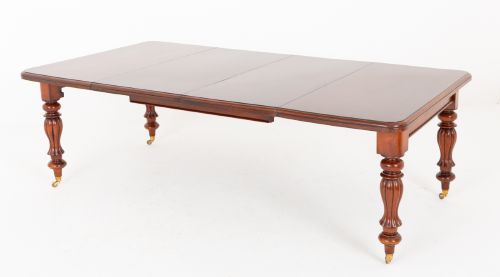
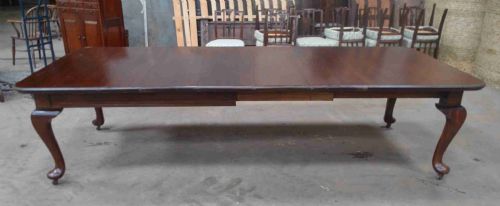
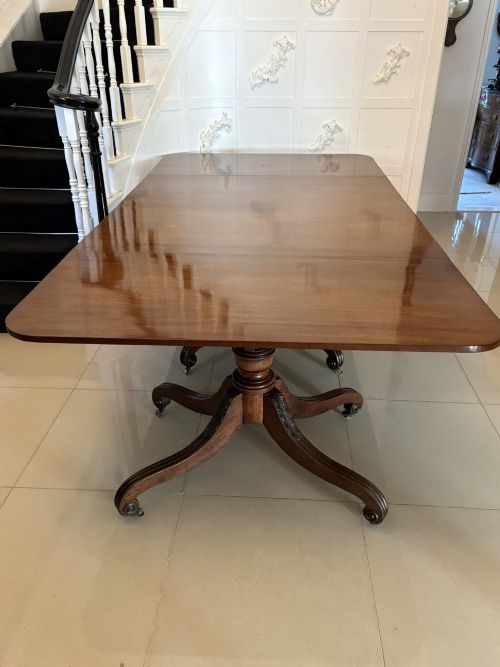
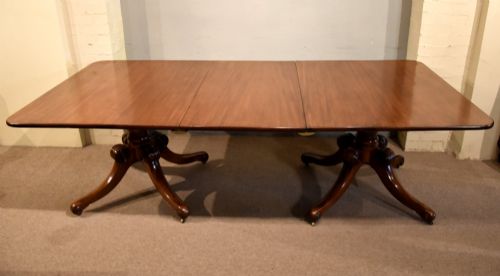
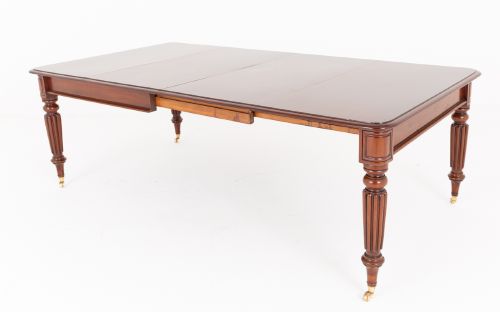
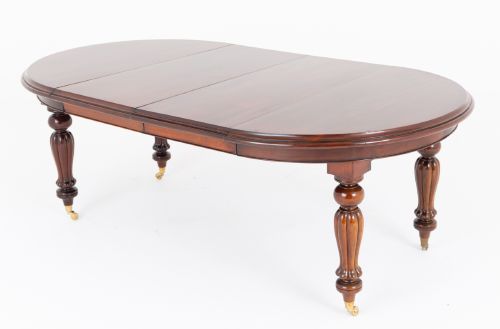
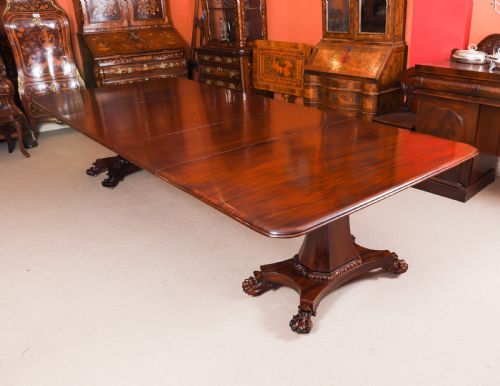
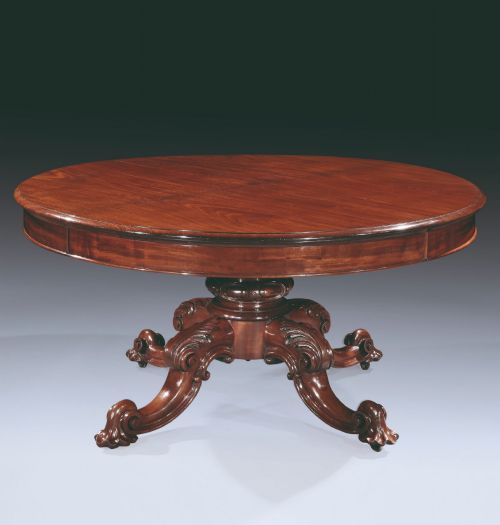
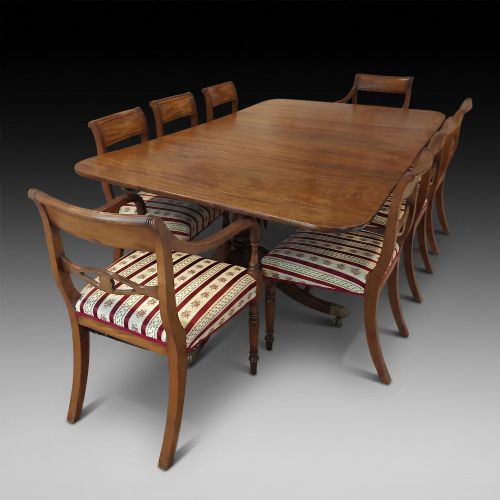
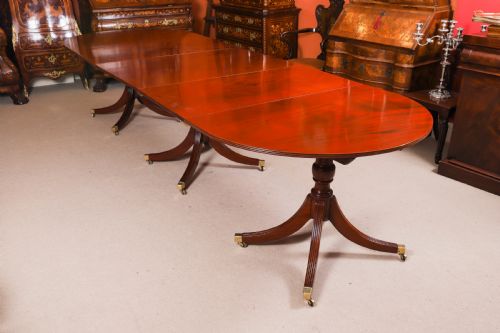
A 19th century extension table serves large gatherings by using leaves and mechanisms that expand the surface area. The pieces on this page appear primarily in mahogany, oak, and cherry wood, spanning the Georgian, Regency, William IV, and Victorian periods.
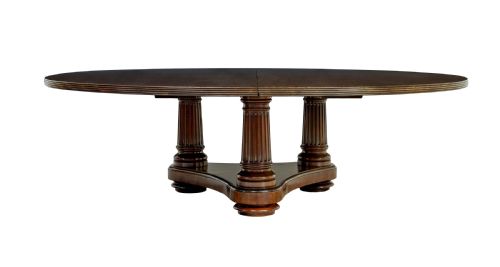
The twin-pillar and triple-pillar dining table forms dominate the selection, alongside draw leaf and wind-out dining tables. These designs reflect the changing social dining habits of the nineteenth century, where hosts needed flexible furniture for varying guest numbers.
Buyers frequently encounter mahogany dining suites and twin pedestal tables originating from the Regency and Victorian eras. These forms combine practical scale with traditional timber construction.
Distinctions in quality
The refinement of the mechanical action dictates the tier of craftsmanship, where smooth operation of leaves and wind-out screws separates workshop standards. Superior examples maintain stability across their full extended length without sagging.
Timber selection and grain matching across multiple leaves indicate the original maker's intent, with uniform colour and careful figure work marking out the finer pieces in the range.
Several dining tables include secret mechanisms that let families lengthen the room's social centrepiece with a simple crank handle.
Gillows
The 19th Century Extension Table Glossary
- Wind-out mechanism
- A mechanical system operated by a handle that expands the table frame to accept additional leaves. This internal screw action became popular during the nineteenth century.
- Twin-pillar
- A table base configuration featuring two central pedestals supporting the main top. This design allows generous legroom around the perimeter.
- Draw leaf
- An extension system where auxiliary leaves store beneath the main top and pull out from the ends. It provides rapid adjustment without separate leaf storage.
- Pollard oak
- Oak timber displaying a mottled or clustered grain pattern formed by pollarding the tree. Cabinet makers prized this wood for decorative veneering.
19th Century Extension Table: Frequently Asked Questions
How do wind-out tables operate?
A removable metal handle turns an internal screw mechanism that pulls the table halves apart. This reveals a gap where extra leaves drop into place before the mechanism closes to secure them.
Regular use requires gentle turning to keep the wooden tracks aligned and prevent binding within the frame.
Where were these tables used?
These dining tables stood in formal townhouses and country estates to accommodate large dinner parties and family meals. Their adjustable nature suited houses where hospitality scale changed frequently.
Daily service involved smaller configurations that expanded only when formal guests arrived.
How do I care for mahogany surfaces?
Mahogany requires consistent polishing with traditional beeswax to nourish the timber and maintain its rich colour. Direct sunlight should be avoided to prevent uneven fading across the main top and separate leaves.
Using mats protects the polished finish from heat and moisture during dining.
What defines a pillar table?
A pillar table rests on one or more central pedestals rather than traditional corner legs. This construction provides structural support while maximising seating capacity around the edges.
Multiple pillars appear on longer tables to distribute weight evenly across the floor.