


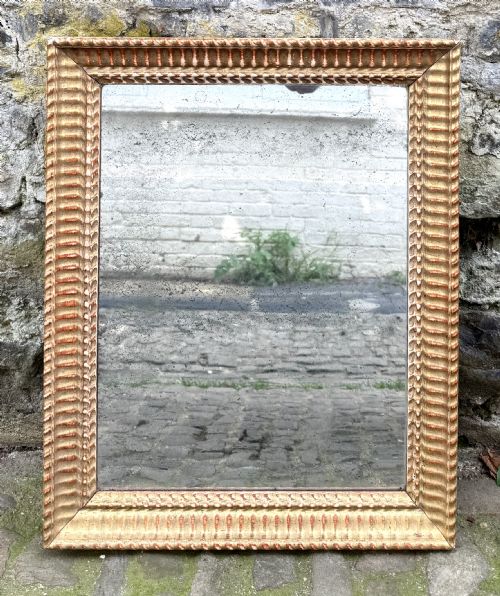


19th Century Empire Mirror
A 19th century empire mirror delivers classical symmetry and grandeur to a room, bringing architectural presence through polished wood and gleaming gilt surfaces.
19th Century Empire Mirror
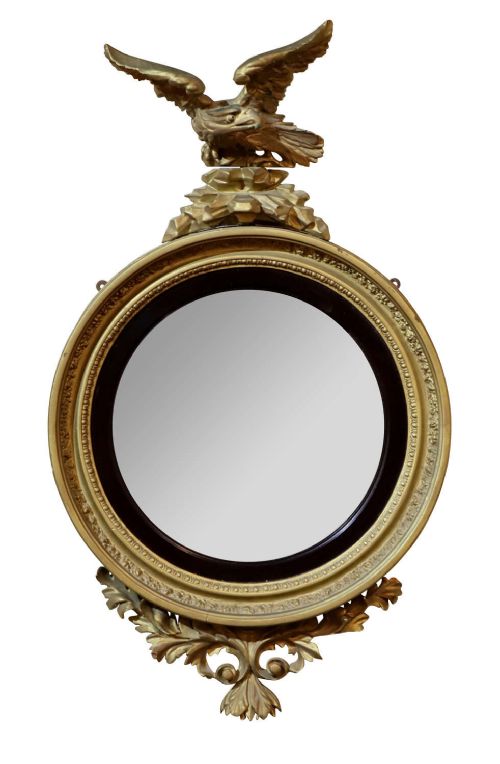
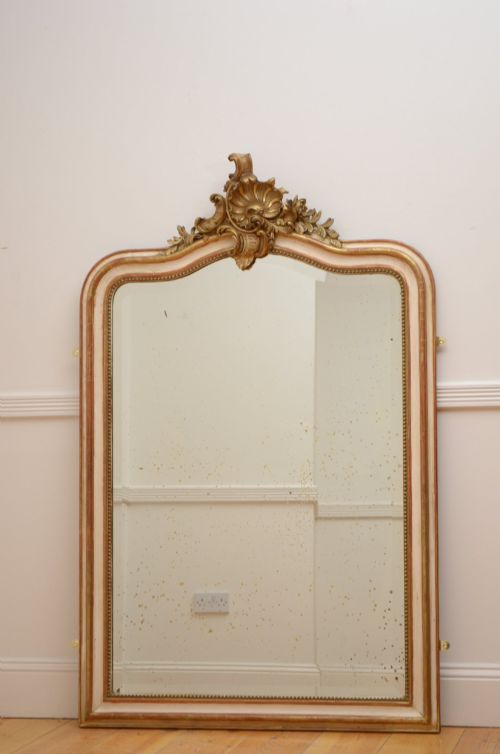
A 19th century empire mirror encompasses wall glasses, overmantels, pier mirrors, and dressing pieces shaped by French Empire, Regency, and Neoclassical design. These items originate across Britain, France, Sweden, and Denmark, reflecting broad continental taste.
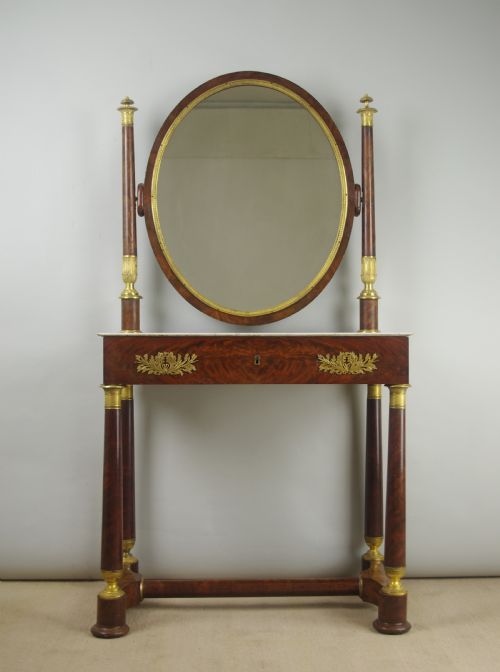
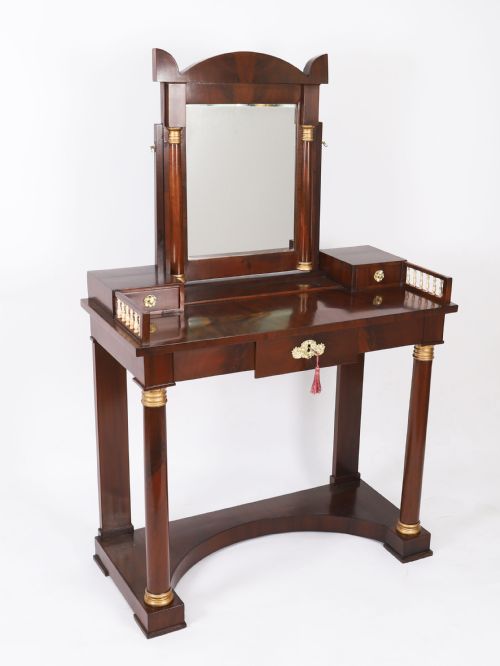
Wall mirrors and overmantels dominate the selection, frequently featuring architectural proportions, pilasters, and decorative panels. Dressing and cheval mirrors offer functional elegance with adjustable stands and mounted frames.
Pieces from this period frequently display revival styles alongside direct period work, incorporating Biedermeier and Napoleon III influences. Buyers encounter both large salon pieces and intimate toilet mirrors designed for table placement.
Materials and Construction
Makers utilised dense timbers including flame mahogany, burr walnut, birch, and ebonised wood to build sturdy carcases and frames. Giltwood and gesso provide reflective, ornate surfaces often enhanced with gold leaf.
Ormolu mounts, brass detailing, and bronze accents punctuate the wooden frames with classical cast motifs. Marble tops and faux marble finishes frequently complement the mirror structures on related console tables and dressing units.
Listings feature mahogany, birch, giltwood, gesso, and marble across wall, pier, and dressing table formats dating from the nineteenth century.
Craftsmanship and Proportion
The precision of carved wooden details and the crispness of ormolu cast mounts distinguish finer examples from simpler workshop output. Architectural elements such as columns, pediments, and eagles demand disciplined hand carving and balanced proportions.
The integrity of the original mercury or silvered glass plate contributes significantly to a piece's character, alongside the preservation of original gilding and polish on the timber frame.
The 19th Century Empire Mirror Glossary
- Ormolu
- Gilded bronze used for decorative mounts and furniture trim. This technique involves applying a gold amalgam to bronze before heating.
- Giltwood
- Timber carved and coated with gold leaf or powder. It provides a bright, reflective surface characteristic of classical frames.
- Pier Mirror
- A tall glass designed to hang on the wall between windows. These pieces often sit above console or pier tables.
- Trumeau
- A decorative wall mirror featuring an upper painted or carved panel. The panel often depicts pastoral or mythological scenes.
- Cheval Mirror
- A freestanding full-length dressing glass mounted on a pivoting frame. The dual pillars allow the mirror plate to tilt.
19th Century Empire Mirror: Frequently Asked Questions
Where should I hang an overmantel mirror?
An overmantel mirror traditionally rests directly above a fireplace mantelpiece to reflect light and anchor the hearth visually.
Ensure the wall fixings are secured safely into studs or masonry to support the substantial weight of the wooden frame and glass.
How do I care for giltwood frames?
Dust giltwood frames gently with a soft, dry brush to prevent damage to the delicate gold leaf surfaces.
Avoid using liquid cleaners, moisture, or chemical sprays, as these can strip the underlying gesso and historical finish.
What defines Biedermeier mirrors?
Biedermeier mirrors emphasise clean lines, domestic comfort, and the natural grain of timbers like birch and mahogany.
Ornamentation remains restrained compared to French Empire designs, focusing instead on timber selection and geometric harmony.
Are these mirrors suitable for bathrooms?
Original antique mirrors feature sensitive historic silvering and wood construction that suffer in high humidity environments.
Keep these pieces in dry living areas, hallways, or bedrooms to preserve the timber carcase and reflective glass plate.