


19th Century Earthenware Dogs
These 19th century earthenware dogs bring character to a mantelpiece, offering a tangible connection to Victorian domestic life.
19th Century Earthenware Dogs
When you search for 19th century earthenware dogs, you encounter ceramic figurines shaped as spaniels, poodles, greyhounds, and pugs. These decorative objects date from the Victorian period through to the late nineteenth century, capturing popular domestic animals of the era.
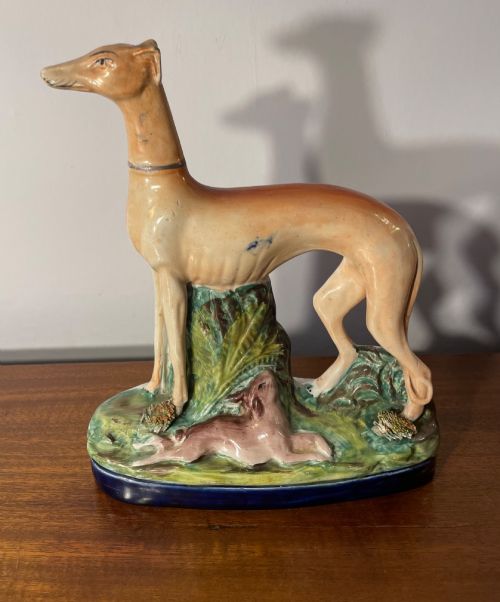
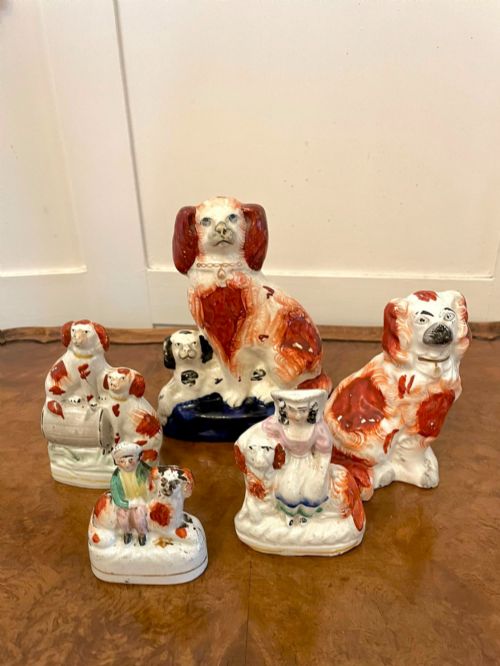
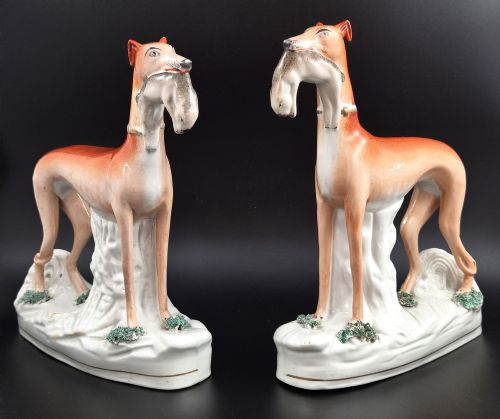
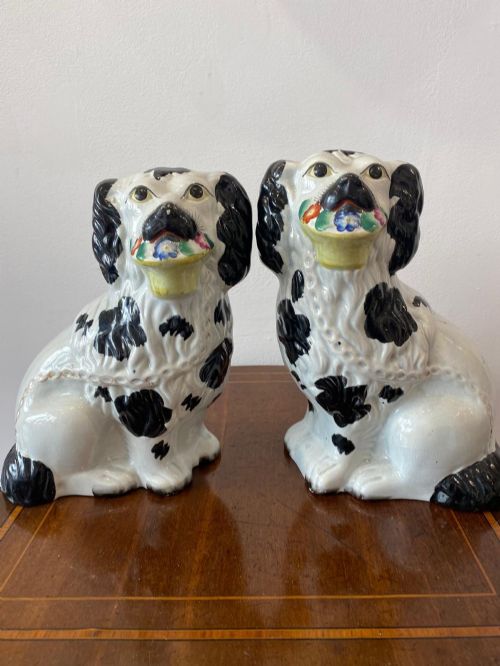
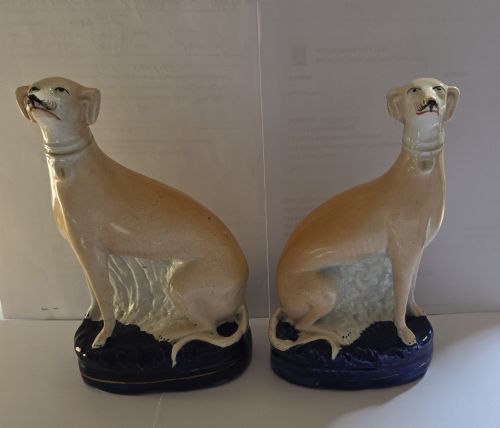
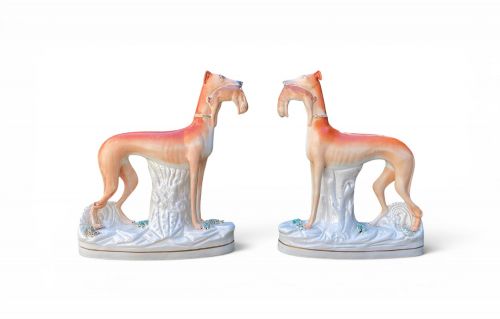
The most common examples on this page are matched pairs of seated spaniels and greyhounds, often modelled with gilt highlights or coloured enamel patches. Certain pieces include functional elements such as basket quill holders and clock groups, while others depict hunting dogs with hares.
Originating largely from English potteries, these figures span various decades from the Georgian transition through to the eighteen-nineties. Collectors find both single figures and elaborate groups involving multiple dogs or human handlers.
How they were made
Potters shaped these earthenware figures using ceramic clay, applying lead glaze to seal the surface and provide a smooth finish. Many pieces received hand-painted enamel details in colours like black, red, and copper lustre.
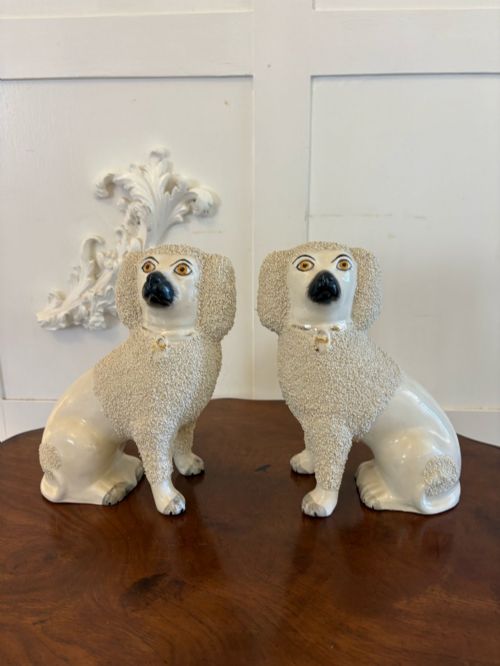
Several Staffordshire poodles wear curious textured coats made to resemble actual wool.
What varies in quality
Quality in these ceramic figures rests upon the crispness of the moulding and the precision of the hand-painted enamels. Superior examples display carefully defined facial expressions and well-preserved gilt details without excessive blurring.
The presence of original matched pairs rather than assembled companions elevates the standing of a piece within the field. Additional details such as textured woolly coats or complex figure groups indicate higher workshop ambition.
Thomas Parr
The 19th Century Earthenware Dogs Glossary
- Earthenware
- Porous pottery fired at lower temperatures than stoneware or porcelain. It serves as the primary body material for these nineteenth-century figures.
- Lead glaze
- A glossy coating containing lead oxide applied to pottery before a secondary firing. This finish gives the surface its characteristic shine and protects the coloured enamels beneath.
- Enamel
- Opaque coloured glass fused to the ceramic surface during firing. It provides the distinctive patches, eyes, and collars seen on the animals.
- Copper lustre
- A metallic glaze finish producing a reflective copper sheen. Potters applied this technique to create decorative coats on specific spaniels and poodles.
- Figure group
- A ceramic composition containing multiple subjects. These items often feature dogs accompanied by puppies, hares, or huntsmen.
19th Century Earthenware Dogs: Frequently Asked Questions
How were 19th century earthenware dogs displayed?
Victorians typically placed these ceramic figures in pairs upon mantelpieces, facing inwards towards the hearth. They also sat upon chests of drawers and side tables within the parlour.
Their symmetrical arrangement reflected interior design preferences of the era, where matching pairs brought balance to a room.
What dog breeds appear most often?
Spaniels and poodles dominate the selection, alongside greyhounds and whippets. Pugs, dalmatians, and various hunting dogs also appear across the inventory.
Spaniels frequently feature white coats with red or black patches, while greyhounds often appear in pairs with captured hares.
How do you date these ceramic dogs?
Dating relies upon stylistic markers, glaze types, and potting techniques characteristic of specific decades. Victorian pieces often display moulded details and enamel colours typical of the mid to late nineteenth century.
Earlier examples from the transition out of the Georgian period exhibit simpler modelling and different glaze compositions.
Did these figures serve a practical purpose?
Most functioned purely as decorative ornaments designed to enrich domestic spaces. However, certain specialised examples incorporated practical elements.
Pieces occasionally included integrated quill holders for writing desks or functioned as part of clock groups on mantelpieces.