





19th Century Dutch Table
These pieces for a 19th century dutch table bring rich fruitwood marquetry and solid walnut into a room.
19th Century Dutch Table
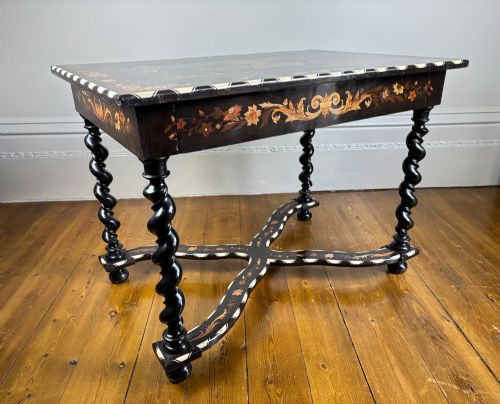
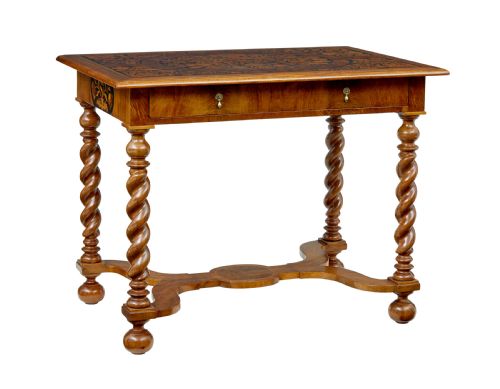
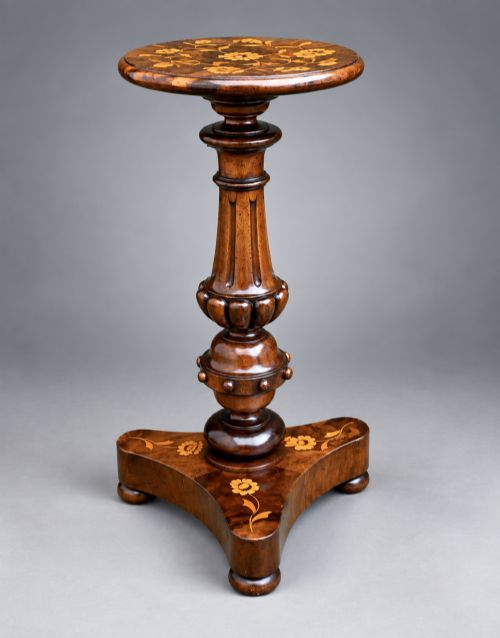
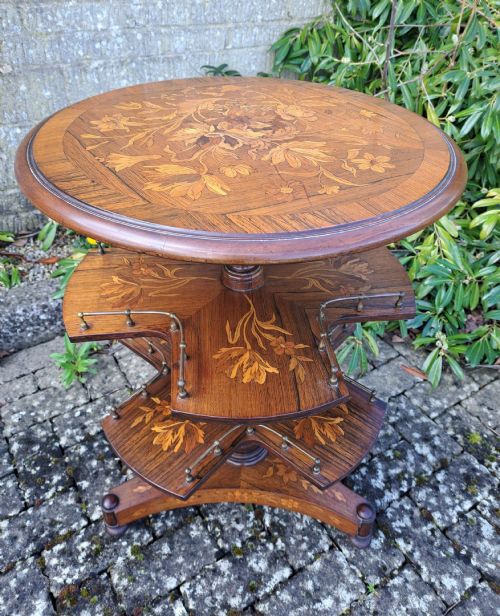
When you search for a 19th century dutch table, you encounter forms ranging from occasional tables and card tables to centre tables and dressing tables. The style is heavily defined by Dutch marquetry and floral marquetry, often executed in walnut or mahogany. You will frequently meet side tables and occasional pieces displaying detailed inlay work across the top surface.
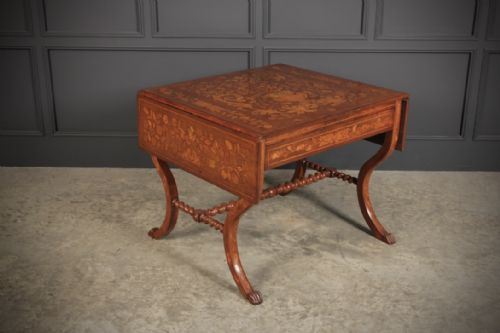
Beyond standard tables, the selection includes related forms like drop leaf tables, silver tables, and lowboys originating from the 19th century and the Georgian period. Many pieces incorporate specialised designs such as rotating mechanisms or folding card table tops. These items served functional domestic roles in European interiors while showcasing elaborate decorative woodcraft.
How they were made
Cabinet makers utilised solid woods like walnut, mahogany, and oak for the structural frames of these tables. Surfaces were then enriched through fruitwood inlay and fruitwood marquetry, creating intricate floral and pictorial patterns. Brass fittings and bone inlay occasionally supplemented the timber construction on specific examples.
The application of marquetry involved fitting thin veneers of contrasting tinted woods into pre-cut recesses to form elaborate floral arrangements or pictorial scenes. Construction techniques ranged from simple pegged joints in oak side tables to complex pivoting mechanisms found in card and library tables.
19th Century Dutch Table Retail Price Guide 2026
Typical asking prices for 19th century dutch table among the pieces listed under this phrase on Sellingantiques today, from the lower quarter to the upper quarter. They describe what is for sale here now, not the wider market.
Listings feature walnut, mahogany, oak, and fruitwood marquetry across side tables, card tables, and centre tables.
What varies in quality
The standard of a marquetry top depends on the crispness of the cutting and the variety of fruitwoods employed to achieve tonal shading. Simpler geometric inlay differs markedly from dense, pictorial floral arrangements that cover the entire surface of the table.
Structural timber selection also dictates the grade of the piece, with figured walnut and rich mahogany commanding greater visual depth than plain oak. The integration of functional elements, such as smooth-turning card table leaves or intact pivoting actions, separates standard workshop production from finer examples.
The 19th Century Dutch Table Glossary
- Marquetry
- Decorative veneer work applied to furniture surfaces in patterns or pictures using different coloured woods. It differs from inlay by covering the entire background rather than being set into recesses.
- Card table
- A folding table designed for playing cards, typically featuring a hinged top that opens to a baize-lined surface. Many examples from this period utilise rotating or swing-leg mechanisms.
- Centre table
- A freestanding table finished on all sides intended to stand away from walls in the middle of a room. These frequently exhibit elaborate marquetry decoration visible from any angle.
- Lowboy
- A small side table or dressing table featuring one or more rows of drawers beneath the work surface. They rest on relatively tall legs and appear in walnut or mahogany.
- Drop leaf table
- A table with a fixed central section and hinged flaps on either side that can be raised and supported. This allows the surface area to be adjusted according to space.
19th Century Dutch Table: Frequently Asked Questions
What is a dutch marquetry table?
A Dutch marquetry table is a wooden piece of furniture adorned with detailed wood veneer patterns, typically depicting floral arrangements, birds, or urns. These tables date predominantly to the 19th century and feature contrasting light and dark fruitwoods.
The technique covers the top surface and often extends down the aprons and legs. They were manufactured as centre tables, card tables, and occasional tables for formal domestic spaces.
How do I use an occasional table?
An occasional table is a small, moveable piece designed for specific, intermittent tasks around the living space. They suit corners, beside seating, or as display surfaces for lamps and decorative items.
Because many period examples feature delicate marquetry or folding tops, they work best holding lighter objects rather than heavy loads. Their compact proportions allow them to fit into tighter spaces than a full dining table.
Were these tables used for dining?
While certain larger oak and centre tables accommodated dining or general domestic work, most tables with intricate marquetry served decorative or social functions. Card tables, silver tables, and Pembroke or drop leaf variants were built for specific activities like gaming or serving tea.
Checking the internal mechanism and wood durability reveals whether a particular table was built for heavy daily use or lighter parlour pursuits.
How do I distinguish walnut from mahogany?
Walnut typically displays a rich, varied grain with lighter golden-brown tones and dark figuring. Mahogany generally presents a deeper reddish-brown hue with a straighter, more uniform grain structure.
Both timbers were widely used by 19th-century cabinet makers, often paired with contrasting fruitwood marquetry. Examining the underside or interior unvarnished areas helps confirm the primary timber.