

19th Century Dog Painting
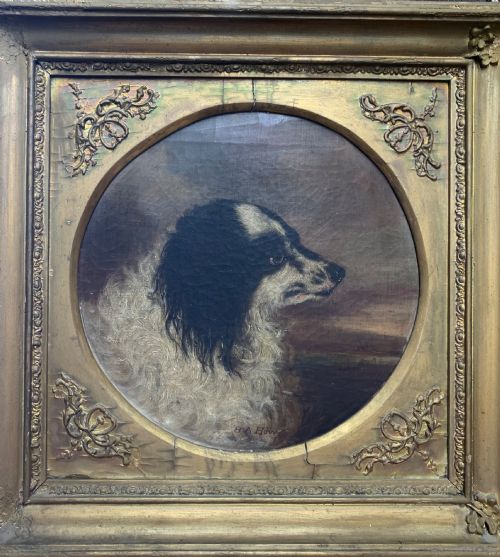
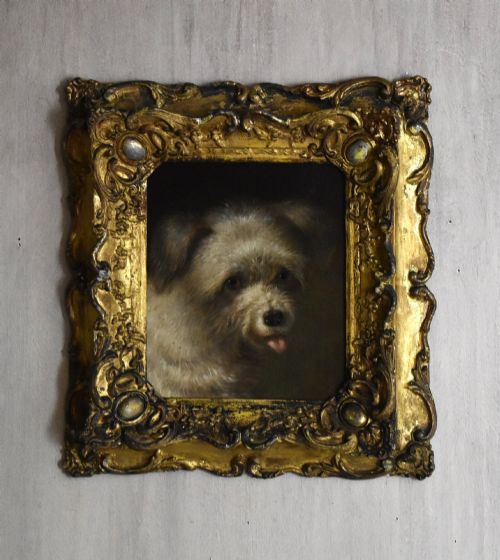
This selection of 19th century dog painting offers framed oil portraits and watercolours of spaniels, collies, and terriers for collectors of historic animal art.
19th Century Dog Painting
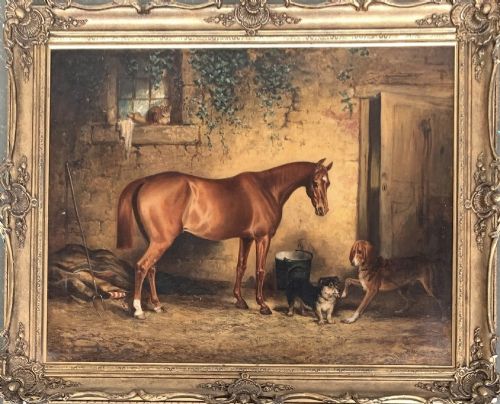
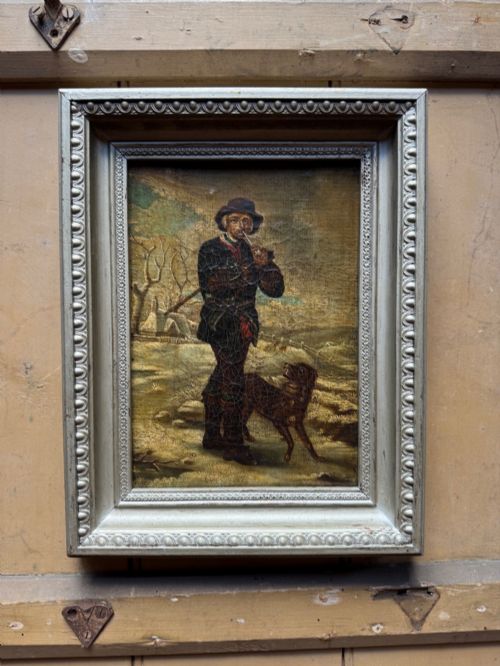
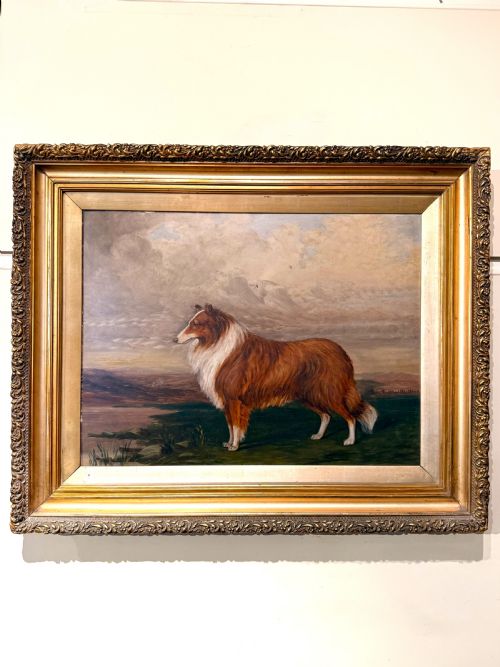
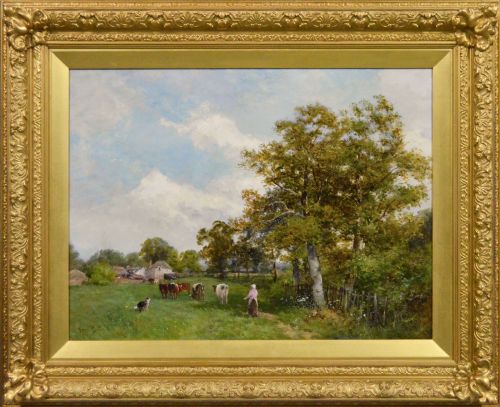
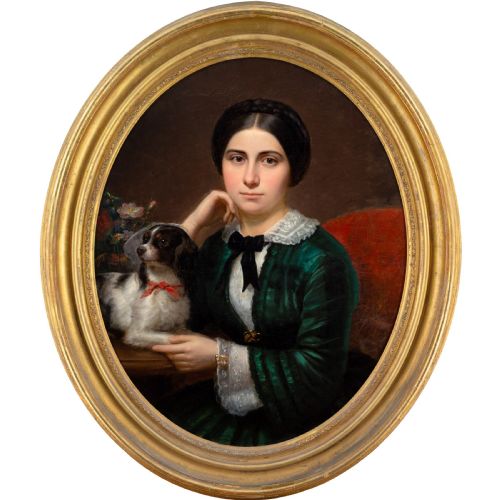
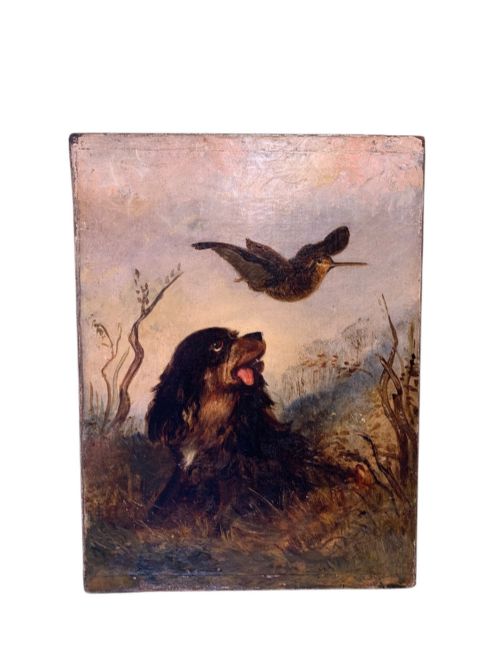
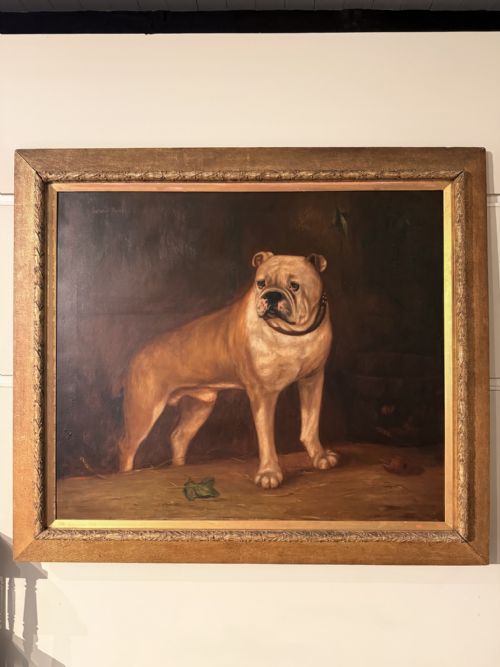
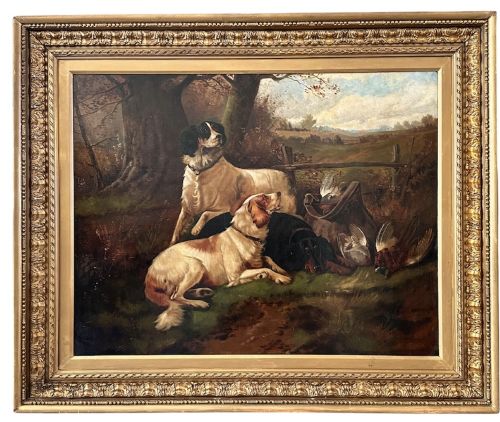
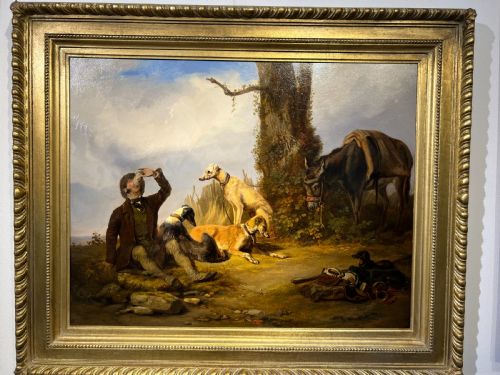
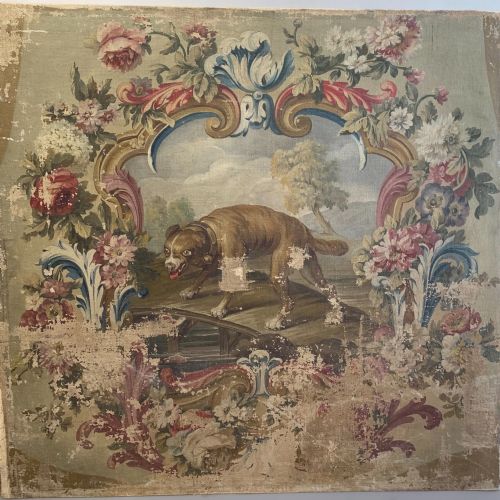
A 19th century dog painting captures individual animals, from working gun dogs and collies to beloved family pets, rendered in oil on canvas, board, or watercolour. These works span the Regency period through the late Victorian era, reflecting both formal fine art traditions and naive folk art expressions.
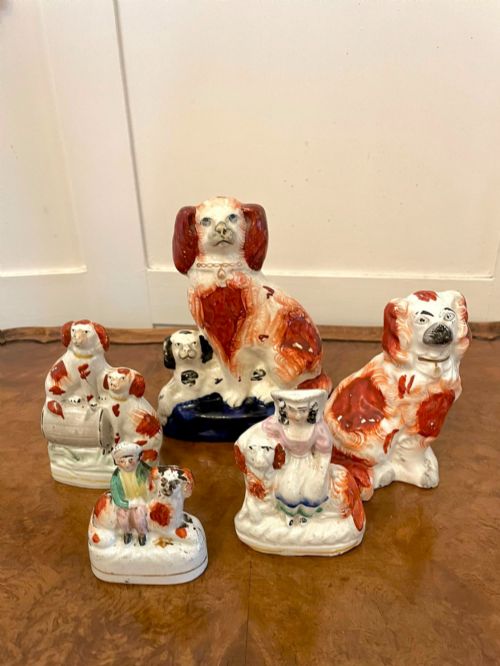
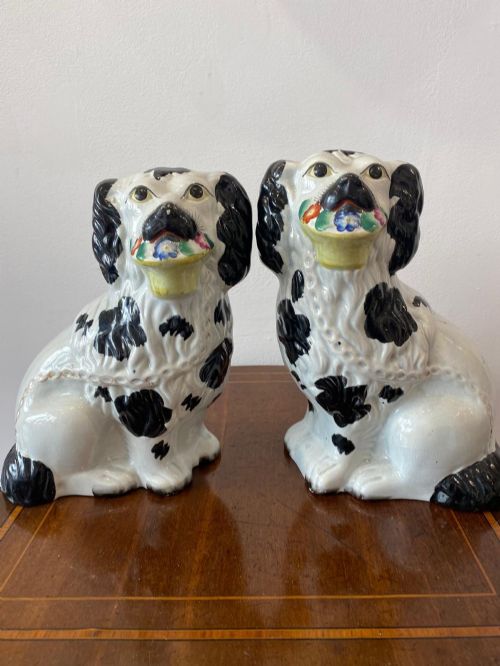
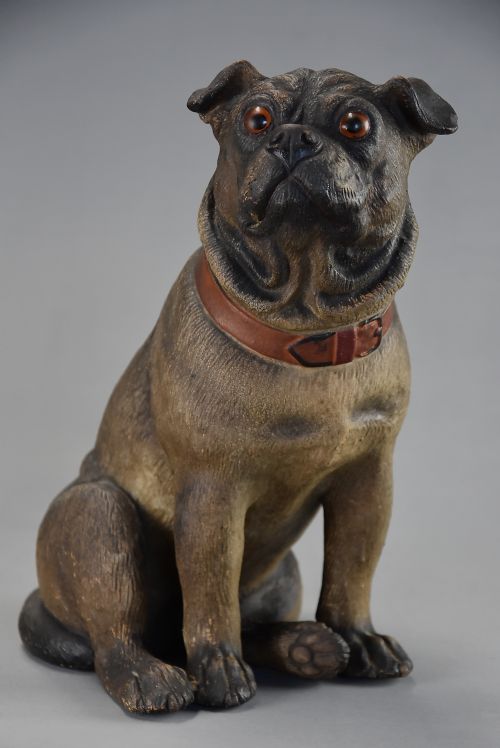
The primary forms on this page include solo canine portraits in landscapes, sporting art depicting hounds with game, and ceramic Staffordshire dog figures displayed alongside painted works. Subjects range from named working dogs and gundogs with a day's bag to domestic pets posed inside stables or homes.
How They Were Made
Artists painted primarily with oil paint onto stretched canvas, wood panels, or artist palettes, using fine brushes to capture the texture of a retriever, spaniel, or terrier coat. Watercolours on paper also appear, alongside moulded earthenware and terracotta bodies fired and painted for ceramic figures.
Giltwood and gilded frames complement many of the oil paintings, providing an ornate period border that preserves the canvas and enhances the display of the artwork.
What Varies in Quality
The ability of the painter to render canine anatomy, light across a coat, and a convincing sense of character separates standard portraits from works by accomplished academic artists. Compositional depth, such as detailed pastoral or moorland backgrounds behind the animal, elevates the visual interest of a piece.
The preservation of the original surface, stability of the canvas, and condition of the period gilt frame contribute significantly to the standing of any individual painting.
Henry Barraud·Valentine T Garland·David Bates·Martin Theodore Ward·John Sargent Noble·Sir Edwin Henry Landseer·C R Breytle·John Emms·John Frederick Herring Senior·Thomas Hicks·William Barraud·Samuel Raven·John Trivett Nettleship·James Clark·George Wright·Henry Bernard Chalon·Colin Graeme Roe·Jan Fyt·John Morris·K Barnard·S A Doidge·S T Dadd·William Mulready
The 19th Century Dog Painting Glossary
- Canvas
- A heavy woven fabric stretched across a wooden frame to serve as a support for oil paintings.
- Giltwood
- Wood carved and coated with gold leaf or metallic paint, commonly used for period picture frames.
- Naive art
- Artwork created by a self-taught artist with a flat perspective and simplified proportions, often seen in folk art pieces.
- Watercolour
- A paint made with water-soluble pigments, applied to paper to create delicate landscape and portrait studies.
- Staffordshire figure
- A hollow earthenware ceramic ornament moulded and hand-painted to depict seated spaniels and other animals.
19th Century Dog Painting: Frequently Asked Questions
What subjects appear in these paintings?
Canine subjects include gun dogs, collies, terriers, spaniels, and hounds, often shown outdoors in landscapes, moorlands, or within domestic and stable settings.
Many works portray specific named animals belonging to notable owners or record the daily activities of working dogs alongside horses and handlers.
How do I identify the period of a painting?
Stylistic clues such as costume, framing materials, and artist signatures help date a work, alongside written inscriptions or labels on the reverse of the canvas.
Victorian and Regency pieces often carry specific framing techniques and pigment use characteristic of nineteenth-century British and European schools.
Where were these paintings displayed originally?
Historic dog portraits hung primarily in country houses, estate libraries, and sporting lodges to celebrate prized working animals and family pets.
Smaller watercolours and Staffordshire ceramic figures decorated domestic drawing rooms and mantelpieces across Britain.
How should I care for an oil painting?
Keep painted works away from direct sunlight and fluctuating humidity to protect the canvas, oil pigments, and wooden stretcher bars.
Dust the surface gently with a soft dry cloth and avoid applying liquid cleaners to either the canvas or the gilt frame.