


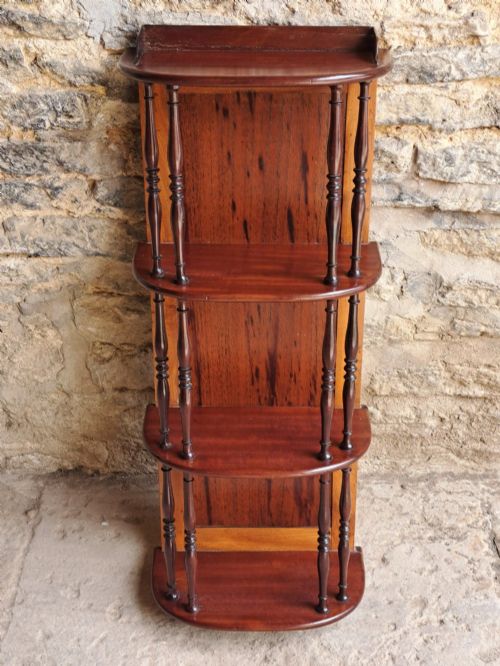
19th Century Display Shelves
19th century display shelves bring order and warmth to a room through timber and glass.
19th Century Display Shelves
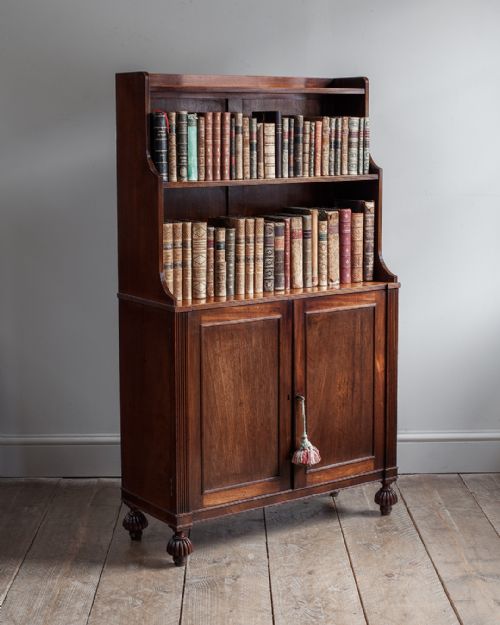
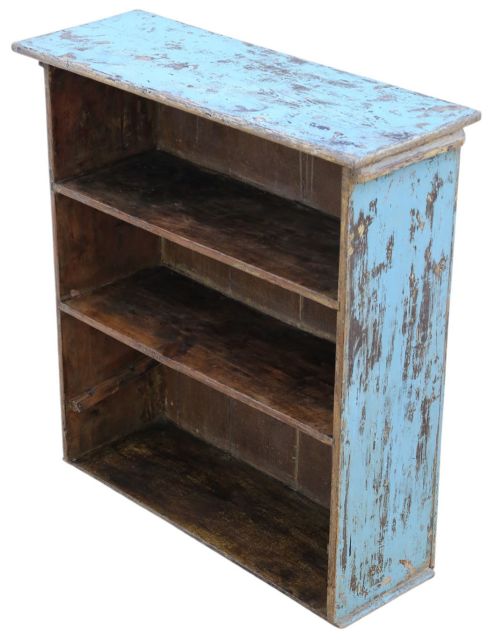
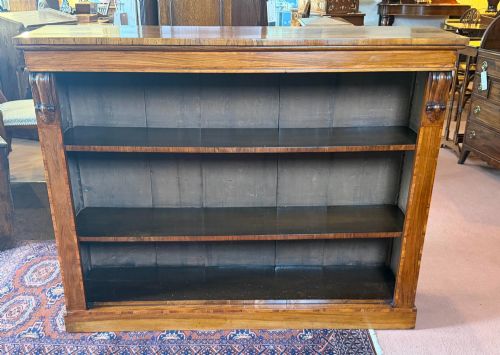
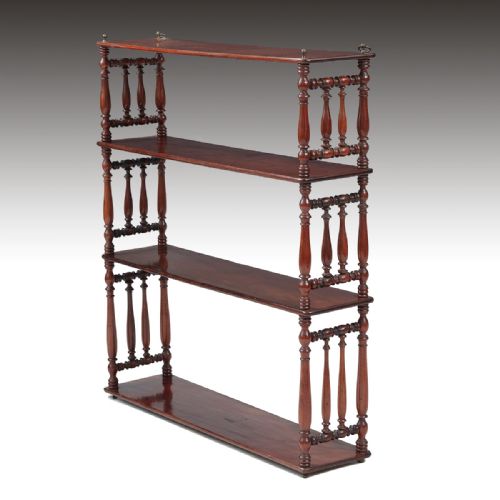
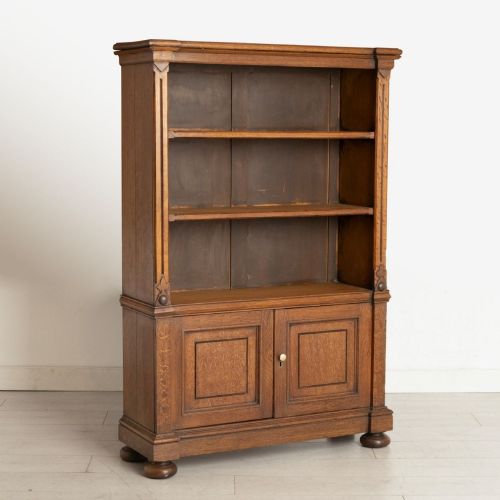
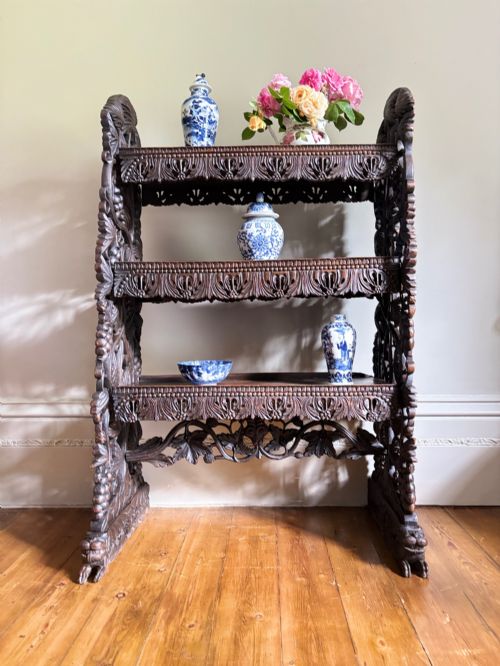
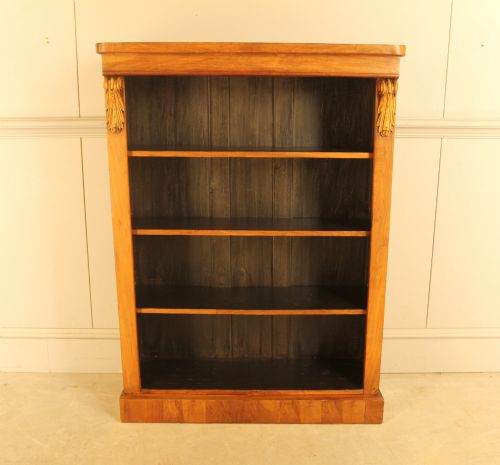
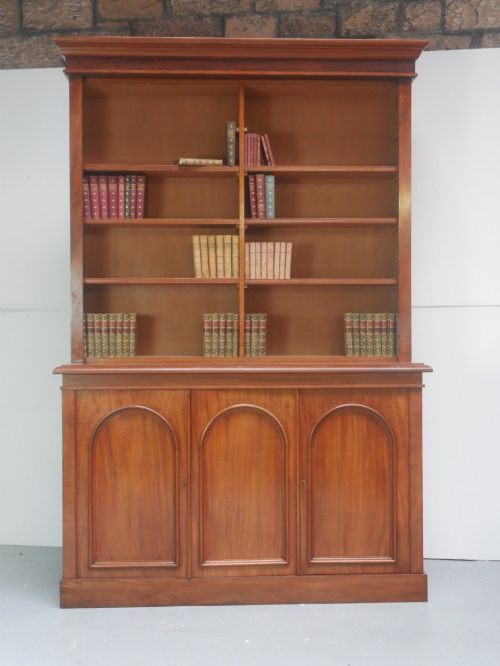
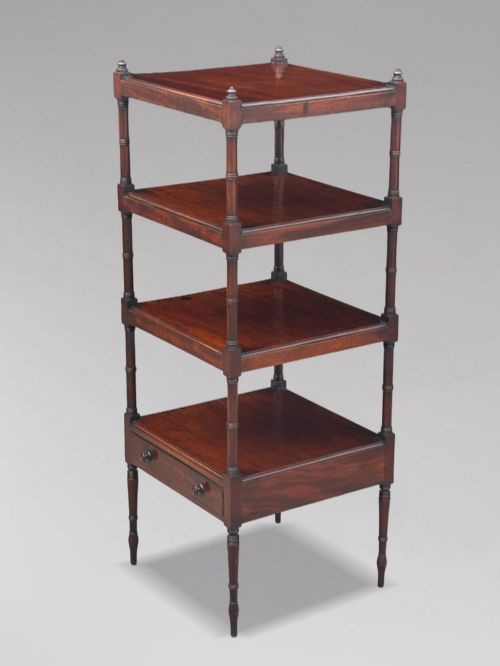
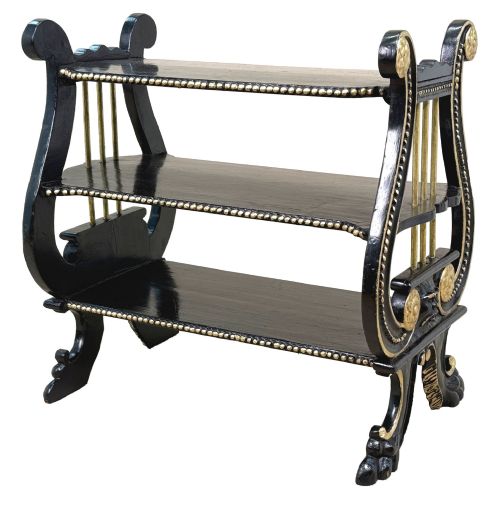
When searching for 19th century display shelves, buyers encounter a wide variety of furniture designed to exhibit and organise books, ceramics, and ornaments. These pieces range from compact wall-mounted units and tiered etageres to substantial open bookcases and glazed cabinets.
The selections span distinct historical styles including Regency, Victorian, William IV, and Anglo-Indian designs. Pieces originate from diverse workshops across Britain, France, and beyond, utilising regional woods and decorative motifs peculiar to their origin.
Wall shelves and hanging compartments offer practical storage without claiming floor space, while larger open bookcases and credenzas anchor a room's main living areas. This variety ensures that options exist for both intimate corners and expansive libraries.
Materials and Construction
Cabinetmakers of the period relied heavily on dense hardwoods such as mahogany, walnut, rosewood, and oak for structural integrity and refined grain patterns. Burr walnut and padauk appear on more ambitious items, adding rich surface figure and deep natural colour.
Secondary materials like brass, ormolu mounts, glass, and wrought iron provide structural contrast and functional glazing. Joinery techniques such as dovetailed boards and turned legs demonstrate the high standard of construction typical of nineteenth-century workshops.
Listings feature woods such as mahogany, walnut, rosewood, oak, and burr walnut across various nineteenth-century forms.
Judging Quality and Craftsmanship
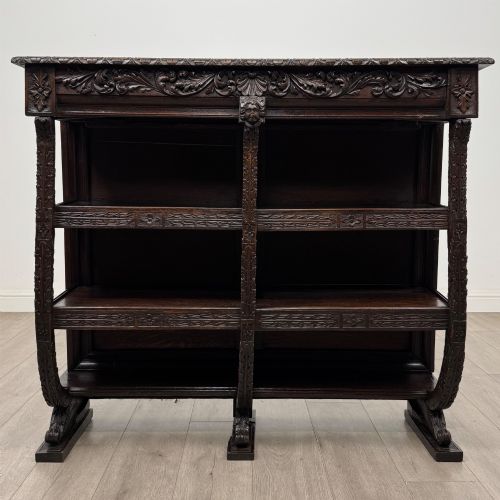
The standard of carving and the selection of timber veneers set finer examples apart from ordinary utility pieces. Richly figured burr walnut, intricate hand-carved details, and integrated ormolu mounts signal superior workshop execution.
Practical refinements such as adjustable shelving mechanisms and sturdy brass fittings demonstrate careful original design. The balance of proportions and the integrity of the secondary woods further distinguish master cabinetwork from simpler regional production.
Gabriel Viardot·Gillows
The 19th Century Display Shelves Glossary
- Étagère
- A piece of furniture consisting of open shelves for displaying small objects or ornaments. These tiered stands were especially popular during the Victorian period.
- Credenza
- A low cabinet or sideboard often fitted with glass doors or open shelving for display. They frequently incorporated decorative ormolu mounts and fine wood veneers.
- Waterfall bookcase
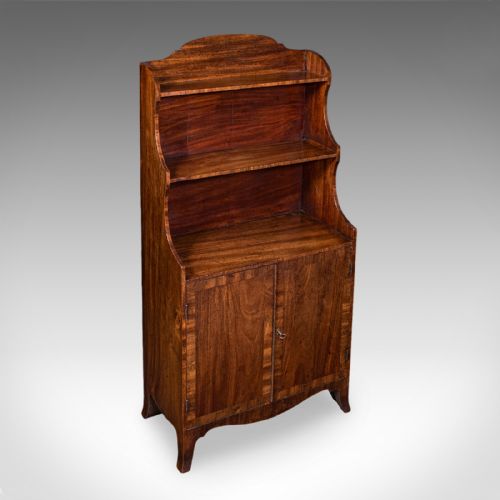
- A set of open shelves where each tier is successively deeper than the one above, creating a stepped profile. This form dates back to the Regency and Victorian eras.
- Whatnot
- A multi-tiered piece of furniture used for storing or displaying books, china, or ornaments. They were produced in various woods throughout the nineteenth century.
- Ormolu
- Gilded bronze used for decorative mounts and furniture trim. It added metallic contrast to dark hardwoods like mahogany and rosewood.
19th Century Display Shelves: Frequently Asked Questions
How do I choose the right size?
Measure your available wall space and floor area carefully before selecting a unit. Wall shelves suit compact rooms, while large open bookcases require ample clearance.
Consider the depth of the shelves in relation to the items you plan to display. Adjustable shelving offers flexibility for books and objects of varying heights.
Are these shelves suitable for heavy books?
Solid hardwood bookcases in oak, mahogany, or walnut provide robust support for extensive libraries. Sturdy construction and sound joinery ensure the shelves bear significant weight without sagging.
Lighter etageres and wall-mounted hanging shelves are better suited for decorative objects, ceramics, and lighter volumes rather than heavy folios.
How do I care for nineteenth-century wood?
Dust the timber regularly with a soft, dry cloth to prevent accumulation. Avoid placing antique furniture in direct sunlight or near heat sources to protect the wood and veneer.
Apply a suitable beeswax periodically to nourish the surface and maintain the natural lustre of the polish. Keep indoor humidity stable to prevent timber movement.
How can I tell the period?
Examine the timber selection, construction methods, and decorative motifs for clues to the date. Regency pieces often feature clean neoclassical lines, whereas Victorian items showcase heavier carved ornament.
Hardware, joint types, and secondary woods help confirm the era of manufacture. Consulting makers' stamps or labels, when present, provides definitive origin.