




19th Century Cutlery Box
These 19th century cutlery box examples keep silver and steel tidy with proper historical character.
19th Century Cutlery Box
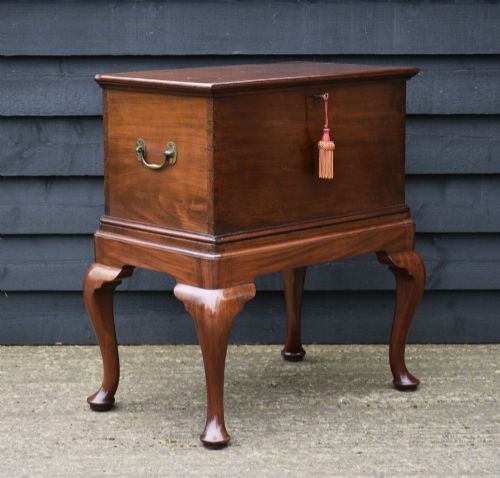
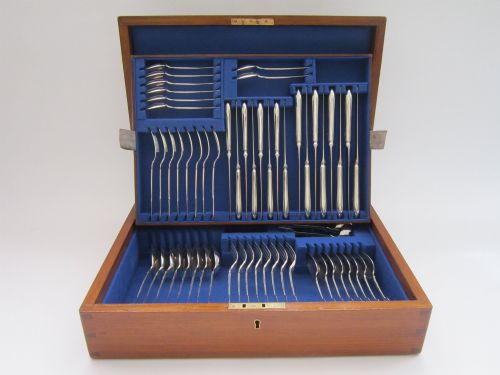
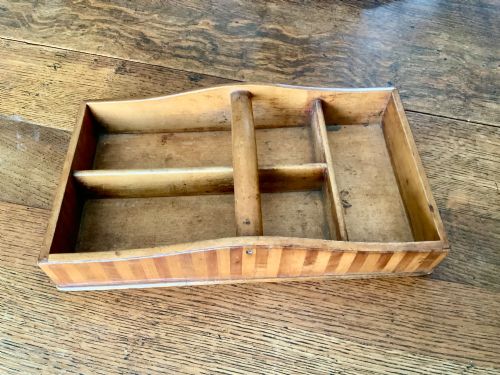
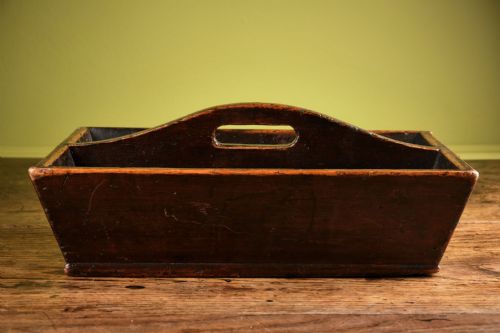
A 19th century cutlery box serves to house flatware and kitchen knives with dedicated compartments. You will most frequently meet mahogany and pine versions across this selection, spanning simple country trays to fitted chests.
The objects range from wall-hanging kitchen knife boxes to campaign travel trunks and tabletop spoon boxes. They reflect the domestic dining habits and service needs of the period through practical timber construction.
How they were made
Joinery relies on sturdy timbers like mahogany, oak, and pine, often lined with velvet for delicate silver service. Brass fittings provide secure hinges and carrying handles for portable chests.
Makers utilised local woods suited to the regional workshop style, whether French Third Republic refinement or Scandinavian rustic country simplicity. Iron and steel components reinforce functional areas.
Periods represented span from the 18th century through Georgian, Victorian, and 1880s French and Scandinavian workshops.
What varies in quality
The distinction between standard utility items and finer pieces lies in the choice of cabinet timber and interior velvet fitting. Finer boxes display deliberate grain selection and careful brass mounting rather than rough utilitarian nailing.
Proportion and original surface treatment determine the visual strength of a piece. Retaining original paint or polished timber surfaces elevates the integrity of the object significantly.
The 19th Century Cutlery Box Glossary
- Campaign chest
- A portable trunk or box designed for travel, typically fitted with flush brass handles and corner brackets to withstand transit.
- Fiddle pattern
- A traditional nineteenth-century flatware handle shape widening gracefully near the end, resembling a stringed instrument.
- Cutlery tray
- An open wooden receptacle with internal dividers, made for holding knives, forks, and spoons during dining service.
- Tortoiseshell
- A decorative material derived from sea turtle shell, applied in thin panels to wooden core boxes for high-status small items.
19th Century Cutlery Box: Frequently Asked Questions
What were these boxes used for?
These boxes stored and transported flatware, serving knives, and spoons safely within the home or on travels. They kept metalware organised and protected from tarnishing elements.
Different forms served specific domestic spaces, from kitchen hanging boxes for daily knives to mahogany chests for formal dining silver.
How do I tell Georgian from Victorian boxes?
Georgian pieces often emphasise clean classical proportions in dense mahogany, whilst Victorian examples introduce broader stylistic revivals and varied timbers.
Examination of the brass hardware, internal linings, and construction methods helps clarify the specific nineteenth-century decade of production.
Where should I place a cutlery box at home?
Tabletop boxes sit well on sideboards or dining room tables to hold everyday napkins or modern cutlery collections. Hanging knife boxes attach securely to kitchen or pantry walls.
Larger trunks function effectively as coffee tables or blanket storage while displaying their brass mounts.
Why do some boxes feature velvet linings?
Velvet protected sterling silver and mother-of-pearl cutlery from scratching against the wooden interior during storage and transport. It added a layer of refinement suited to formal dining services.
Original fabric also dampens sound when closing the lid over heavy metal flatware.