

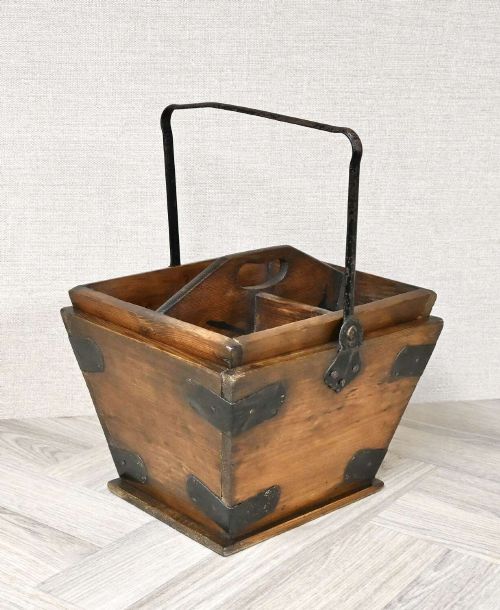
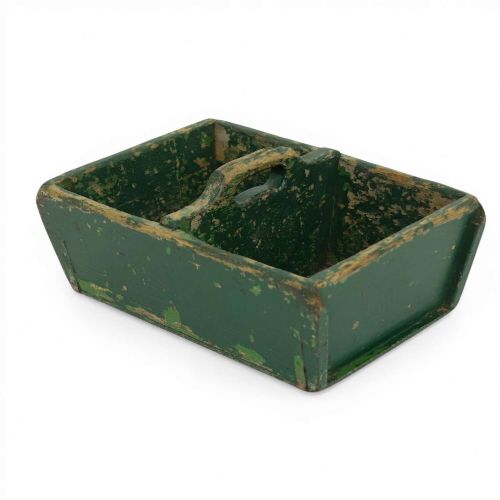

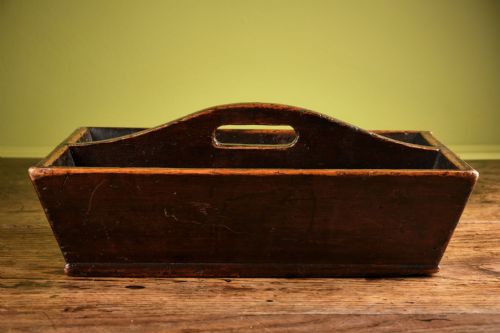


Rustic Wooden Caddy
A rustic wooden caddy brings honest texture and utilitarian warmth to an interior, shaped by generations of practical daily labour.
Rustic Wooden Caddy
When you search for a rustic wooden caddy, you encounter an assortment of utilitarian vessels designed for storage and carrying. These objects range from cutlery boxes and kitchen work boxes to garden trugs, butter tubs, and spice boxes. The selection reflects the daily domestic and agricultural needs of past centuries.
You are most likely to meet 19th-century pieces, including Victorian examples and items from the Edwardian period, alongside occasional Georgian work. Oak and pine dominate the forms, supplemented by hardwoods and iron hardware. Welsh vernacular and Scandinavian country styles appear frequently among the listings.
The regional variety is wide, spanning English country items, Welsh folk art, Black Forest carving, and colonial Indian spice boxes. Each piece retains the marks of its original purpose, whether that is carrying cutlery, holding butter, or gathering truffles.
Materials and construction methods
Maker construction relies heavily on native timbers such as oak, pine, and assorted hardwoods, selected for local availability and utility. Coopered vessels utilise staves bound with iron, while trays and boxes depend on solid plank construction and dovetail joints. Surfaces often display original paint or rich patination developed through decades of handling.
Hand-carved details appear on spice boxes and decorative vessels, showing straightforward gouge and knife work. Iron brackets, brass fixings, and swing handles provide structural reinforcement for items subjected to heavy outdoor or kitchen labour.
Rustic Wooden Caddy Retail Price Guide 2026
Typical asking prices for rustic wooden caddy among the pieces listed under this phrase on Sellingantiques today, from the lower quarter to the upper quarter. They describe what is for sale here now, not the wider market.
A truffle collecting trrug requires a keen nose, but the oak box simply holds the harvest.
Separating the ordinary from the exceptional
Quality in a rustic wooden caddy rests on the integrity of the joinery and the honesty of the surface wear. Superior examples display thoughtful proportions, such as the boldly-shaped profile of a Georgian tray, rather than purely functional utility. The presence of original paint or untouched patination elevates an object beyond standard workshop output.
The distinction also lies in regional character and decorative ambition, seen in crisp hand-carving or robust coopered assembly. Pieces that retain their original iron or brass hardware without later replacement hold greater integrity for collectors.
The Rustic Wooden Caddy Glossary
- Coopered
- Constructed from curved wooden staves fitted together edge-to-edge, traditionally held in place by metal hoops. This technique was essential for water-tight buckets and tubs.
- Vernacular
- Objects designed and built by local craftsmen to satisfy practical daily needs without high-style academic design. Welsh vernacular pieces often display distinct regional joinery.
- Treen
- Small handmade wooden domestic objects, ranging from spoons and bowls to boxes and trays. These items were shaped for everyday use in the kitchen and parlour.
- Trug
- A shallow container or basket traditionally used for gathering garden produce, flowers, or truffles. They are constructed from split wood or solid staves with a fixed handle.
- Patina
- The deep surface sheen and colour acquired by wood and metal over years of handling, polishing, and environmental exposure. It acts as a visual indicator of age.
Rustic Wooden Caddy: Frequently Asked Questions
What is a rustic wooden caddy used for?
These pieces served practical daily functions in homes, workshops, and gardens. They carried cutlery, sorted kitchen implements, held spices, or transported garden produce.
Today, they adapt easily to modern interiors for organising small items or displaying dried botanicals.
How do I date a wooden caddy?
Dating relies on identifying timber species, construction methods like hand-cut nails or dovetails, and tool marks left on the wood. Style indicators and regional traits also provide clues to the decade of origin.
Comparative analysis with documented vernacular pieces helps narrow down the period.
Are painted finishes original?
Original painted surfaces display genuine wear, craquelure, and layers of accumulated dust that match the age of the timber. Pigments were typically lead- or oil-based mixes suited for harsh domestic environments.
Later overpainting often obscures the sharper details and feels flat compared to historic layers.
How should I clean my caddy?
Maintenance requires only a soft, dry cloth to remove dust from the grain and crevices. Avoid water, harsh detergents, or modern polishes that can strip the historic patination.
Applying microcrystalline wax sparingly helps protect dry pine or oak surfaces.