


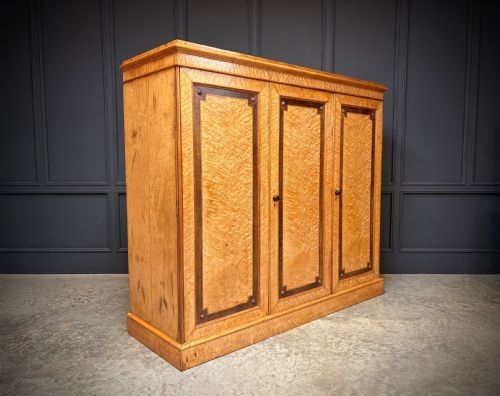
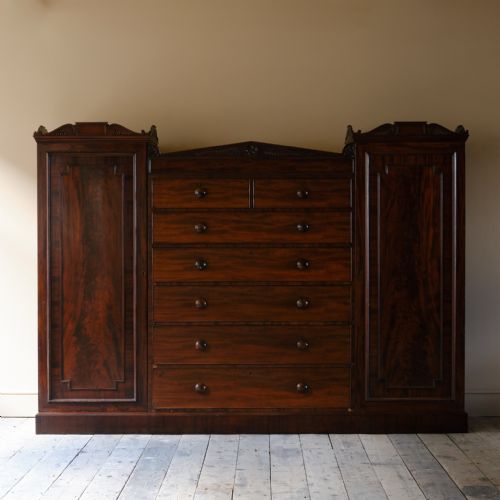


19th Century Compactum Wardrobe
A 19th century compactum wardrobe offers fitted storage combining hanging space and drawers, prized for organising clothes efficiently in period bedrooms.
19th Century Compactum Wardrobe
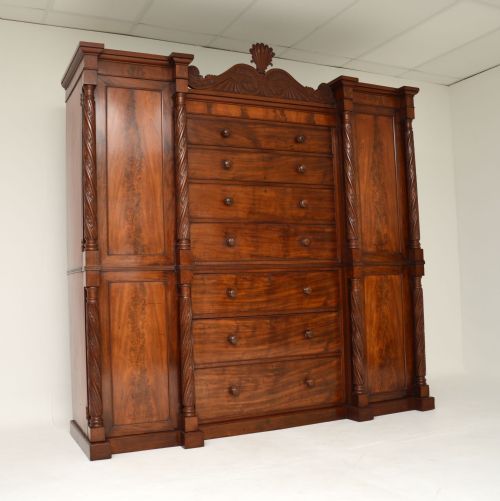
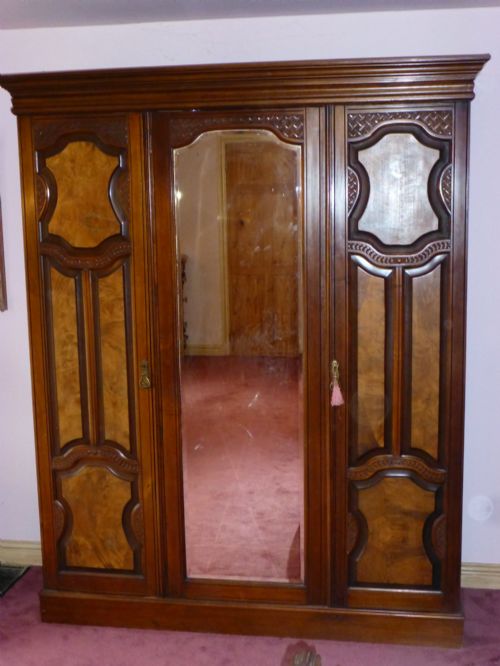
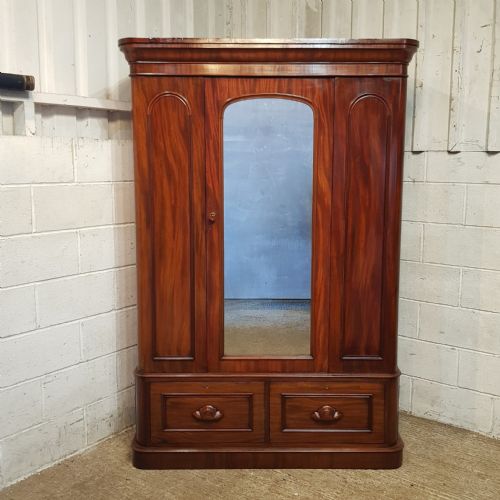
A 19th century compactum wardrobe brings together hanging sections, linen slides and internal drawers within a single architectural frame. These large storage pieces span periods from the Georgian era through William IV and the Victorian decades, reflecting shifting domestic requirements.
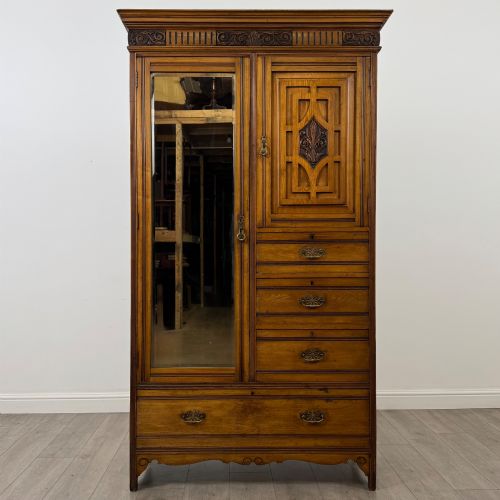
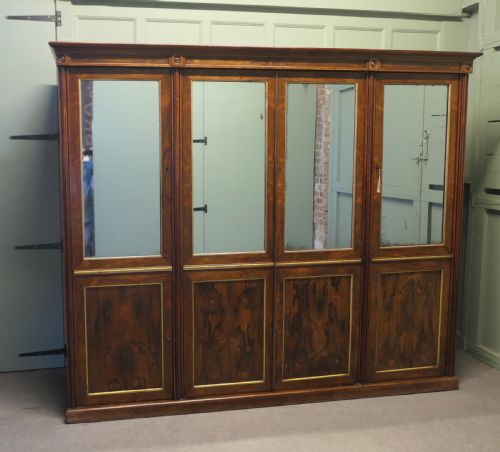
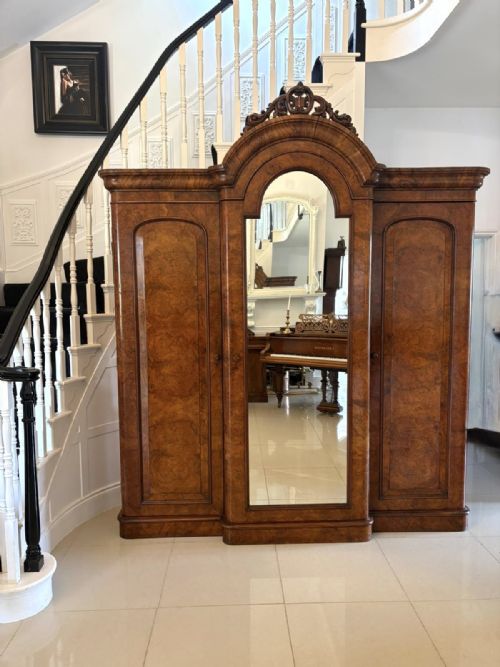
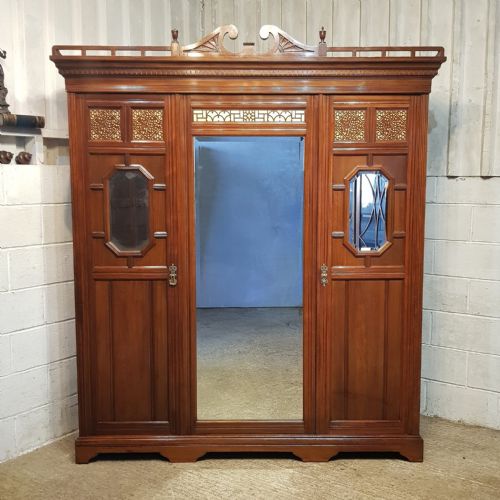
Mahogany and walnut predominate, often finished with flame veneers or burr figuring, alongside examples executed in ash, satin birch, oak and rosewood. Formats range from two-door models to expansive triple and breakfront configurations incorporating mirrored doors.
Design influences vary across the century, moving from classical Regency proportions through robust mid-Victorian joinery to late Victorian Sheraton Revival inlay and Aesthetic Movement simplicity.
Materials and construction
Cabinetmakers constructed these wardrobes using solid pine and oak carcases faced with choice timbers such as flame mahogany veneer, burr walnut, figured birch and satinwood. Cabinet fronts frequently displayed symmetrical grain matching to enhance the visual impact of the polished surfaces.
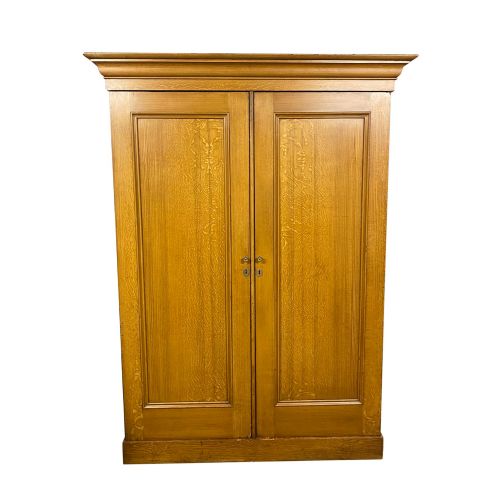
Interior fittings relied on traditional joinery, including sliding linen trays, dovetailed drawer construction and brass hanging hardware. Alternative finishes such as scumble faux oak paintwork also appear on certain regional pieces.
Some industrious Victorians chose faux oak scumble paintwork instead of exotic veneers to brighten up their morning dressing routine.
Evaluating distinction
Distinction in these wardrobes rests upon the selection of timber figures, such as dense burr walnut or curl mahogany, and the precision of the cabinetwork. Finer examples display meticulous grain continuity across multiple doors and integrated breakfront sections.
Internal configuration also separates standard production from superior workshop output, particularly where fitted linen presses, original brass hardware and secondary timber linings remain intact.
Holland and Sons·Holland & Sons
The 19th Century Compactum Wardrobe Glossary
- Compactum
- A multi-functional wardrobe combining hanging space, shelving and internal drawers in a single unit. This design maximises bedroom storage efficiency.
- Breakfront
- A piece of furniture where the central section projects forward from the flanking wings. This architectural arrangement creates depth and shadow on large wardrobe facades.
- Linen press
- A tall cabinet featuring upper sliding trays for folded textiles above a chest of lower drawers. Many listings group these pieces alongside compactums due to their shared storage purpose.
- Scumble
- A decorative painting technique used to simulate natural wood grain over a plain ground. This treatment appears on specific period painted items.
- Burr walnut
- Timber taken from the gnarled growth of a walnut tree, producing swirling, highly decorative grain patterns. Cabinetmakers used burr veneers on high-status Victorian facades.
19th Century Compactum Wardrobe: Frequently Asked Questions
How do I fit a compactum wardrobe in a modern bedroom?
These large wardrobes typically dismantle into modular sections, including cornices, side wings and central carcases, allowing for transport and reassembly in upper rooms.
Measuring ceiling height and floor clearance carefully ensures the projecting breakfront sections and opening doors clear existing skirting boards and cornices.
What is the difference between a wardrobe and a compactum?
A standard wardrobe provides primarily hanging space behind full-length doors, whereas a compactum integrates multiple internal drawers, linen slides and compartmented shelving.
This multi-purpose internal layout was designed to house an entire gentleman's or lady's wardrobe within a single footprint.
How do I identify a Victorian compactum wardrobe?
Victorian examples often feature dense timbers like burr walnut, figured mahogany or ash, frequently built on a larger triple or breakfront scale with arched or mirrored doors.
Construction details such as hand-cut dovetails on internal drawers and traditional secondary woods like pine or oak help confirm the nineteenth-century origin.
Can these wardrobes be separated for moving?
Many larger 19th-century wardrobes and breakfront compactums were constructed in modular parts, separating into distinct vertical carcases, top cornices and plinth bases.
This sectional design enabled Victorian cabinetmakers to deliver heavy furniture up staircases and into domestic bedrooms during installation.