
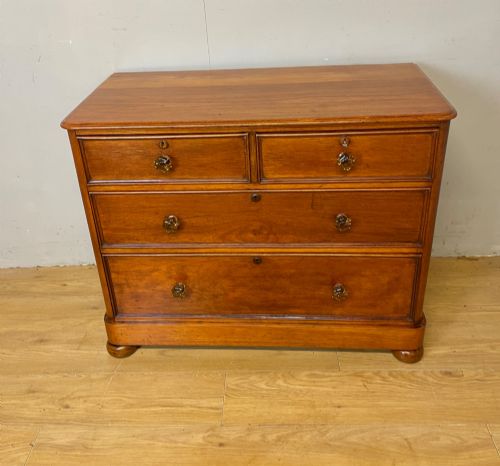
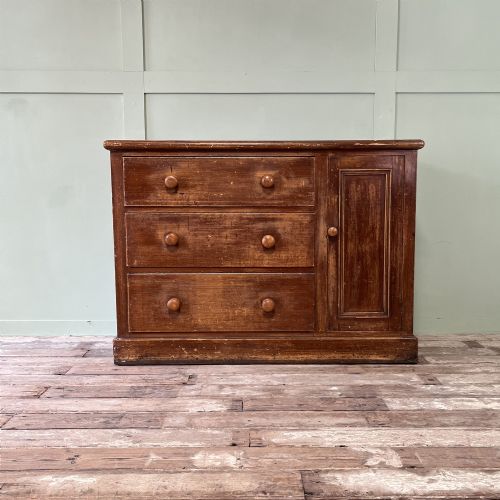
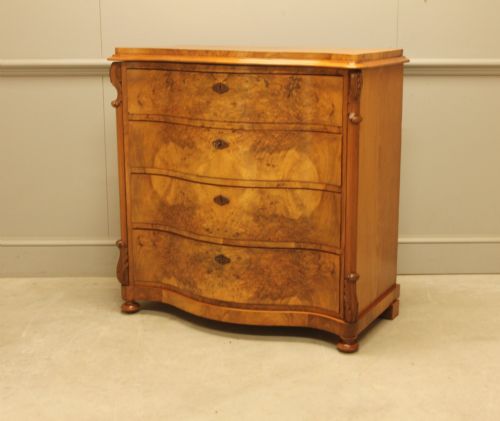
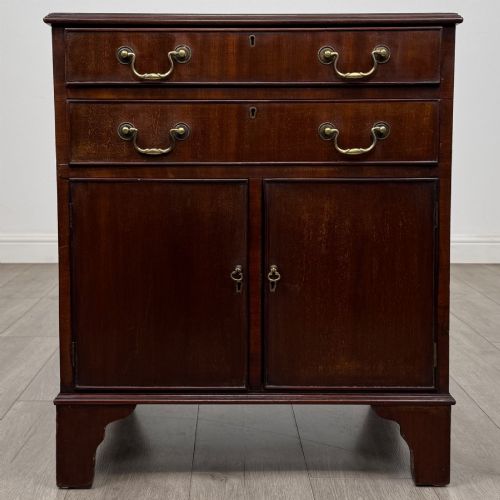
19th Century Commode Chest
A 19th century commode chest brings timber warmth and historical gravity into a room, offering practical storage disguised as fine furniture.
19th Century Commode Chest
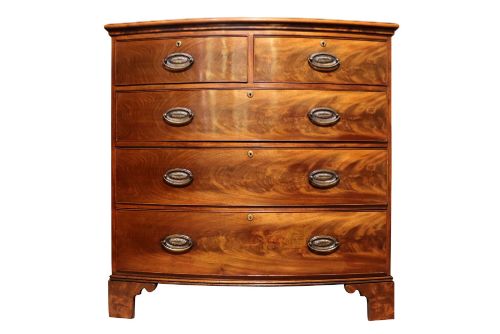
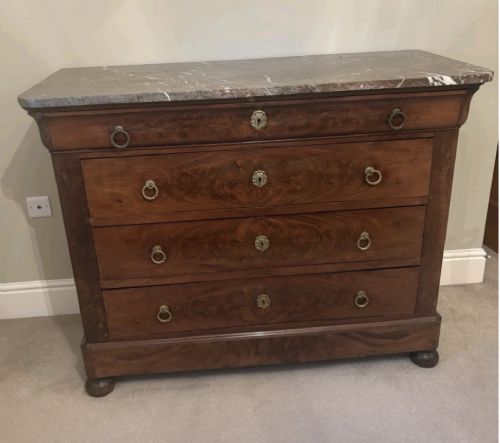
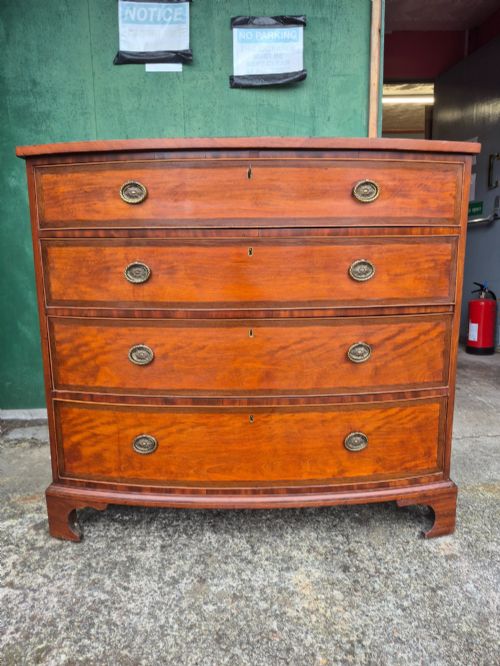
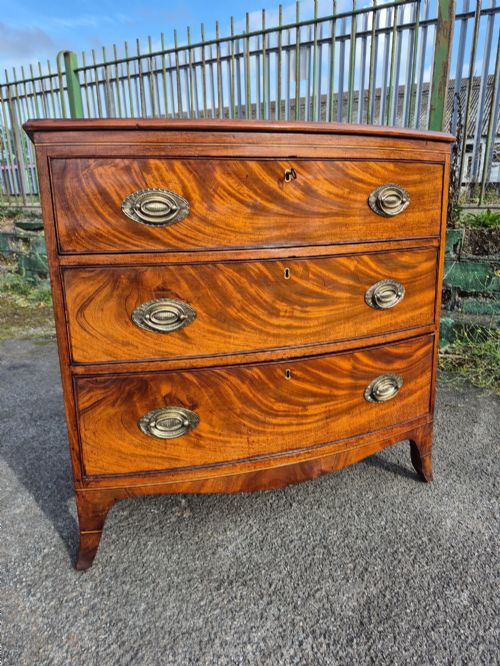
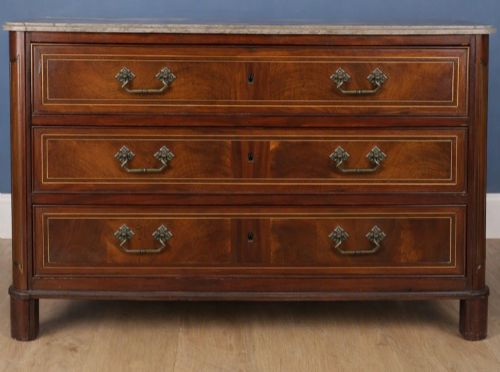
A 19th century commode chest bridges the gap between English cabinetmaking and continental European case pieces, merging functional drawer storage with decorative presence. Buyers searching this phrase encounter everything from stern British mahogany bowfronts to lavish French walnut and marquetry commodes topped with marble.
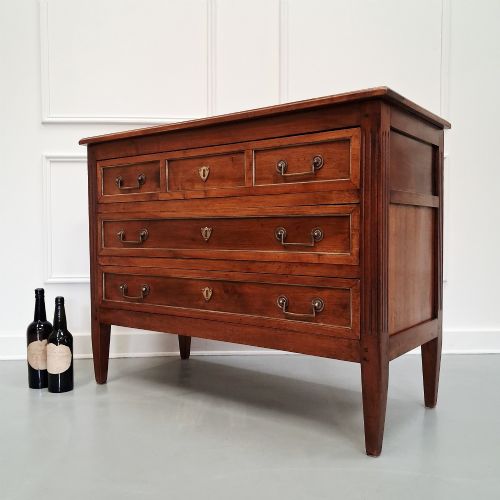
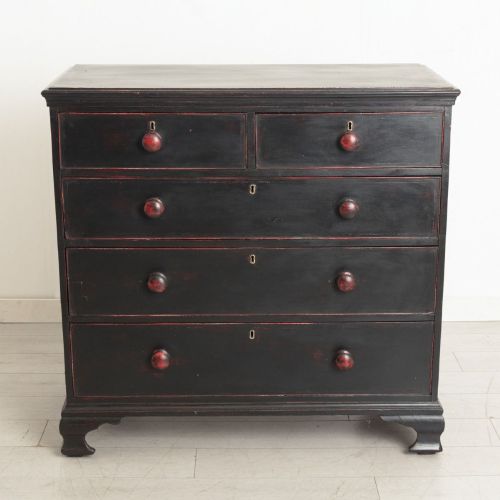
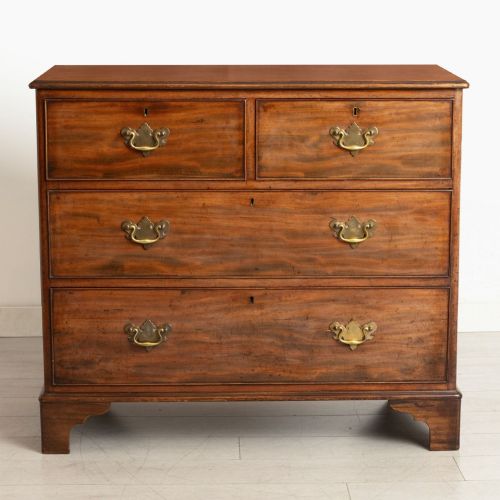
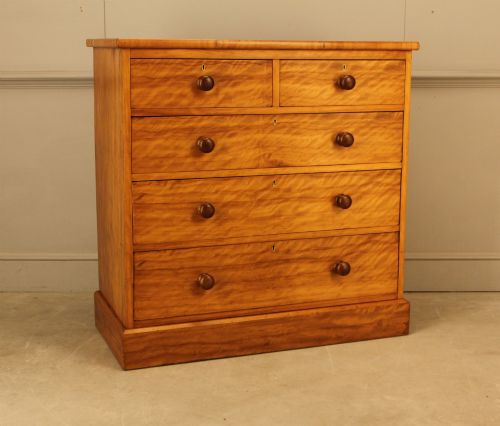
The English tradition leans towards sturdy mahogany, oak, and pine forms, often featuring clean vertical banks of drawers or curved fronts. Conversely, continental examples frequently exhibit serpentine outlines, rich kingwood veneers, and inset stone surfaces that shift the visual weight toward the floor.
These pieces served bedrooms, dressing rooms, and formal parlours, functioning as primary storage for textiles and personal items. Surviving examples demonstrate a wide geographic spread, originating from English workshops as well as French, Dutch, and Anglo-Indian makers.
Materials and Construction Methods
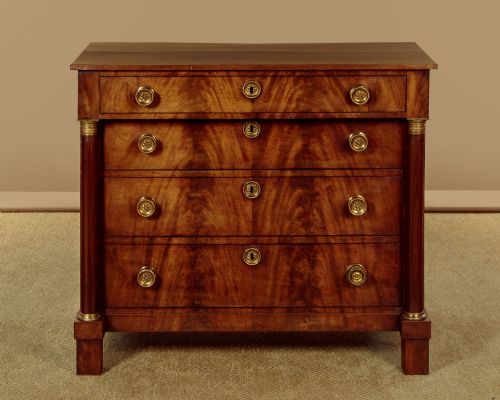
Makers relied heavily on solid mahogany, walnut, and pine carcasses, frequently applying figured veneers like flame mahogany or burr elm to primary display surfaces. Drawer linings typically utilised secondary timbers such as oak or pine, joined with hand-cut dovetails that reveal the manual labour involved in their assembly.
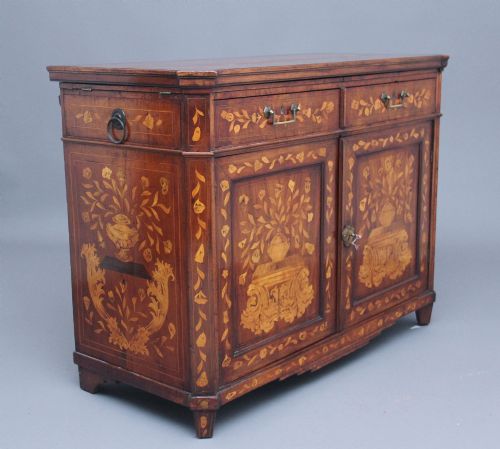
Surface ornamentation involved intricate marquetry, parquetry, and contrasting stringing using satinwood and bone inlay. Many continental pieces incorporated heavy grey or white marble slabs fitted directly to the top surface, requiring robust structural support within the upper frame.
Hardware played an essential structural and decorative role, with brass handles, escutcheons, and occasional gilt bronze mounts secured to drawer fronts. French and English cabinetmakers employed distinct locking mechanisms and carcass framing, ranging from straightforward pine backing boards to complex serpentine curved internal bracing.
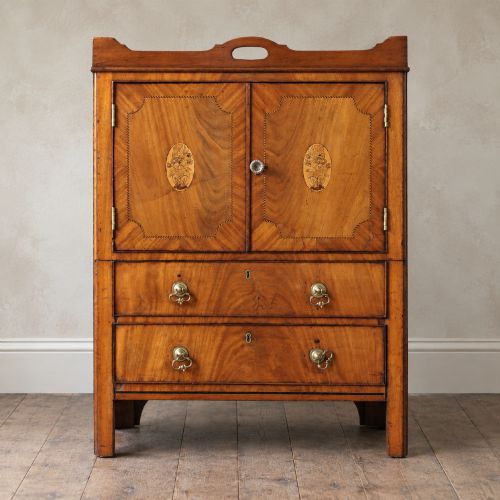
Some bedside commode chests include lift-up lids concealing chamber pots, cleverly disguised to maintain bedroom dignity.
Markers of Quality and Execution
The calibre of a 19th century commode chest rests upon the selection and continuity of its veneers. Superior examples display mirrored flame mahogany or complex floral marquetry wrapping cleanly around curves without awkward interruption.
Structural integrity reveals itself in the drawer construction and timber movement management. Finely made pieces maintain flush drawer fronts, tight dovetailing, and smooth gliding action within the runners, resisting the warping common to inferior secondary woods.
Decorative detailing dictates the upper tier of execution, distinguishing standard utilitarian chests from elite commissions. Crisp carving on bracket feet, precise brass mounts, and accurately fitted marble slabs separate provincial output from high-status metropolitan workshop production.
Henry Dasson·Gillows
The 19th Century Commode Chest Glossary
- Bow front
- A convex curved cabinet front that projects outward in a smooth arc. This shape gained immense popularity during the Regency and Georgian periods.
- Serpentine outline
- A horizontally undulating front edge featuring a central convex curve flanked by concave sweeps. Cabinetmakers required exceptional skill to shape drawers and carcasses to this complex profile.
- Bombe
- A swollen, bulging outward contour typical of continental furniture styles. This silhouette requires shaped vertical posts and curved side panels.
- Marquetry
- The art of forming decorative patterns by fitting together thin veneers of various coloured woods, ivory, or bone. Craftsmen assembled these intricate pictorial designs before gluing them to the carcass.
- Caddy top
- A raised furniture top with a moulded edge resembling the lid of a tea caddy. This detail frequently appears on early 19th century case pieces.
- Parquetry
- Geometric wood inlay work arranged in repeating patterns such as cubes, lozenges, or squares. It differs from marquetry by focusing on abstract geometry rather than pictorial scenes.
19th Century Commode Chest: Frequently Asked Questions
How do I identify a French commode?
French commodes of this era usually feature prominent marble tops, richer walnut or kingwood veneers, and sometimes gilt bronze mounts. Their proportions often emphasise width and curved serpentine or bombe silhouettes.
English equivalents tend to rely on straight-grained mahogany, oak, or pine with restrained brass handles and boxwood stringing. The internal construction methods and secondary timbers also point directly to regional workshop practices.
What is a flame mahogany veneer?
Flame mahogany is a highly figured wood grain obtained from the fork of the tree where branches meet the main trunk. This creates a distinctive feather-like pattern that reflects light dynamically across the drawer fronts.
Cabinetmakers prized this timber for high-status furniture, carefully matching the grain across multiple drawers to achieve a symmetrical visual effect.
Were marble tops original to these chests?
Many continental commodes were designed specifically to carry heavy marble slabs, which provided a durable, stain-resistant surface for washing and dressing. These stones were fitted into rebated wooden frames built into the upper carcass.
English chests rarely featured marble unless specially commissioned or altered later, relying instead on solid timber top boards.
How should I care for an antique wood chest?
Protect the timber by keeping the piece away from direct sunlight and steady heat sources, which cause veneers to dry out and lift. Maintain consistent indoor humidity to prevent the solid woods and secondary framing from splitting.
Apply high-quality beeswax sparingly and buff gently with a soft cloth to nourish the finish without building up heavy wax layers.