
19th Century Collectors Drawers
These 19th century collectors drawers offer compact multi-drawer storage in timbers like mahogany and pine, prized for sorting specimens and small objects.
19th Century Collectors Drawers
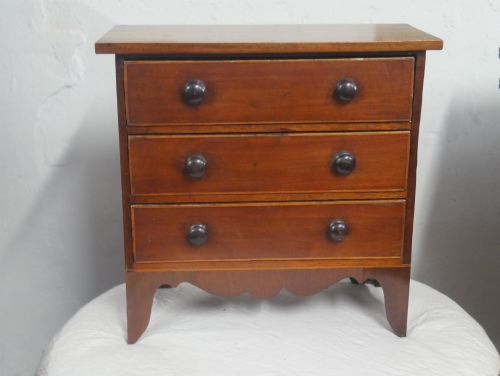
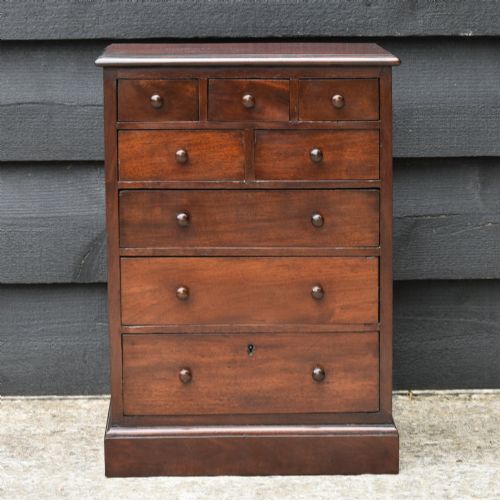
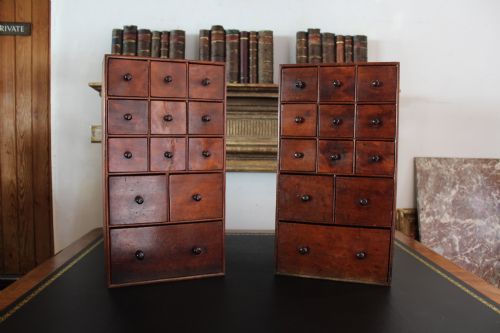
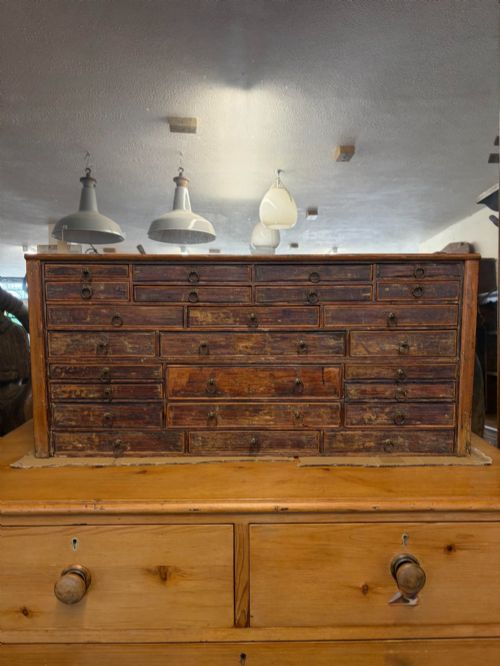
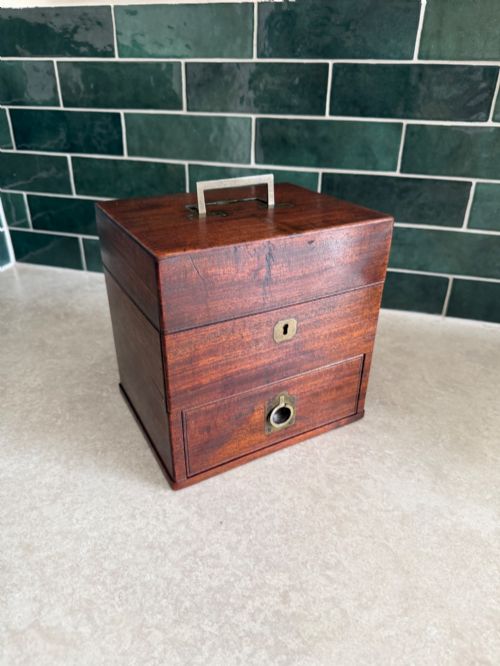
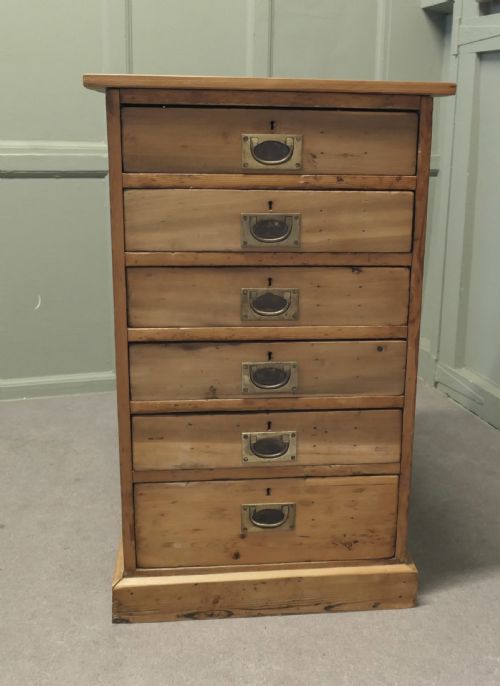
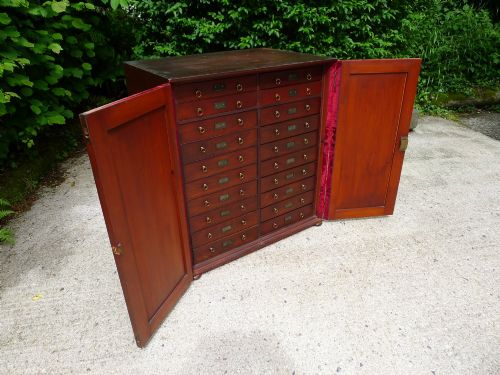
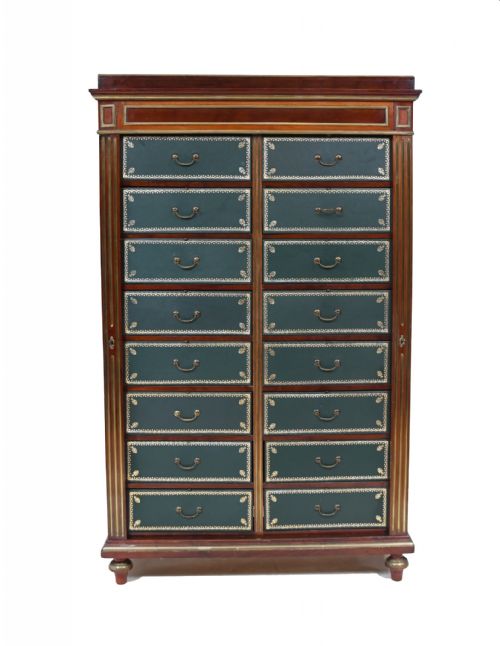
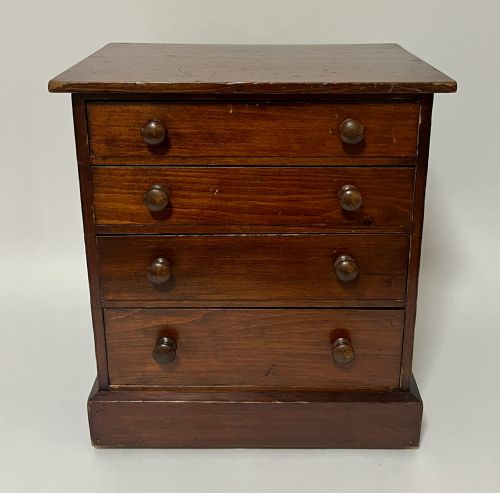
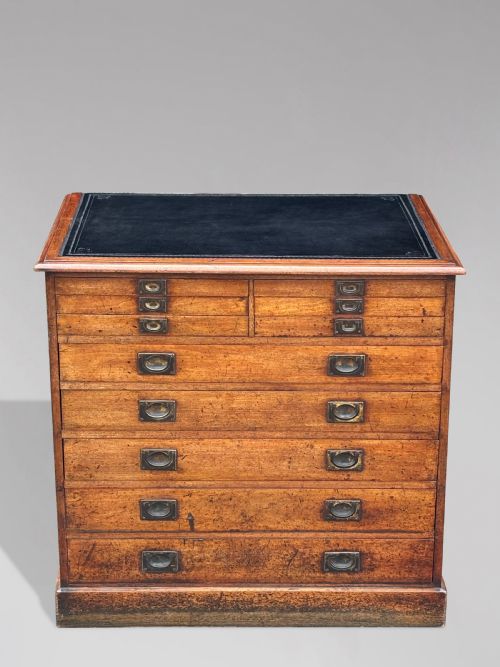
When you search for 19th century collectors drawers, you encounter a specialised form of multi-drawer cabinetry designed to house natural history specimens, coins, or small household items. The pieces on this page span vernacular pine filing units, banks of pharmacy drawers, and miniature apprentice chests.
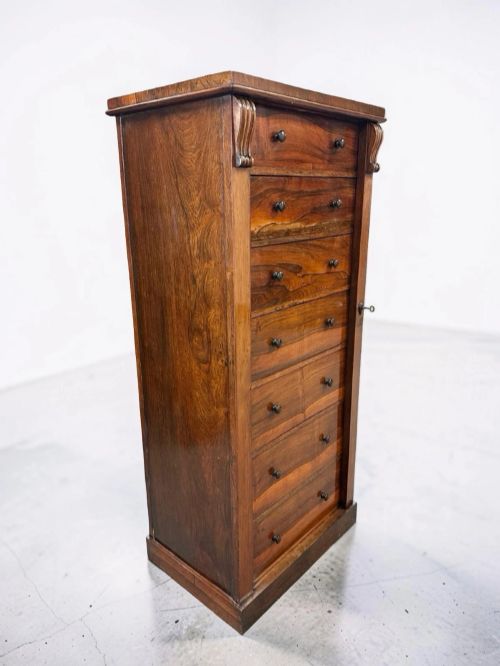
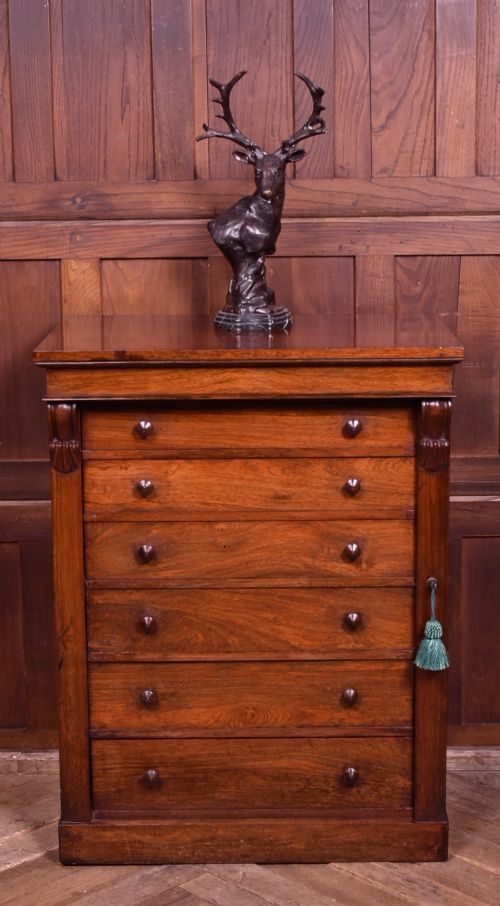
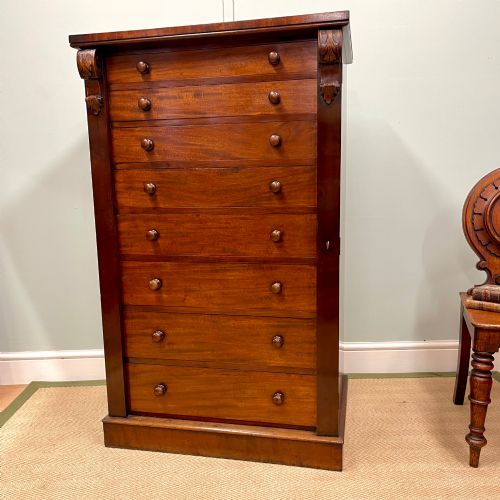
Mahogany and walnut predominate among the formal Wellington chests and specimen cabinets, whilst pine and deal serve for utilitarian filing and apothecary banks. You will frequently meet compact tabletop formats alongside substantial floor-standing cabinets containing dozens of small drawers.
The origins stretch from Victorian England to regional workshops and continental makers, incorporating styles from Georgian restraint to Charles X elegance. Buyers choose them to bring orderly compartmentalisation into modern interiors.
How they were made
Cabinet makers constructed these pieces primarily from solid hardwoods such as mahogany, walnut, and rosewood, alongside softer utilitarian timbers like pine and deal. Drawer construction typically relied on hand-cut dovetail joints to withstand frequent opening.
Surfaces received various treatments, from polished french polish on formal Wellington chests to stained finishes on workshop pine. Brass pulls, campaign handles, and locking side-bars provided security and ease of access for delicate contents.
Homeopathic chests offer tiny drawers meant for micro-doses of Victorian remedies.
What varies in quality
The distinction between standard utility storage and exceptional cabinet-making lies in timber selection and drawer fit. Finer examples utilise figured veneers, burr walnut, or solid exotic hardwoods with seamless drawer runners.
Hardware integrity and structural preservation dictate the standing of a piece. Original brasses, locking mechanisms with working keys, and undisturbed patination elevate cabinet-work well above altered or heavily restored equivalents.
Luxmore's of Ilfracombe
The 19th Century Collectors Drawers Glossary
- Wellington chest
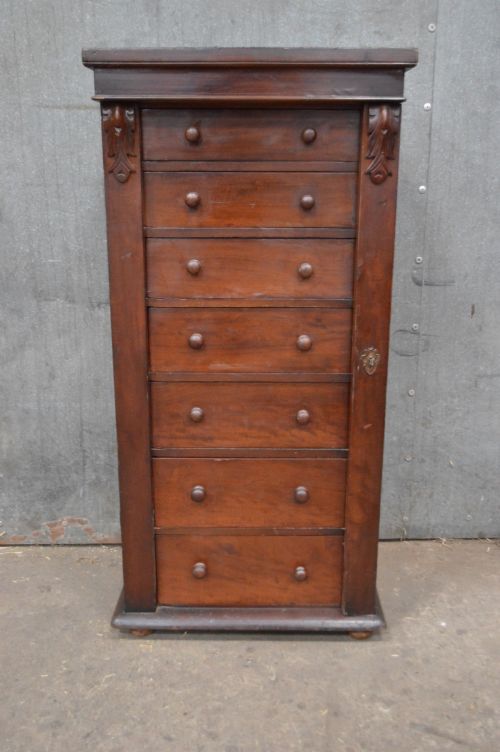
- A tall, narrow chest of drawers secured by a hinged locking stile on one vertical edge. This locking bar fastens over the drawer edges, secured by a single key.
- Apprentice piece
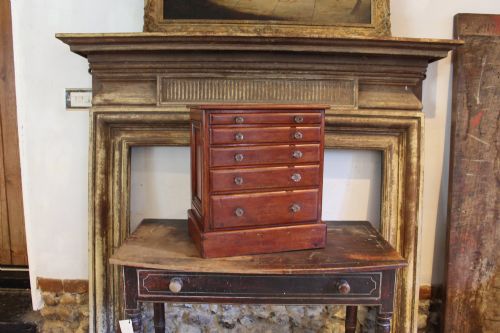
- A small-scale item demonstrated to a guild by a craftsman seeking master status. These miniature chests replicate full-size furniture proportions precisely.
- Apothecary chest
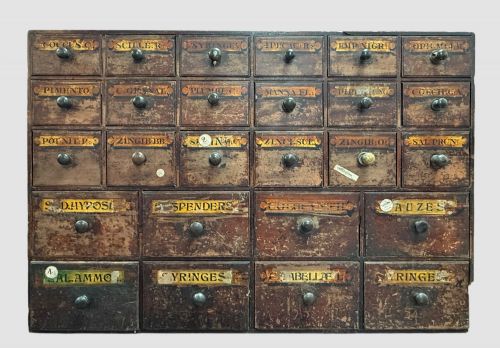
- A multi-drawer unit originally utilised by chemists or doctors for storing medicines and herbs. They often feature numerous small drawers and labelling compartments.
- Specimen cabinet
- A cabinet designed specifically for housing natural history collections such as insects, fossils, or microscope slides. The internal shallow drawers protect delicate items.
- Cartonnier
- A French cabinet fitted with tiers of drawers or boxes for storing papers and documents. They frequently appear in mahogany during the Charles X period.
19th Century Collectors Drawers: Frequently Asked Questions
What were 19th century collectors drawers used for?
These multi-drawer units served naturalists, doctors, and collectors for organising specimens, apothecary items, and documents.
Today, they suit modern domestic spaces for storing jewellery, stationery, and small household collections.
Are miniature chests apprentice pieces?
Many small-scale chests date from the nineteenth century and functioned as masterworks for craftsmen proving their skills, or as salesman samples.
They scale down standard chest of drawers designs whilst retaining dovetail joinery and working drawers.
Where should I place a multi-drawer cabinet?
Compact specimen cabinets and tabletop filing drawers sit well on desks, sideboards, or dressing tables where their small compartments remain accessible.
Floor-standing banks of drawers function independently as focal storage points in studies or living rooms.