


19th Century Cloisonne Vase
A 19th century cloisonne vase brings intense colour and meticulous wirework into a room, offering a tangible link to Victorian-era global tastes.
19th Century Cloisonne Vase
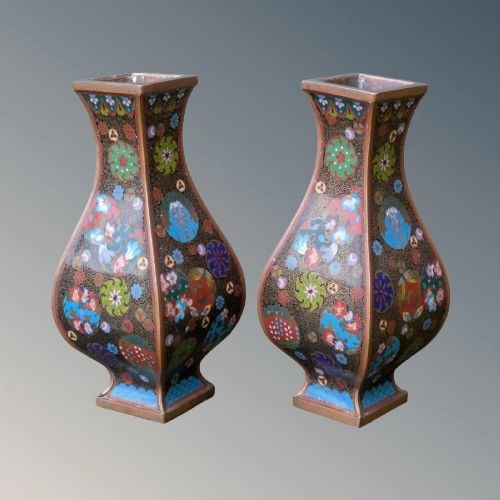
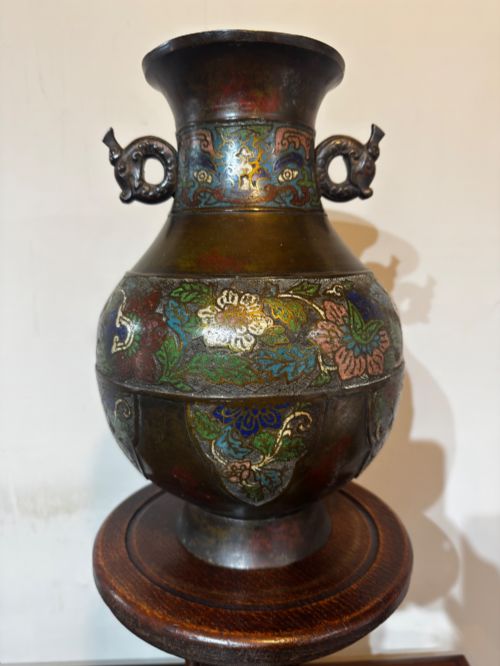
A 19th century cloisonne vase is a decorative vessel defined by metal wire soldered to a core, creating compartments filled with vitreous enamel. These pieces emerge from diverse cultural spheres, most notably during the Meiji period in Japan and the Qing Dynasty in China, alongside European interpretations from France.
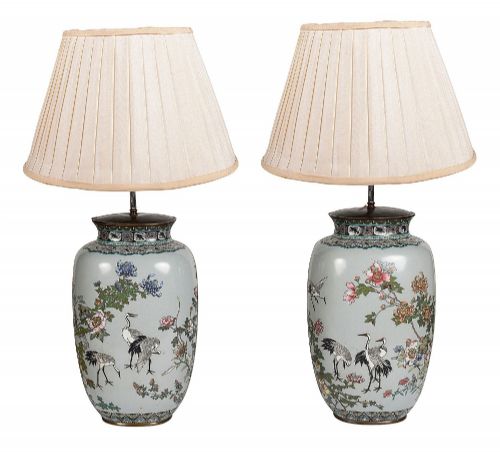
Buyers will encounter various formats on this page, ranging from diminutive ritual vessels and cabinet miniatures to monumental palace urns and converted table lamps. The physical footprint varies dramatically from small desk pieces to towering floor-standing examples created for export and domestic display.
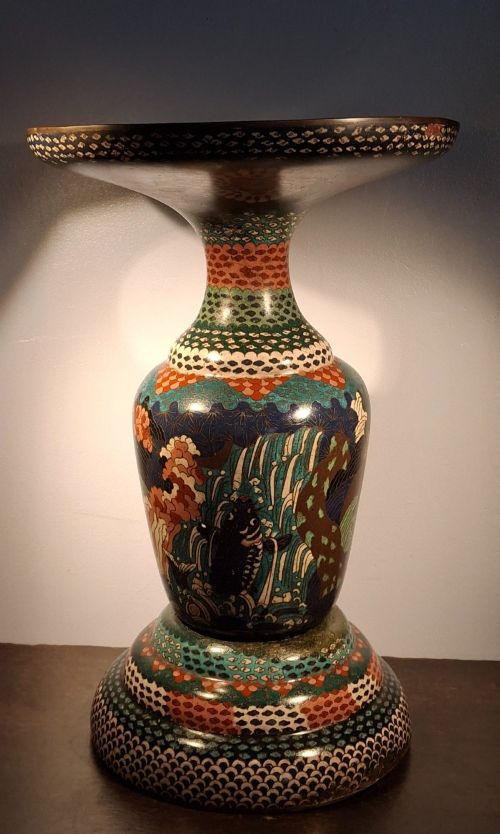
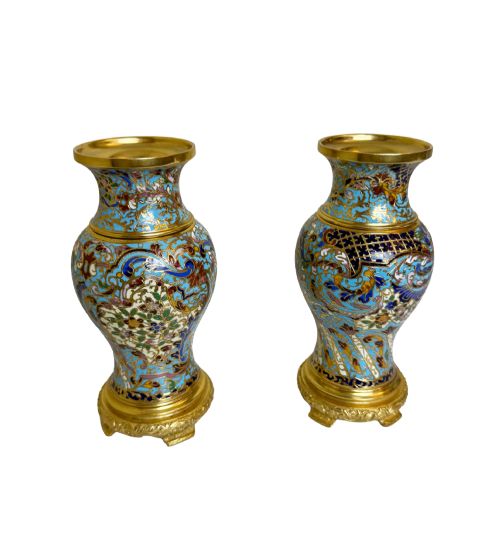
The aesthetic vocabulary spans traditional Asian motifs like phoenixes, dragons, and koi fish to ornate French ormolu-mounted candelabra and Chinoiserie styles. Each iteration reflects the specific decorative ambitions of its period, whether adherence to archaic forms or the technical mastery of late-century Japanese workshops.
Materials and construction
The foundational structure relies on metals such as copper, bronze, brass, or gilt bronze, shaped into vessels or cast as candelabra bases. Artisans then soldered thin flat wires - usually brass or copper - onto the metal surface to outline intricate patterns and compartmentalise the design.
Craftsmen filled these delineated cells, known as cloisons, with coloured enamel pastes made from ground glass and mineral pigments. The pieces underwent successive firings in kilns to fuse the enamel before workers ground and polished the entire surface until the metal wires and glass paste formed a smooth plane.
Some nineteenth-century artisans meticulously laid wire to mimic rough tree bark beneath dragons.
Evaluating craftsmanship and execution
The fineness of the wirework dictates much of the visual success, where thinner ribbons and denser geometric or pictorial patterns demand greater manual dexterity from the artisan. Superior examples display absolute precision in the soldering and negligible distortion in the metal body following repeated kiln firings.
Colour saturation and surface finishing also separate standard production from masterworks, evident in the smoothness of the polished enamel and the complexity of the tonal gradations. Pieces bearing signature marks or associated with specific stylistic movements often reveal a higher degree of sculptural ambition in the supporting bronze mounts or vessel contours.
Jules Vieillard
The 19th Century Cloisonne Vase Glossary
- Cloisonne enamel
- A metalwork technique where fine wires form compartments that hold coloured glass paste before firing. This method creates a cell-based mosaic effect across the body of the vessel.
- Champleve
- An enamelling technique where troughs or cells are carved directly into the thick metal surface rather than building up soldered wires. The hollowed channels are then filled with enamel and fired.
- Totai Shippo
- A Japanese technique involving translucent enamel applied over a textured or organic core, such as simulated tree bark. This specific method allows light to pass through portions of the decorative body.
- Meiji Period
- The era of Japanese history spanning from 1868 to 1912, characterised by industrial modernization and exceptional decorative arts output for international export. Enamel work from this period achieved unprecedented technical refinement.
- Qing Dynasty
- The final imperial dynasty of China, ruling from 1644 to 1912, known for reviving archaic bronze shapes and intricate cloisonne production. Pieces from this context frequently utilise traditional auspicious symbols and stylized motifs.
19th Century Cloisonne Vase: Frequently Asked Questions
How do I spot a Japanese piece versus a Chinese piece?
Japanese items from the Meiji era often feature highly naturalistic pictorial elements, such as specific fish, birds, or textured backgrounds like tree bark, alongside meticulous wirework. Chinese vessels from the Qing period tend to favour formal symmetry, traditional mythical beasts, and heavier cast bronze elements.
Examining the metal alloy of the base and the interior counter-enamel colour can also offer clues to the regional workshop traditions of the nineteenth century.
Were these pieces originally made as lamps?
Many items found today were originally created as decorative vases, urns, or ritual vessels and were subsequently converted into table lamps during the twentieth century. This conversion often involved drilling the base or mounting the vessel onto metal hardware to accommodate electrical wiring.
Unconverted vessels remain in their original configurations, serving purely ornamental purposes as mantel or table centerpieces.
How should I clean a nineteenth-century enamel vase?
Dust the surface gently with a soft, dry microfibre cloth to prevent accumulation within the wire recesses. Avoid using abrasive household cleaners, chemical solvents, or excessive water, which can damage the polished glass surface or corrode the exposed base metal.
If the piece requires deeper attention, consult a professional conservator experienced in nineteenth-century metalwork and vitreous enamels.
What does an archaic style mean in these listings?
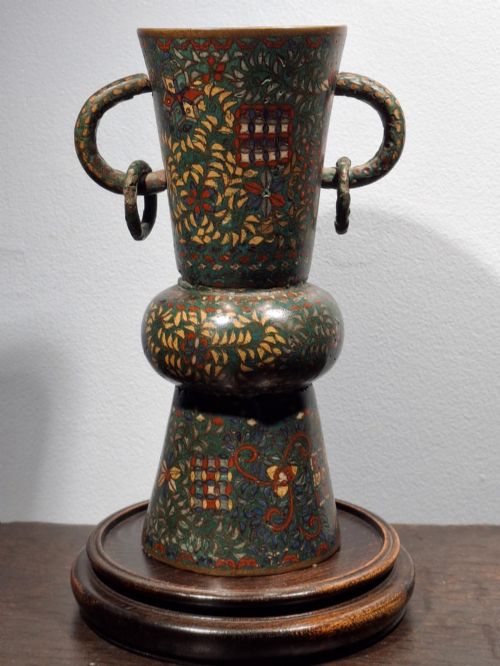
An archaic style refers to nineteenth-century designs that deliberately emulate the ritual bronzes of much older Chinese dynasties, such as the Shang or Zhou periods. Makers adopted these ancient vessel shapes and geometric motifs to appeal to collectors who valued historical continuity and classical erudition.
These pieces combine nineteenth-century enamelling techniques with ancient vessel silhouettes.