



19th Century Clock Dome
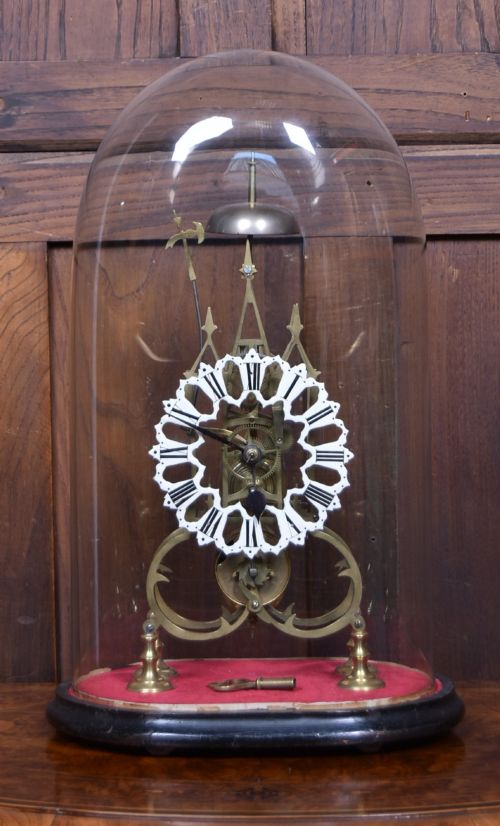
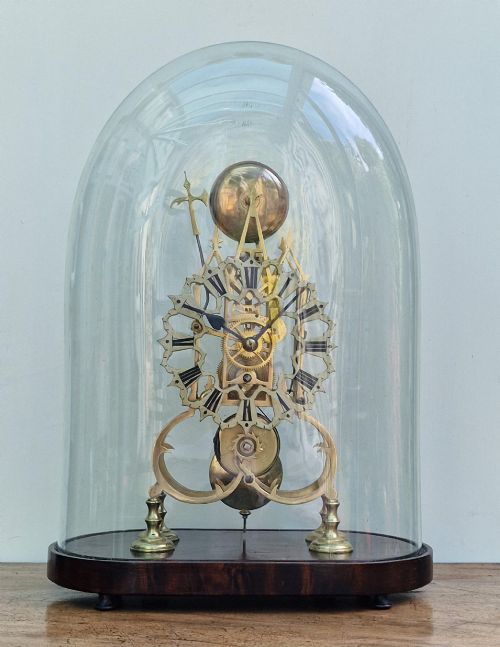
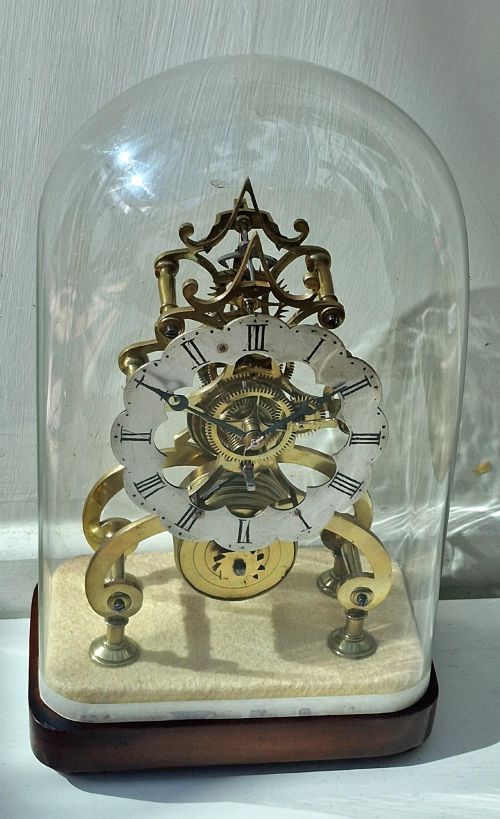
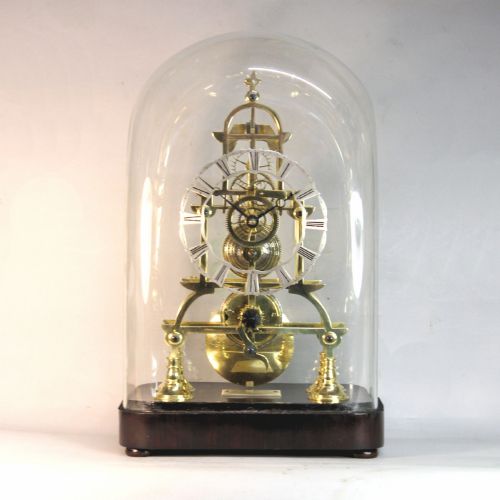
A 19th century clock dome protects delicate mantel timepieces while offering an uninterrupted view of intricate skeleton and portico movements.
19th Century Clock Dome
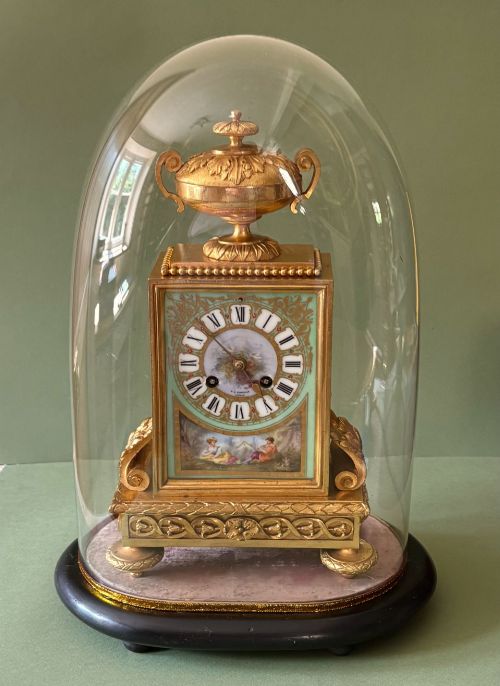
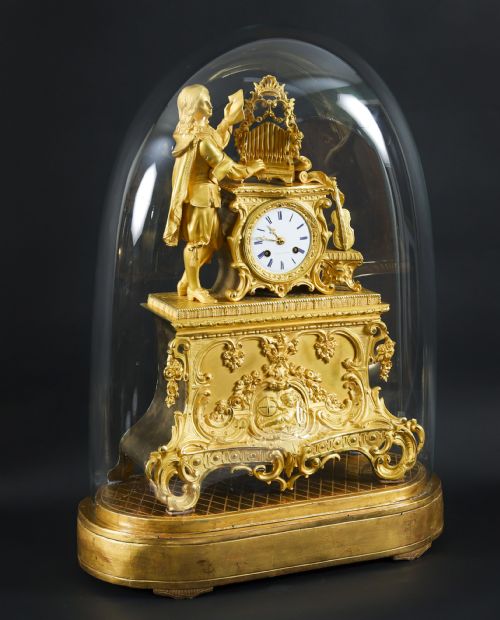
A 19th century clock dome serves to shield intricate mechanical movements from dust while putting the craftsmanship of the clock on clear display. These protective covers appear most frequently paired with English fusee skeleton clocks and elaborate French mantel pieces.
The selections on this page span the Victorian era, bringing together tall portico designs and compact square glass covers. Many items preserve original blown glass bells alongside their matching wooden bases.
Collectors encounter everything from simple glass shields to complete garniture sets housed beneath towering protective domes. Each configuration reflects the nineteenth-century desire to display complex horological machinery without risk of tarnish.
Materials and construction methods
The protective covers rely on blown glass shaped into smooth bell forms or square configurations. These transparent shields rest securely upon sturdy wooden plinths, often finished in ebonised or polished rosewood.
Internal clocks utilise brass and ormolu framing, frequently embellished with porcelain panels or gilt bronze mounts. Makers incorporated mahogany and marquetry detailing into the supporting bases to complement the aesthetic of the timepiece.
19th Century Clock Dome Retail Price Guide 2026
Typical asking prices for 19th century clock dome among the pieces listed under this phrase on Sellingantiques today, from the lower quarter to the upper quarter. They describe what is for sale here now, not the wider market.
Early glass blowers worked so close to the furnace that their apprentices occasionally doubled as human shields against flying hot bubbles.
Evaluating quality and craftsmanship
Quality reveals itself in the clarity of the blown glass and the absence of heavy distortion or bubbles. Superior examples maintain their original wooden or ebonised stands without replacement or heavy alteration.
The refinement of the brass and ormolu mounts dictates the standing of the piece. Master makers applied careful gilding and precise porcelain mounting that elevates the entire assembly above standard workshop production.
Richard Winter of Chieveley·Leroy Paris·Jean Baptiste Delettrez·Allen Colyer
The 19th Century Clock Dome Glossary
- Fusee
- A conical pulley used in spring-driven clocks to ensure even power delivery as the mainspring unwinds. This mechanism is frequently visible beneath a glass cover.
- Ormolu
- Gilt bronze ornamentation applied to clock cases and bases during the nineteenth century. The technique involves creating a finely chased bronze object coated in gold amalgam.
- Garniture
- A set consisting of a central clock flanked by matching decorative ornaments, often displayed together under large glass domes. These coordinated suites were popular in French period interiors.
- Portico clock
- A architectural timepiece designed with pillars supporting the movement, resembling a classical temple facade. Many examples utilise tall glass covers to accommodate the architectural height.
- Ebonised wood
- Timber treated to imitate expensive ebony through staining and polishing. This dark finish provides a strong visual contrast against bright brass movements.
19th Century Clock Dome: Frequently Asked Questions
Are these glass covers original to the clocks?
Many Victorian timepieces retain their original hand-blown glass bells and matching timber plinths. Hand-blown glass often displays subtle imperfections and slight thickness variations that reveal its age.
Replacement covers occasionally appear on the market when original glass was broken over the decades. Checking the fit against the original wooden rebate helps determine period authenticity.
What styles of clocks fit beneath these covers?
Skeleton clocks with exposed brass gear trains appear most frequently beneath tall glass bells. Portico clocks and porcelain-mounted French mantel pieces also utilise protective enclosures to safeguard delicate gilding.
The height and width of the glass dictate which timepiece fits inside comfortably. Most arrangements leave adequate clearance around the dial and balance wheel.
How do I date a nineteenth-century clock cover?
Examine the manufacturing technique of the glass and the material of the base plinth. Hand-blown glass with pontil marks on the interior typically points to nineteenth-century production methods.
Matching the style of the wood, such as ebonised rosewood or mahogany, to known Victorian manufacturing periods provides a reliable timeframe. The presence of original fitted feet or moulding details adds further chronological context.