






19th Century Chinese Panel
A 19th century chinese panel brings deep historical texture to a room, offering rich woodcarving, silk, or lacquer work.
19th Century Chinese Panel
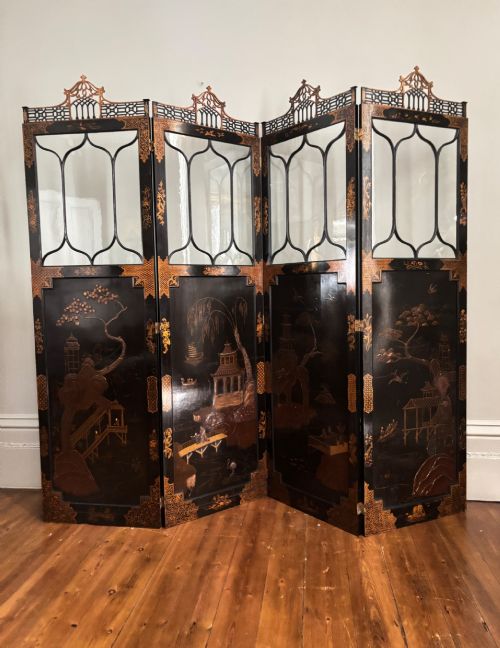
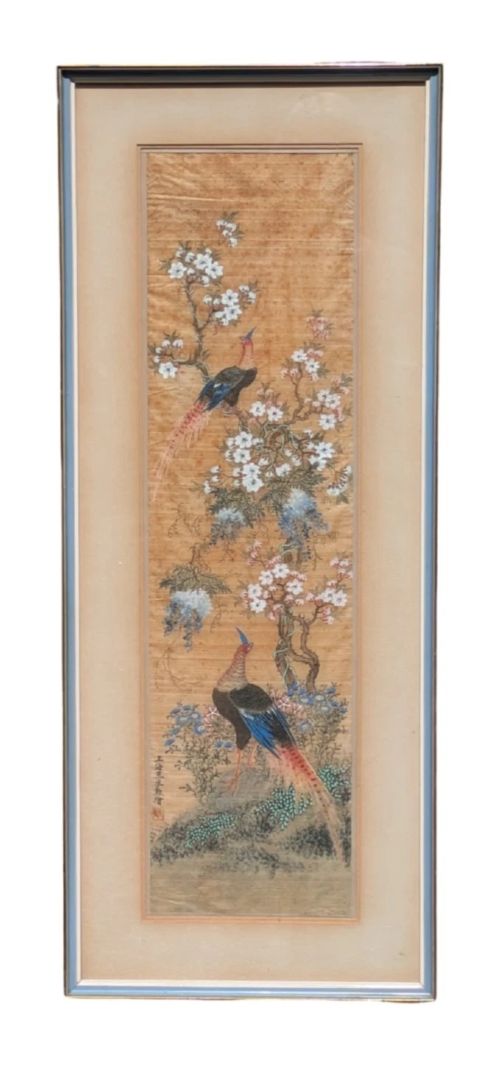
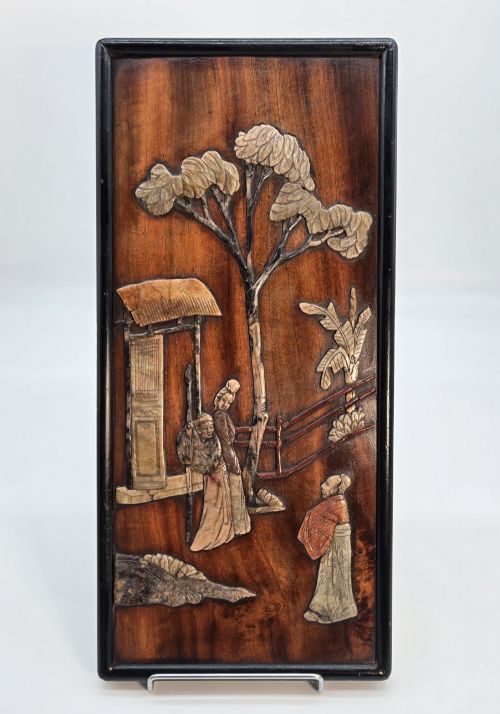
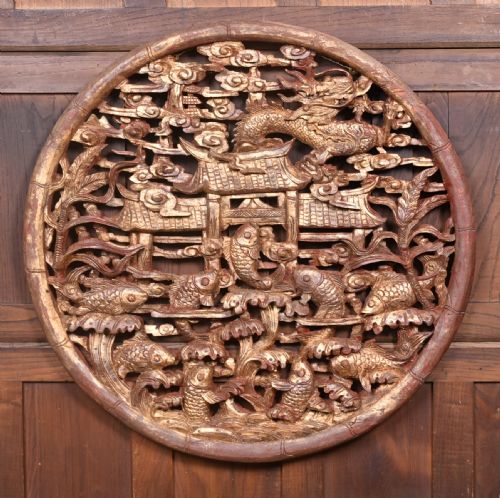
A 19th century chinese panel encompasses a diverse group of decorative objects, ranging from wall plaques and window screens to folding screen sections and framed paintings. These pieces often originate from the Qing Dynasty or utilise Chinese Export and Chinoiserie styles, reflecting the intricate craftsmanship of the period.
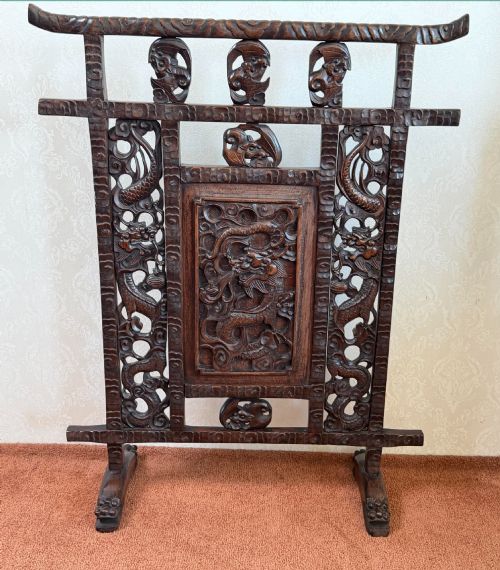
Buyers are most likely to encounter carved hardwood panels, lacquer pieces, and framed silk works on this page. Many examples feature detailed figural motifs, dragons, or floral arrangements, serving either as standalone wall art or as components of larger room dividers.
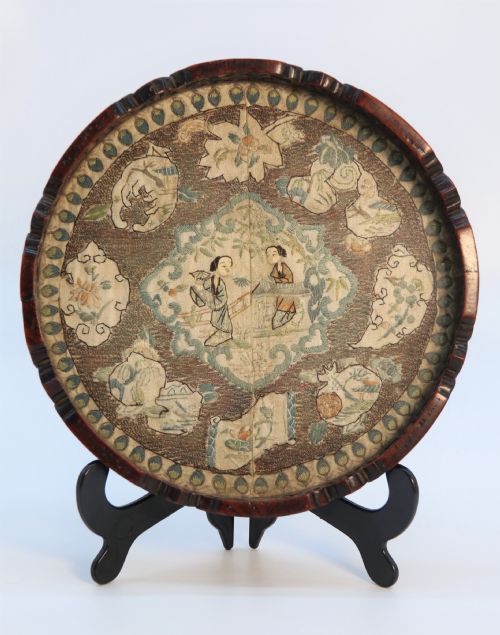
Beyond flat plaques and folding screens, the selection includes miniature figures, embroidered trays, and stands set with porcelain. Each item demonstrates how traditional materials were adapted for both domestic use and export markets during the 1800s and early 1900s.
How They Were Made
Makers constructed these panels primarily from wood and hardwood, frequently employing deep relief carving to create complex dimensional scenes. Softwood and lacquered wood also appear, sometimes enhanced with gold leaf, mother-of-pearl inlay, or carved giltwood details.
Surface decoration often involved delicate silk embroidery, watercolour on silk, or layered lacquer work in the Coromandel or Bantam style. Artisans combined these refined textiles and polished finishes with sturdy wooden frames and brass mounts to ensure durability.
Listings feature items from the nineteenth century, including specific dates across the eighteen-fifties, sixties, eighties, and nineties, alongside early twentieth-century examples.
What Varies in Quality
The refinement of the carving separates standard items from exceptional examples, as master carvers achieved remarkable depth, expression, and anatomical accuracy in figures and dragons. Simpler pieces rely on repetitive motifs with shallower incision and less sculptural variation.
The integrity of the original materials dictates overall standing, particularly the preservation of fragile silk, the stability of lacquered surfaces, and the tightness of hardwood joints. Panels retaining their original gilding or intricate mother-of-pearl inlays without modern intervention hold greater visual authority.
The 19th Century Chinese Panel Glossary
- Coromandel
- A type of Chinese incised lacquerware where the background is carved away, filled with colour, and polished. This technique was frequently utilised on folding screens.
- Chinoiserie
- European artistic styles reflecting Chinese motifs and decorative techniques. It often appears on decorative items made for Western export markets during the nineteenth century.
- Qing Dynasty
- The final imperial dynasty of China, ruling from sixteen forty-four to nineteen twelve. Pieces from this era often display traditional dynastic iconography and craftsmanship.
- Giltwood
- Wood that has been treated with a thin layer of gold leaf or gold paint. Miniature carved figures and panel frames often show this decorative application.
- Hardwood
- Dense, durable timber utilised for structural stability and fine carving. It forms the primary support for many nineteenth-century screens and wall plaques.
19th Century Chinese Panel: Frequently Asked Questions
How do I hang a heavy wooden panel?
Heavy hardwood panels require robust wall anchors and brackets suited to the weight of the specific timber and frame. Securing the piece directly to wall studs ensures proper support.
Professional framing or mounting hardware prevents the panel from shifting over time. Ensure the weight is distributed evenly across multiple fixing points.
Where should I place a lacquer screen?
Lacquered panels and folding screens perform best away from direct sunlight and excessive heat sources. Stable indoor temperatures prevent the wood and lacquer from drying out and cracking.
Position the screen where it receives gentle, indirect light to highlight the carved details. This placement preserves the rich colours and delicate surfaces.
How do I clean embroidered silk panels?
Silk and embroidered textile panels require gentle dusting with a soft, dry brush or low-suction vacuum through a protective mesh. Avoid using water or chemical cleaners on delicate threads.
Professional textile conservators should handle deeper cleaning or repairs. Direct contact with hands can transfer oils and damage aged fibres.
Can I separate panels from a folding screen?
Separating panels from a folding screen alters the original format and requires careful handling of the connecting hinges. Many pieces function effectively as individual wall art once detached.
Consider the placement of hardware and the structural integrity of the frame before making modifications. Keeping screens intact maintains their historical form.