


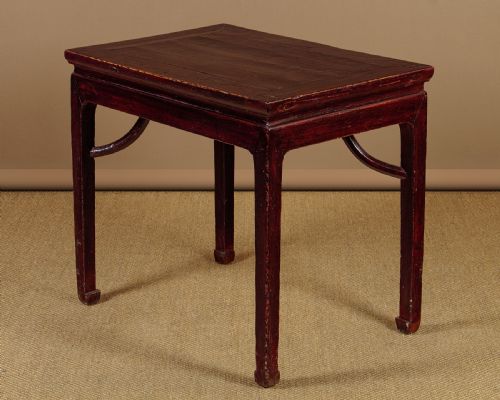


19th Century Chinese Console
These 19th century chinese console pieces combine enduring structural form with rich historical character, offering practical surface space and distinct regional presence.
19th Century Chinese Console
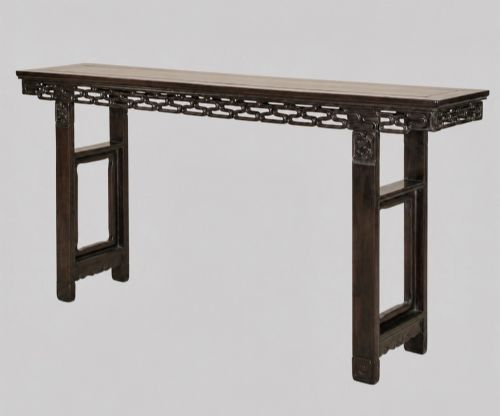
A 19th century chinese console encompasses a variety of utilitarian and ritual furniture forms, including altar tables, side tables, and demilune hall tables originating from the Qing dynasty and provincial workshops. These items serve as functional surface furniture while displaying traditional Chinese joinery and proportion.
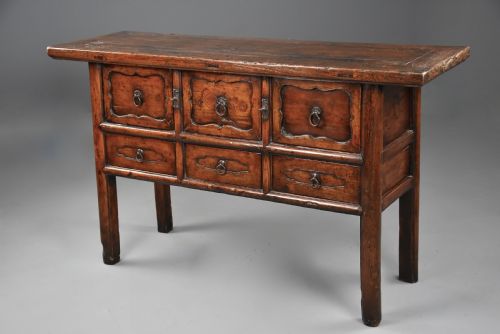
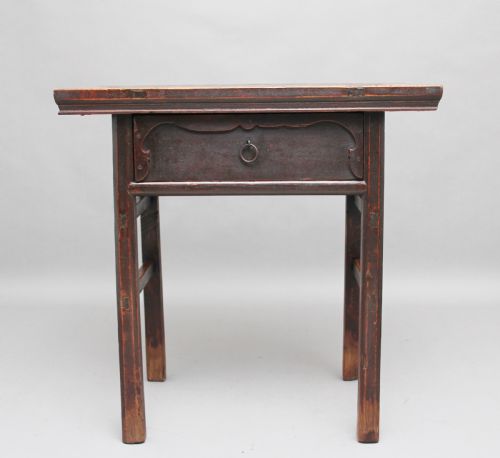
Elm and dense hardwoods dominate the selections encountered on this page, often appearing alongside red lacquer finishes, marble inserts, and brass hardware. Pieces range from rustic provincial dressers to finely carved hardwood centre tables and altar tables.
Forms span from narrow console and altar tables designed for wall placement to pairs of demilune tables and low sideboards. Each piece reflects the functional requirements of nineteenth-century domestic and ceremonial interiors.
How they were made
Cabinetmakers utilised indigenous timbers such as elm, hongmu, and general hardwood, selecting materials for grain pattern and density. Plank-top construction and traditional mortise and tenon joinery provide structural stability without extensive metal fasteners.
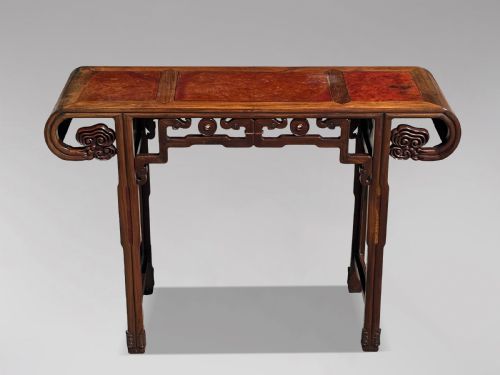
Surfaces receive decorative treatments including red lacquer, gilt accents, and contrasting amboyna veneers, while select examples incorporate marble inserts into the timber frames. Carving is applied to aprons and legs to define Qing dynasty and provincial design idioms.
Materials documented across these listings include elm, hard woods, brass, lacquer, hongmu, iron, and marble.
What varies in quality
The degree of refinement in the carved detailing and the selection of timber dictate the standing of an individual piece, distinguishing standard provincial output from denser hongmu or intricately carved altar tables. The preservation of original surface finishes, such as patinated elm or red lacquer, significantly influences character.
The 19th Century Chinese Console Glossary
- Altar table
- A rectangular ritual or domestic table featuring upturned flange ends or recessed legs, traditionally placed against a wall.
- Demilune
- A half-moon shape used for console and side tables designed to stand flush against a wall.
- Hongmu
- A dense, dark traditional Chinese hardwood prized for its weight, fine grain, and deep colour.
- Elm
- A resilient domestic timber utilised across Chinese provincial furniture for its strong grain and fibrous structure.
- Qing Dynasty
- The final imperial dynasty of China, spanning from sixteen forty-four to nineteen twelve, encompassing the period of manufacture for these pieces.
19th Century Chinese Console: Frequently Asked Questions
Where were these tables placed?
Tables of this form typically stood against main walls in reception rooms, halls, or ancestral altars. Altar tables held ceremonial objects, while console and side tables supported daily decorative items.
Provincial examples often functioned as practical work surfaces or storage ledges within domestic quarters. Their narrow profiles allowed placement in corridors and tight spaces without obstructing movement.
How do I care for lacquer?
Maintain red lacquer surfaces by keeping them away from direct sunlight and extreme humidity fluctuations. Dust gently with a soft, dry cloth and avoid chemical polishes.
Stable indoor environments prevent the wood substrate from expanding or contracting, which protects the lacquer layer from cracking or lifting over time.
Are these tables solid wood?
Nineteenth-century Chinese tables are constructed from solid timbers such as elm, hongmu, and assorted dense hardwoods. Joinery relies on traditional interlocking wood joints rather than modern metal fasteners.
Plank tops and structural frames consist entirely of timber, sometimes augmented with marble inserts or brass hardware depending on the specific form.