


19th Century Chinese Cloisonne
These 19th century chinese cloisonne pieces bring rich colour and intricate metalwork to a room, offering vibrant enamels set within fine wire cells.
19th Century Chinese Cloisonne
When you search for 19th century chinese cloisonne, you encounter an array of vessels and decorative objects created during the Qing Dynasty.
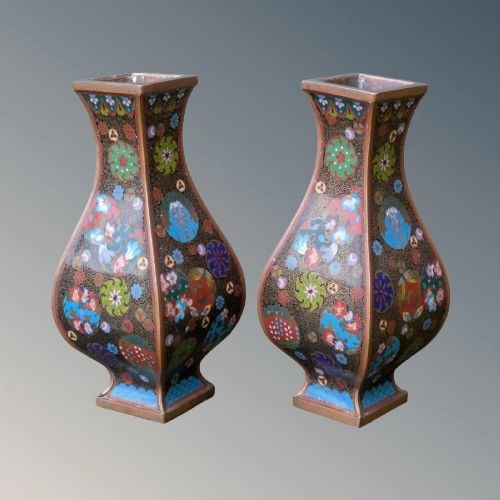
The pieces on this page span from censers and wine vessels to vases, bowls, jardiniere planters, and table lamps.
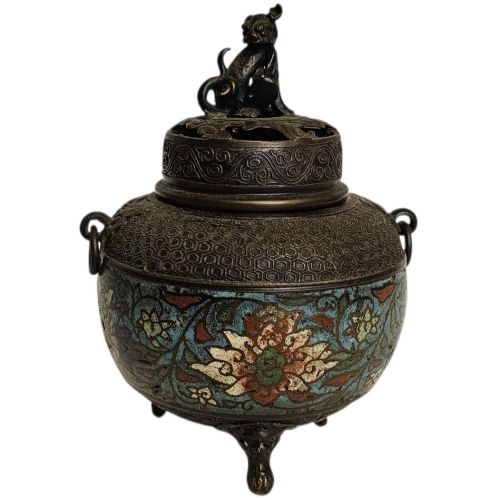
Vessels range from modest scholar's brush washers to large chargers and heavy tripod censers adorned with qilin lions.
How they were made
Artisans formed the body of each piece using bronze, brass, or copper, shaping the metal into the desired vessel or decorative object.
Fine metal wires were soldered onto the surface to create cellular compartments, known as cloisons, which were then filled with coloured enamel paste.
The piece was fired and polished down until the metal wires and glass enamels formed a smooth, unified surface.
The listings here include items featuring bronze, brass, copper, and gilt bronze, alongside materials like silk and fabric used in associated lamp fittings.
What varies in quality
The precision and fineness of the wirework determine the clarity of the design, separating standard utilitarian vessels from exceptional scholarly items.
The density and richness of the enamel colours, alongside the weight and finish of the underlying bronze or copper armature, distinguish finer examples.
Pieces featuring integrated orormolu mounts or complex archaistic forms reflect higher levels of craftsmanship and design ambition.
The 19th Century Chinese Cloisonne Glossary
- Cloisonne
- Enamelwork in which coloured pastes are applied to compartments created by soldered metal wires on a base.
- Censer
- A vessel used for burning incense, frequently supported by tripod legs and decorated with mythical beasts.
- Archaistic
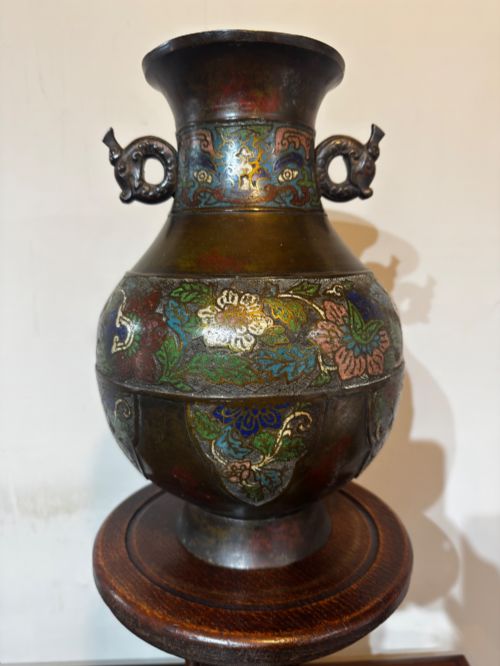
- A style that consciously emulates the ancient forms and decorative motifs of early Chinese bronzes.
- Jardiniere
- A large ornamental pot or bowl designed to hold plants or floral arrangements.
- Champleve
- An enamelling technique where troughs are carved into the metal base to hold the coloured paste rather than soldered wires.
19th Century Chinese Cloisonne: Frequently Asked Questions
What is 19th century chinese cloisonne?
These items are decorative metal objects created in China during the 1900s, featuring coloured glass pastes fired within soldered wire networks.
They encompass a wide variety of domestic and ritual forms, from small scholar's items to large planters and lamps.
How were these objects used?
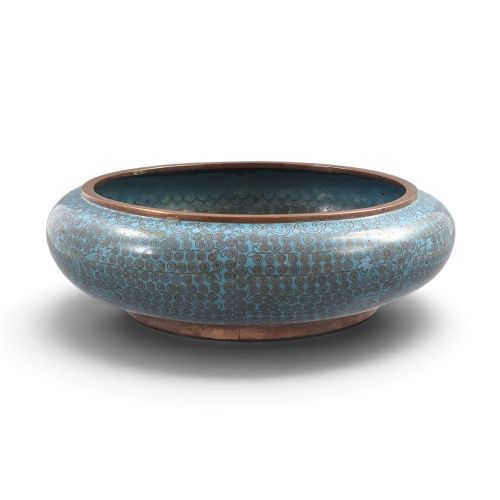
Many pieces served functional roles in homes and scholarly settings, such as burning incense in censers or washing brushes in small basins.
Larger vessels like jardiniere bowls and chargers were displayed for decoration, while some later items were adapted into table lamps.
How do I live with them?
These colourful metal objects suit placement on side tables, desks, or mantelpieces where their intricate wirework and enamels catch the light.
Keep them away from direct moisture and clean them gently with a soft dry cloth to protect the delicate metal and glass surfaces.
How do I tell periods apart?
Dating relies on observing changes in the brightness of the enamel colours, the weight of the bronze or copper bodies, and stylistic shifts.
Pieces associated with the Jiaqing period or specific decades like the 1880s and 1890s often exhibit distinct mounting styles or archaistic details.