


19th Century Childs Rocker
A 19th century childs rocker brings diminutive scale and rustic charm to a room, offering both practical seating and decorative warmth.
19th Century Childs Rocker
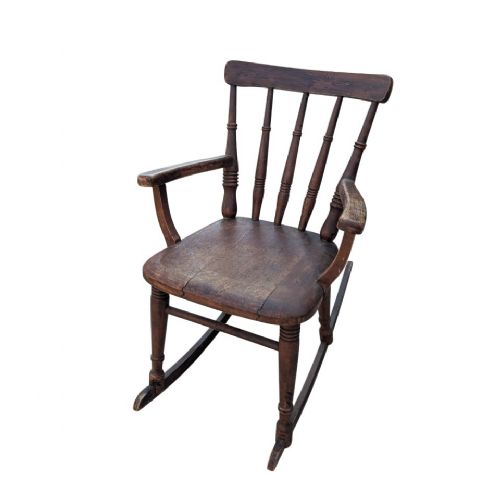
A 19th century childs rocker encompasses small-scale seating designed for children, featuring curved runners for motion alongside standard chair structures. You encounter both spindle-back Windsor forms and upholstered armchairs within this category.
The selection ranges from vernacular country pieces in elm and ash to refined mahogany and fruitwood examples. These items reflect the domestic life of the period through varied regional styles, including English and Scandinavian country designs.
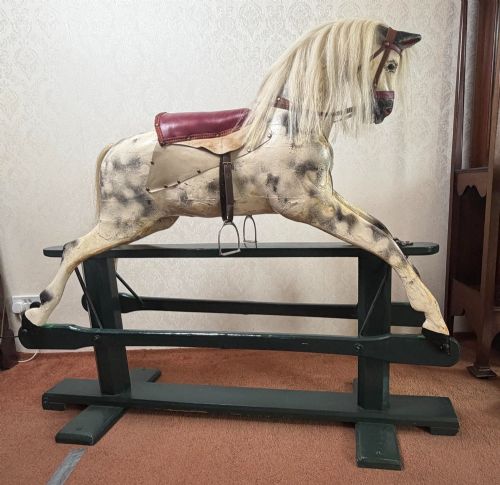
Alongside conventional chairs, the group includes carved wooden rocking horses mounted on original rockers. Each object demonstrates the distinct craftsmanship applied to children's furniture during the nineteenth century.
How they were made
Carpenters utilised local timbers such as elm, ash, beech, and fruitwood to construct the frames, often combining multiple woods within a single chair. Windsor styles incorporate turned spindles fixed into solid seats.
Upholstered variants integrated traditional stuffing materials like horsehair and outer coverings of leather. These components were secured to the wooden frameworks to provide padded support for young occupants.
Listings feature items spanning the eighteenth to the nineteenth centuries, incorporating materials such as rush, leather, and horsehair alongside solid woods.
What varies in quality
Quality rests in the integrity of the timber and the harmony of the proportions. Chairs retaining their original surface patination and uncompromised structural joints stand above those with extensive replacements.
The sophistication of the turning on spindle backs and the selection of secondary woods influence the character of the piece. Regional vernacular examples derive their appeal from honest, robust construction rather than ornate detail.
The 19th Century Childs Rocker Glossary
- Windsor
- A chair built with a solid wooden seat into which the back and legs are separately inserted. These typically feature shaped saddles and turned spindles.
- Vernacular
- An architectural or object-making tradition driven by local needs, materials, and craftsmanship rather than academic design styles. These pieces display regional character.
- Spindle back
- A chair back constructed from a series of slender, turned wooden rods placed vertically between the crest rail and the seat. This method provides lightweight strength.
- Fruitwood
- Timber sourced from fruit-bearing trees such as pear, apple, or cherry, prized by cabinetmakers for its dense grain and warm colour.
19th Century Childs Rocker: Frequently Asked Questions
Were these rockers actually used by children?
Yes, these small chairs served as functional seating for children in nineteenth-century households. Their scaled-down dimensions accommodated young occupants during daily domestic routines.
Over time, many transitioned from nursery use to decorative display pieces in living spaces. Their enduring appeal lies in this dual capacity for utility and charm.
What woods were commonly used?
Makers utilised a variety of timbers depending on regional availability and the desired finish. Elm and ash appear frequently in country vernacular pieces for their strength and flexibility.
Other examples employ mahogany, fruitwood, or beech. Combinations of different woods within a single chair are also typical of the period's workshop practices.
How do I identify a Windsor style?
A Windsor chair is characterised by a thick wooden seat that acts as the central anchor for all other components. The legs and back spindles are tenoned directly into this slab.
This construction method produces a sturdy, utilitarian form without the need for a traditional box frame. Spindle-back variations offer a lighter visual weight.
Are rocking horses included in this category?
Certain listings feature carved wooden rocking horses mounted on original wooden rockers alongside traditional chairs. These large toys share the nineteenth-century period and motion mechanism.
They provide a distinct form of child-focused antique while fitting the broader search for rocking items. Both categories reflect nineteenth-century craftsmanship dedicated to youth.