
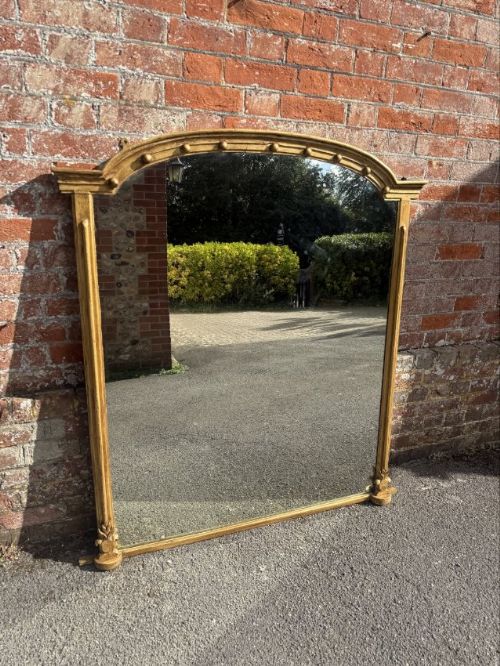
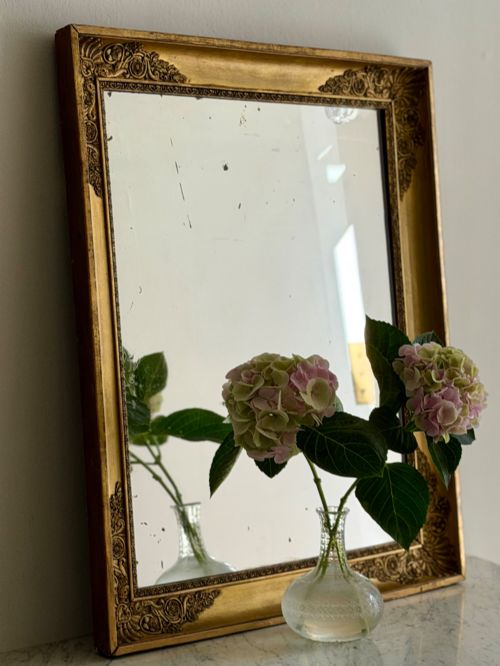
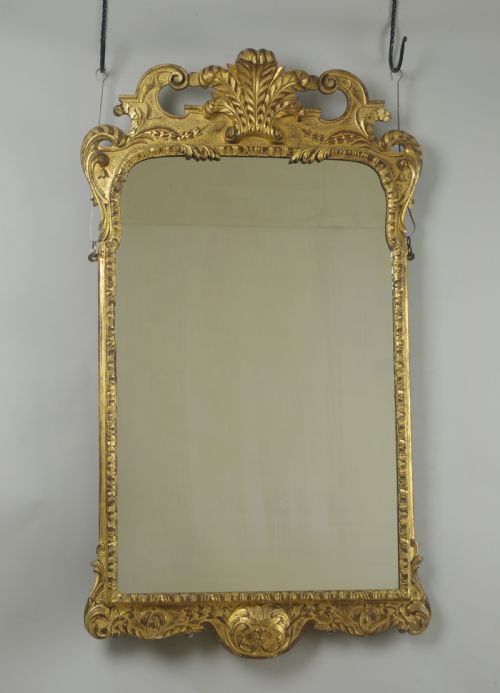
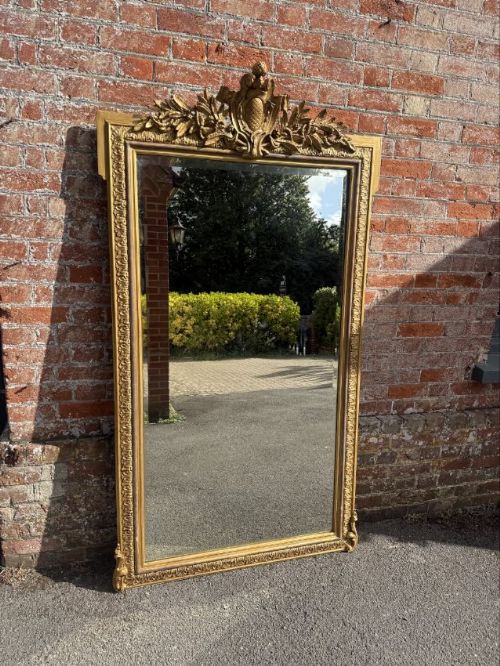
19th Century Carved Overmantel
These nineteenth-century carved overmantel mirrors bring grand architectural scale and reflective light to a fireplace, offering period presence and exceptional hand-carved detail.
19th Century Carved Overmantel
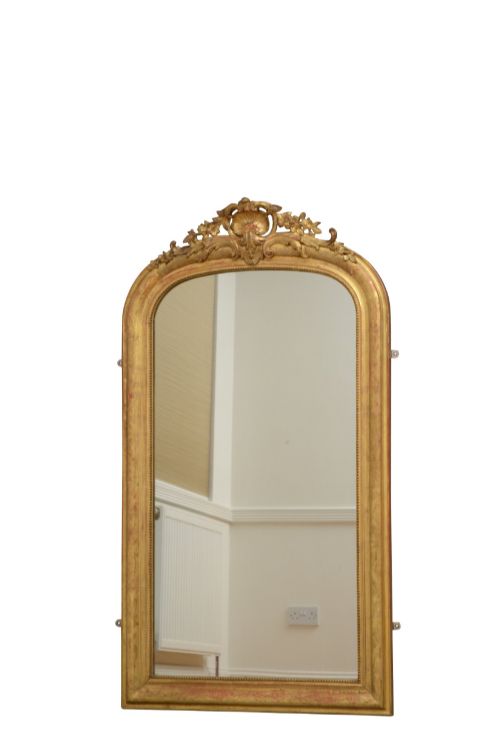
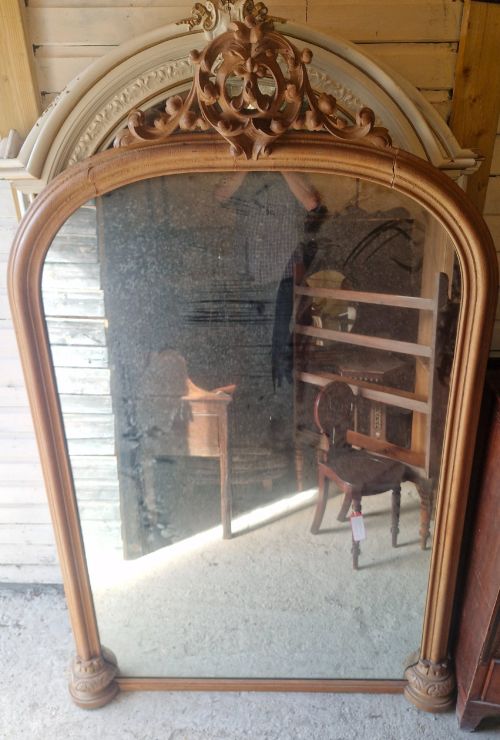
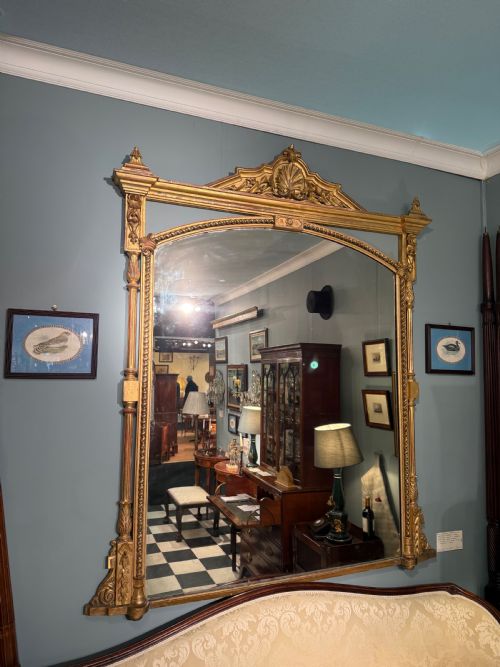
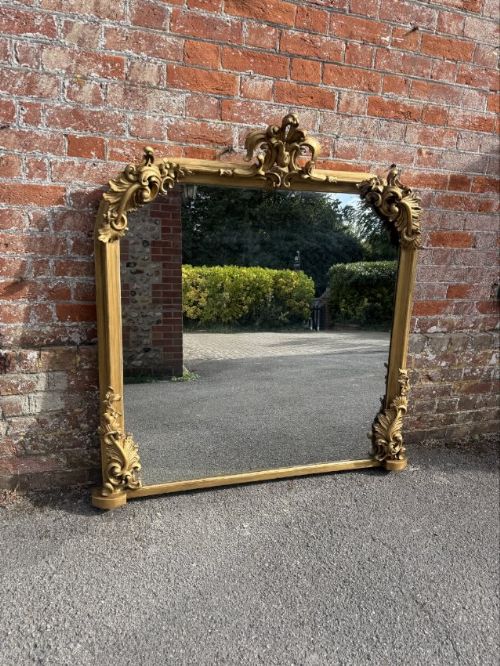
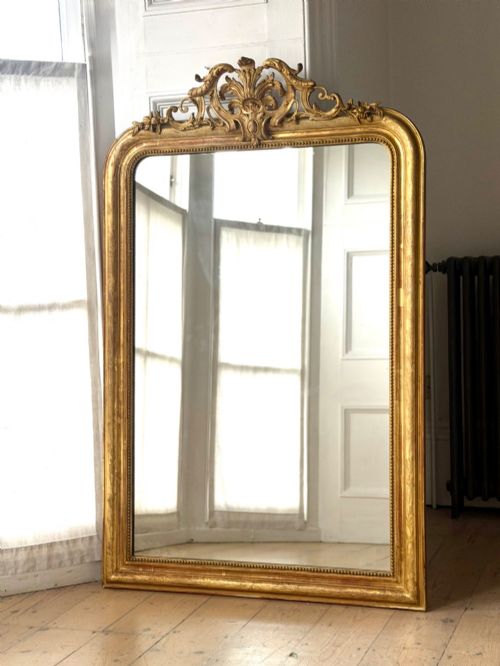
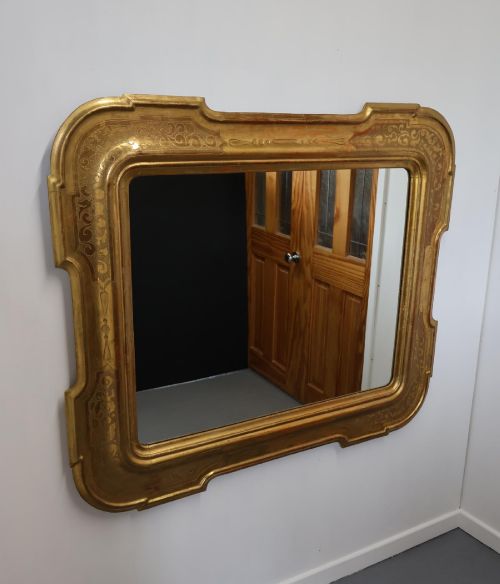
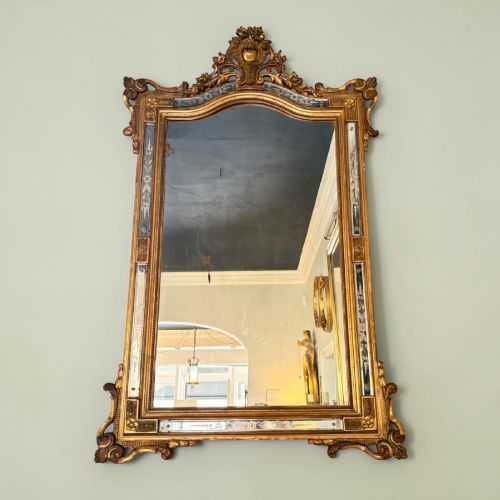
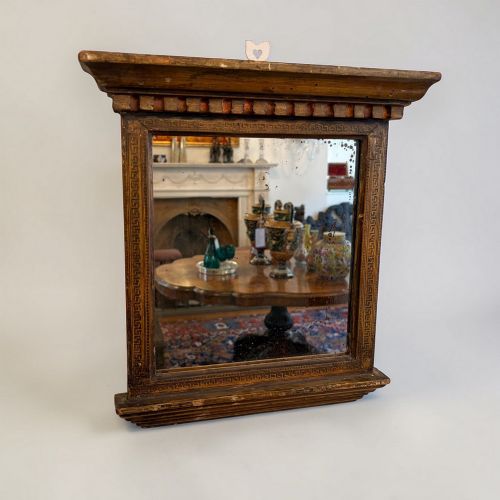
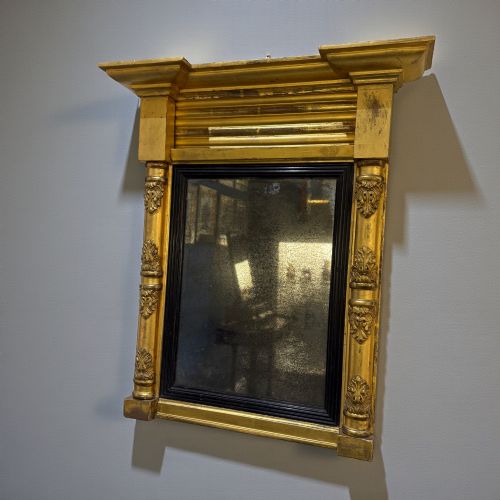
A nineteenth-century carved overmantel is a large decorative mirror or carved wooden panel designed specifically to hang on the wall directly above a fireplace mantelpiece. The pieces found here span English and French workshops, encompassing grand architectural formats as well as pier mirrors and triple plate configurations.
Originating across the nineteenth century, these heavy statement pieces served to anchor formal reception rooms while bouncing natural light around the interior. Surviving examples demonstrate the diverse regional preferences of British and continental makers working in pine, walnut, and oak.
How They Were Made
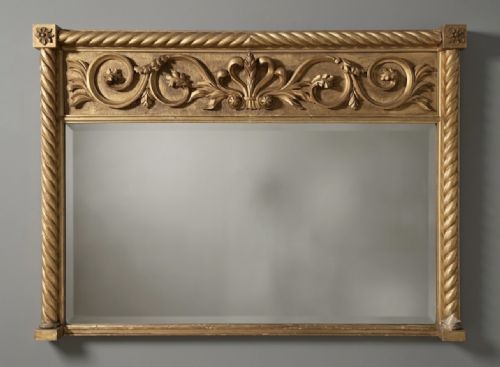
Frames and panels start with timber foundations of oak, pine, or walnut, shaped and joined to support heavy glass plates. Artisans then applied layers of gesso over carved wooden elements to build up intricate relief ornaments such as scrolls, rope twists, and floral garlands.
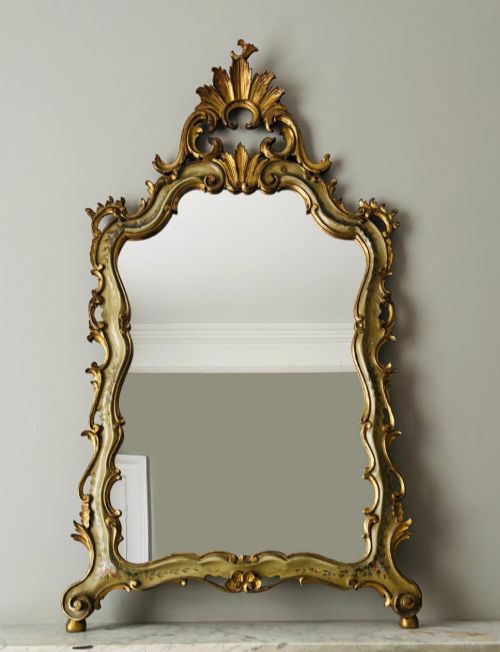
Surface decoration relied heavily on gold leaf application or specialised painting techniques, alongside parcel gilt finishes that highlighted carved details against contrasting backdrops. French and English craftspeople utilised composition moulding for repetitive decorative motifs before securing the original mirror plates into the rebate.
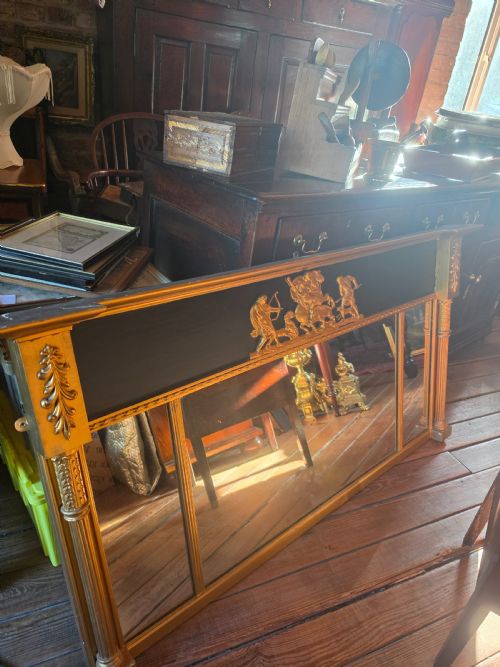
Archival records show overmantel variations incorporating triple plates, carved griffins, and faux bamboo mouldings.
What Varies in Quality
Quality rests in the depth, crispness, and ambition of the hand-carved woodwork, distinguishing finely sculpted motifs like mythological figures and naturalistic foliage from simpler moulded production. The integrity of the underlying gesso and the retention of original gilding or authentic painted finishes dictate the visual authority of the piece.
Construction scale and proportions also drive distinction, particularly in monumental triple plate mirrors or exceptionally tall formats that require substantial framing timber to maintain structural stability. Original mirror glass with age-appropriate oxidation holds greater historical character than modern replacement plates.
Gabriel Viardot
The 19th Century Carved Overmantel Glossary
- Overmantel
- A mirror or decorative panel specifically scaled to hang on the wall above a fireplace mantel. These fixtures traditionally dominated the chimney breast in nineteenth-century reception rooms.
- Gesso
- A plaster-like mixture applied to wooden frames and moulded to create raised ornamental details before gilding or painting. It provides the smooth foundation necessary for crisp surface decoration.
- Giltwood
- Timber that has been coated with thin layers of gold leaf or metallic powder over a prepared ground. This technique gives frames their characteristic warm, reflective metallic lustre.
- Pier Mirror
- A tall narrow glass designed to hang on the wall space between two windows. They share many stylistic traits and construction methods with overmantel mirrors.
- Triple Plate Mirror
- A large mirror construction featuring three distinct glass sections side by side, often divided by decorative wooden mullions or frame mouldings. This format was favoured for wide nineteenth-century hearths.
- Composition
- A mouldable mixture of whiting, resin, glue, and oil pressed into ornamental shapes for frames. It allowed makers to produce elaborate relief decoration more rapidly than direct hand carving.
19th Century Carved Overmantel: Frequently Asked Questions
Were these mirrors always meant for above fireplaces?
While specifically proportioned for chimney breasts, many large nineteenth-century examples functioned equally as pier mirrors placed between windows. Their grand scale allowed them to serve as primary architectural focal points throughout formal rooms.
Overmantels were also utilised as leaner mirrors placed directly on console tables or floor surfaces. Their versatile design accommodated various placement strategies within nineteenth-century interior schemes.
How do I clean an antique giltwood frame?
Giltwood and gesso surfaces require delicate maintenance using only a very soft, dry brush to gently remove accumulated dust. Moisture, chemical cleaners, and abrasive cloths will strip the gold leaf and damage the underlying composition ornament.
Preserving the original surface patina means avoiding modern polish entirely. Regular, gentle dusting is sufficient to maintain the appearance of nineteenth-century metallic finishes.
What is the difference between Victorian and French styles here?
Victorian overmantels frequently showcase robust carved oak timbers featuring deep relief work, armorials, or mythical beasts. They emphasise solid construction and architectural weight suited to British interiors.
French pieces from the Louis Philippe and Rococo Revival traditions typically lean toward fluid gesso ornamentation, arched shapes, and bright giltwood finishes. These continental designs prioritize reflective light and graceful, curvilinear decorative motifs.