

19th Century Cameo
A 19th century cameo brings classical antiquity into your home through finely carved shell, stone, glass, and plaster reliefs.
19th Century Cameo
When searching for a 19th century cameo, buyers encounter an array of objects ranging from wearable jewellery like brooches, pendants, and bracelets to framed decorative intaglios and wall plaques. These pieces predominantly reflect neoclassical and Grand Tour influences, celebrating classical motifs, mythology, and historical portraits.
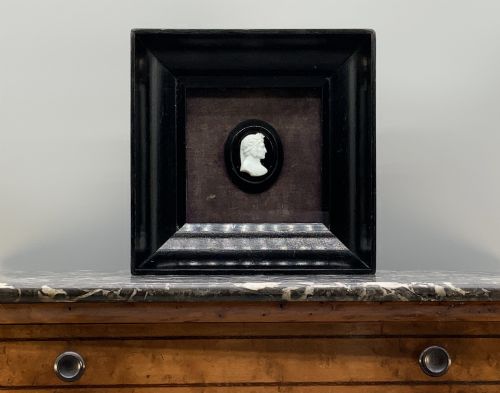
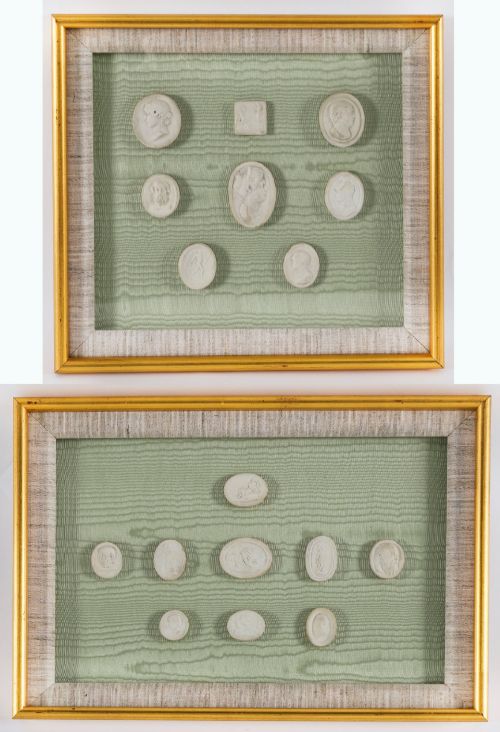
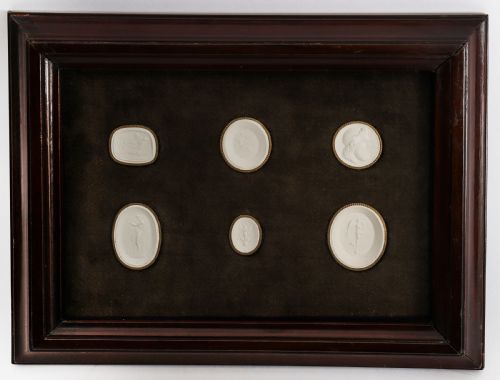
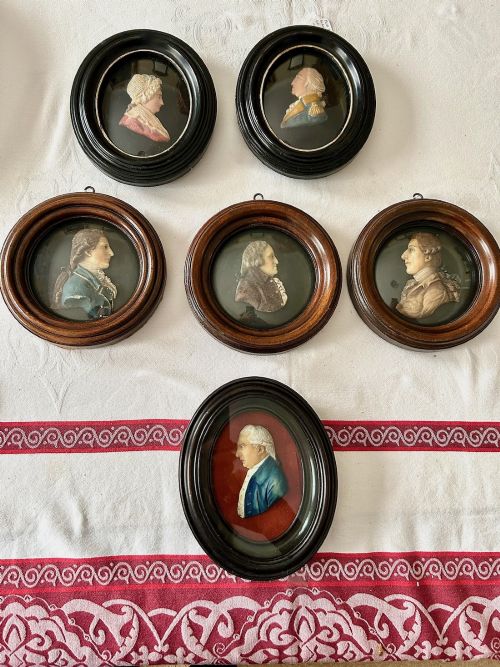
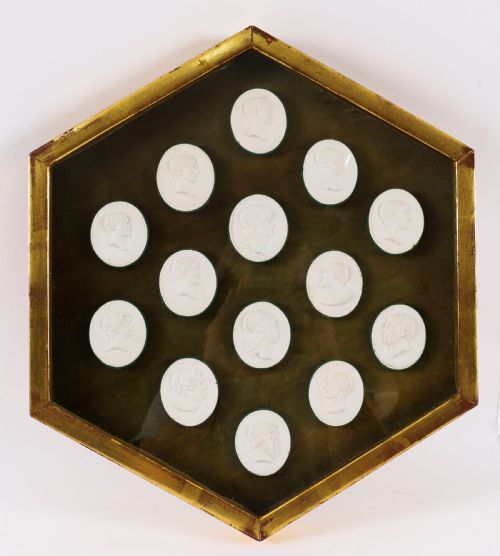
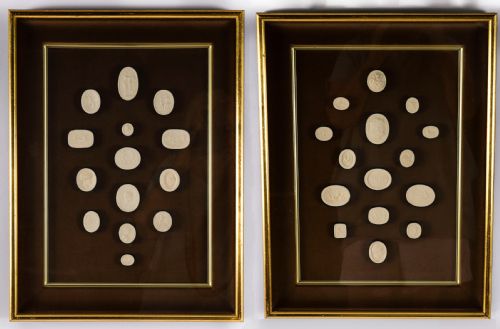
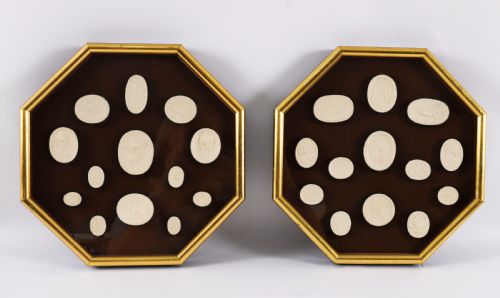
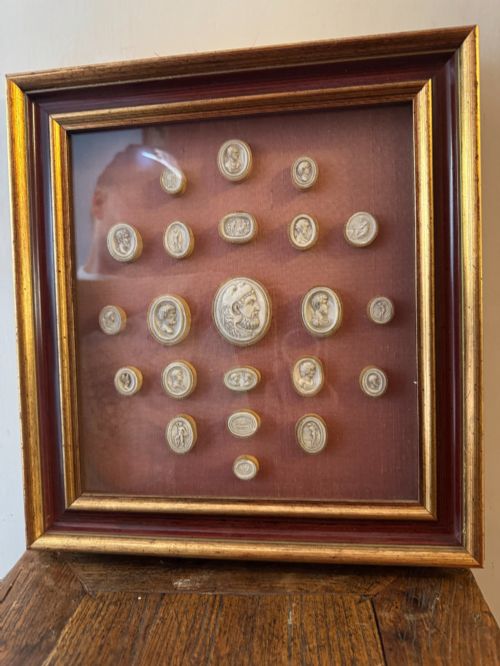
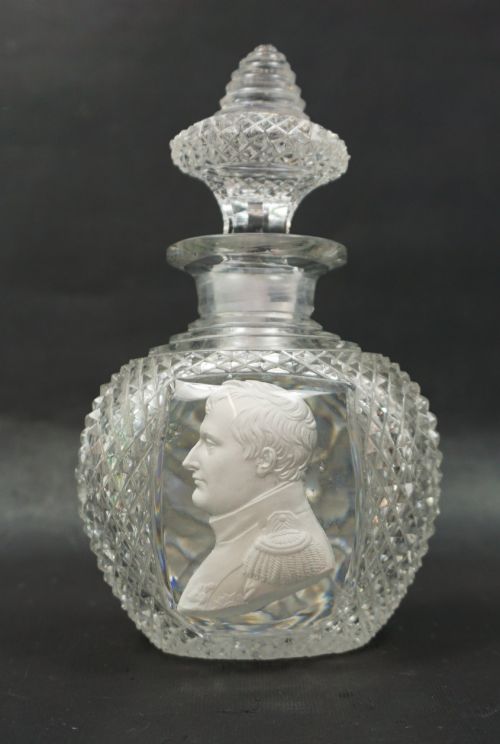
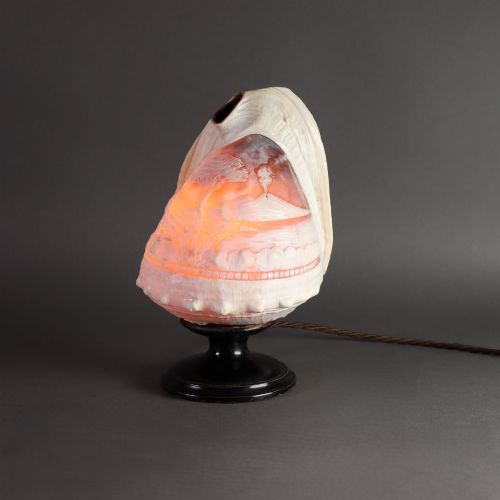
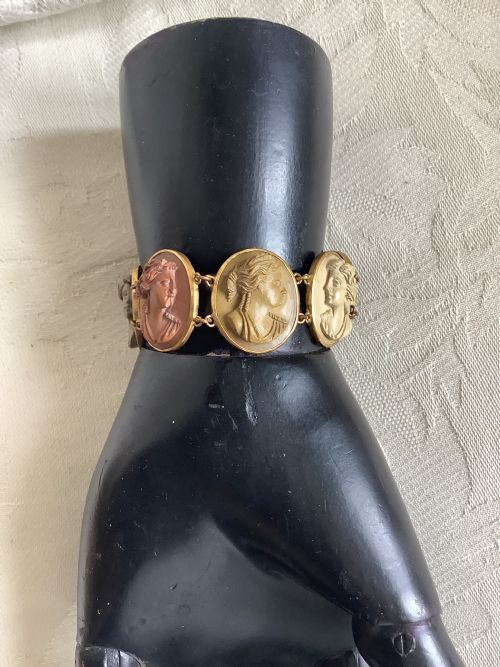
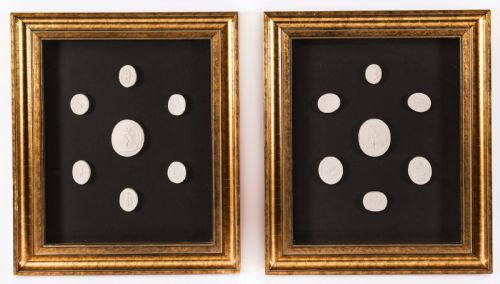
The most common formats on this page include shell cameo brooches mounted in gold or silver, and framed collections of plaster or gypsum intaglios produced in Italy. Buyers also find larger decorative works, such as carved lava stone bracelets, glass scent bottles, and marble profile plaques.
Originating largely from the cultural hubs of 19th-century Europe, particularly Italy and France, these items served as both personal adornments and scholarly souvenirs. They capture the era's deep fascination with antiquity, offering tactile links to the art of ancient Greece and Rome.
How they were made
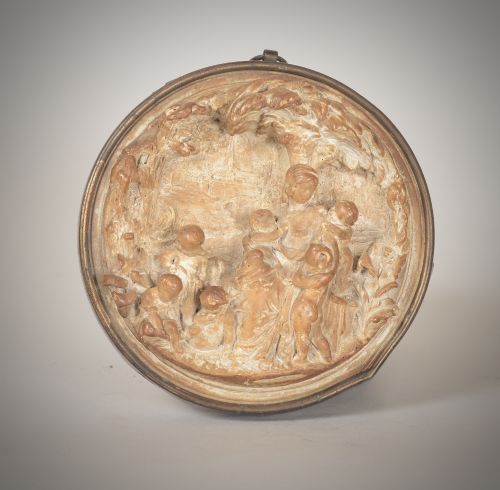
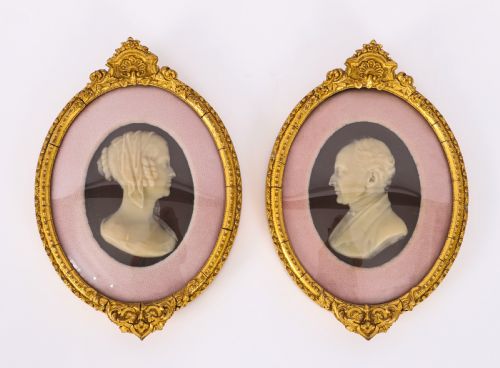
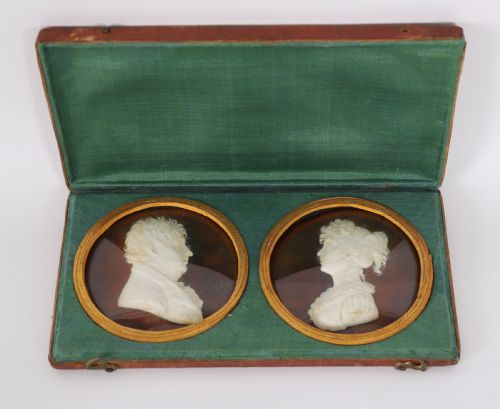
Carvers utilised natural materials possessing distinct chromatic layers, such as conch shell, layered agate, and lava stone, meticulously cutting away the upper stratum to reveal a contrasting raised profile against a darker background. For intaglios and plaster reliefs, makers pressed gypsum or wax into moulds or carved directly into glass and marble to achieve crisp, sunken or raised classical imagery.
Metalworkers housed these delicate carvings in secure mounts of gold, silver, or gilt bronze, frequently employing fine filigree, enamel appliques, and pearl settings for jewellery. Framed wall pieces relied on velvet backings, wood, and giltwood enclosures to preserve and display the fragile plaster, wax, and ivory panels.
The selection includes Regency, Victorian, and Georgian items, demonstrating broad stylistic shifts across the 19th century.
What varies in quality
Quality rests primarily on the depth, sharpness, and anatomical accuracy of the carving itself, where master hands achieved subtle facial expressions and fluid drapery folds rather than flat, stiff profiles. The choice and preparation of the raw material also dictate the tier of the piece, with flawless shell layers and unblemished hardstones commanding higher regard.
The integrity of the mounting and framing elevates certain examples above ordinary souvenirs, distinguishing workshop-produced Grand Tour sets from everyday tourist pieces. Original matching settings, clean gold or silver work, and well-preserved wax or plaster casts maintain the historical and aesthetic value of the object.
Giovanni Liberotti·Pietro Bracci·Thorvalsen Workshop·Stevens and Williams
The 19th Century Cameo Glossary
- Intaglio
- A gem or gemstone carved deeply into the surface so that the design sits below the edges, often used as a seal. In 19th-century collections, these were frequently cast in plaster or gypsum during Grand Tour travels.
- Grand Tour
- A traditional trip through Europe, chiefly Italy, undertaken by upper-class young men and scholars to absorb classical culture. Travellers collected framed plaster intaglios, shell cameos, and marble plaques as tangible evidence of their journey.
- Lava stone
- A porous volcanic rock utilised by Italian carvers during the Victorian era for three-dimensional portrait cameos and bracelets. It offered a matte finish that readily accepted fine sculptural detail.
- Hardstone
- A semi-precious stone such as agate or onyx possessing multiple coloured layers, favoured for durable and sharply defined carved profiles. These required immense skill from the lapidary.
- Sulphide
- A small white ceramic-like cameo or portrait medallion encased within clear glass. It creates a silvery, reflective relief when viewed from the front.
19th Century Cameo: Frequently Asked Questions
What is a Grand Tour cameo collection?
A Grand Tour collection consists of multiple miniature carved intaglios or reliefs, usually cast in plaster, gypsum, or wax and arranged together in a framed box. Travellers gathered these sets in Italy during the 19th century to document classical sculptures and antiquities seen abroad.
These framed sets served as portable museums for scholars and enthusiasts who wished to study classical mythology and portraiture at home. They reflect the educational ideals and aesthetic tastes of the period.
How do shell cameos differ from lava stone?
Shell cameos utilise natural conch or helmet shells, exploiting the contrast between a pale outer layer and a darker pink or brown inner background. They exhibit a smooth, slightly translucent polish that catches the light.
Lava stone cameos, by contrast, are carved from volcanic material and feature a distinctively matte, opaque finish. They are typically rendered in earthy tones of grey, brown, or cream and offer a deeply textured, velvety appearance.
How should I care for a vintage cameo?
Carved shell and soft stone cameos require gentle handling because organic materials are sensitive to moisture, cosmetics, and harsh chemical cleaners. Dust them softly with a dry cloth and store them away from direct sunlight to prevent fading.
Mounted jewellery pieces should be checked periodically to ensure the prongs or bezels holding the stone remain secure. Keeping them in dedicated velvet-lined boxes protects the delicate relief work from scratching against other items.
Can cameo jewellery be worn daily?
Wearing cameo jewellery depends largely on the material, as hardstone and durable gold mounts tolerate regular wear better than delicate shell or brittle plaster. Even robust brooches and rings benefit from mindful placement to avoid accidental impacts against hard surfaces.
Gentle use ensures that fragile relief edges and fine gold filigree remain intact for years to come. Many collectors reserve their most intricate pieces for special occasions while enjoying sturdier hardstone designs more frequently.