


19th Century Brass Helmet
A 19th century brass helmet brings striking metalwork into a room, whether forged for a Victorian fireplace or worn in European military service.
19th Century Brass Helmet
When you search for a 19th century brass helmet, you find a distinct mix of hearth accessories and historical military headgear. The pieces fall broadly into two camps: domestic coal scuttles shaped like classical helmets, and actual military items from various European regiments.
Domestic coal scuttles dominate the domestic side of the selection, often featuring polished brass bodies and sometimes copper accents with claw feet. Military examples range from French fire brigade helmets to German imperial officer pieces and cavalry headgear.
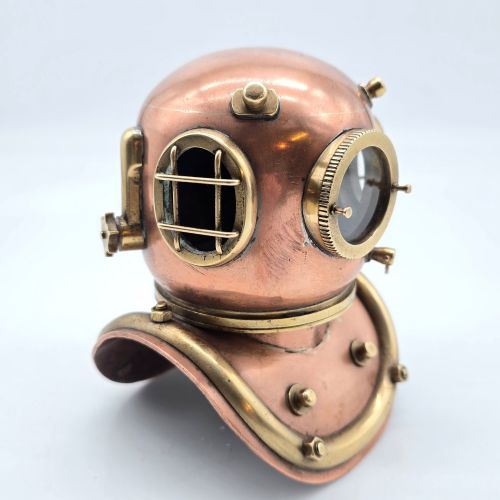
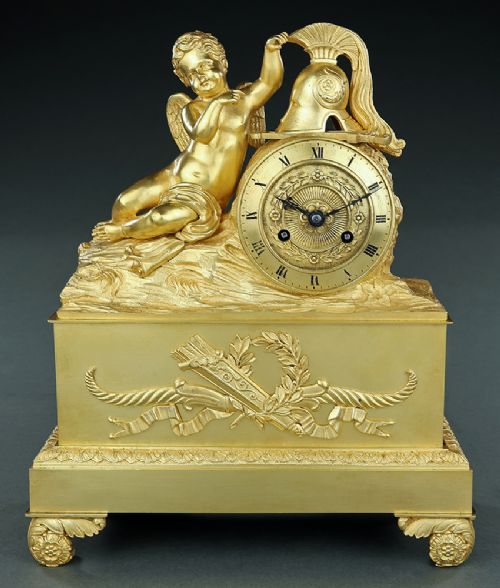
The periods span the Victorian era alongside specific dates like 1860, 1870, 1890, and 1910, reflecting both home utility and military pageantry. You will also encounter smaller decorative items such as scale models and mantel clocks incorporating the helmet motif.
How They Were Made
Makers utilised sheet brass and copper, shaping the metal through spinning and panel assembly for both coal scuttles and military helmets. Domestic items often incorporated wooden handles and cast metal feet.
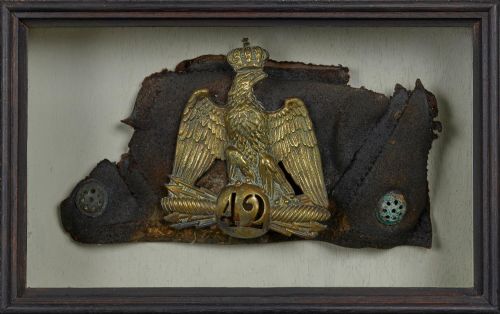
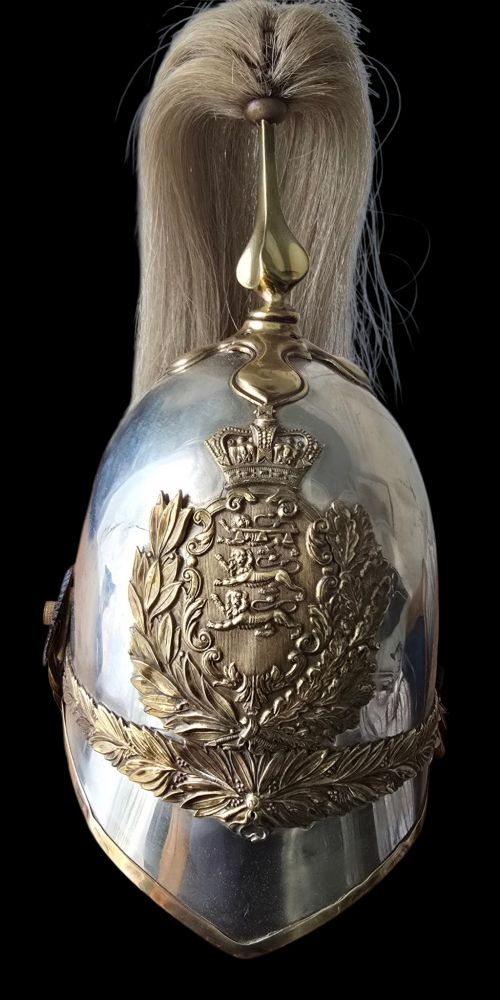
Military headgear involved complex assembly of brass, white metal, and gilt bronze elements, frequently complemented by leather liners and horsehair plumes. Miniature engineering pieces demonstrate the same careful metalworking on a tiny scale.
Materials in this selection include brass, copper, leather, wood, horsehair, glass, gilt bronze, and white metal across the 19th century.
What Varies in Quality
The standard of metal shaping and finishing dictates the quality of a 19th century brass helmet. Thicker gauge brass, crisp embossing, and robust construction distinguish superior domestic coal scuttles from simpler versions.
For military items, the integrity of original components such as plumes, metal trim, and structural hardware separates authentic regimental gear from later or assembled pieces.
The 19th Century Brass Helmet Glossary
- Coal Scuttle
- A domestic container designed for holding coal near a fireplace. Many 19th century examples were shaped specifically like classical helmets.
- Shako
- A tall, cylindrical military cap, often adorned with a metal plate or plume. Some period examples incorporate leather and brass elements.
- Gilt Bronze
- Bronze coated with a thin layer of gold or gold-coloured metal. This finish appears on decorative clock mounts and military fittings.
- Horsehair Plume
- A decorative crest of horsehair attached to the top of military headgear. These plumes add height and distinction to cavalry and officer helmets.
- White Metal
- An alloy of relatively low melting point used in military uniform fittings. It provides a silver-toned contrast to yellow brass.
19th Century Brass Helmet: Frequently Asked Questions
Are these helmets wearable?
Most pieces intended for military use were designed to be worn, though historical items require careful handling.
Domestic helmet scuttles, however, are purely functional hearth vessels and are not proportioned for human heads.
How do I clean a brass helmet?
Maintenance depends on whether you prefer a bright polished finish or a deep historical patina.
Gentle dusting is usually sufficient, while proprietary brass cleaners can restore shine to domestic scuttles.
What is the difference between a scuttle and military gear?
Coal scuttles are heavy domestic buckets designed with a hinged handle and flat base for scooping fuel.
Military helmets are protective or ceremonial headwear featuring chinstraps, liners, and regimental badges.
How do I date a brass helmet?
Dating relies on matching the construction methods, materials, and specific stylistic patterns to known historical periods.
Military pieces often correspond to precise regimental regulations from the Victorian era or imperial campaigns.