


Victorian Brass Helmet
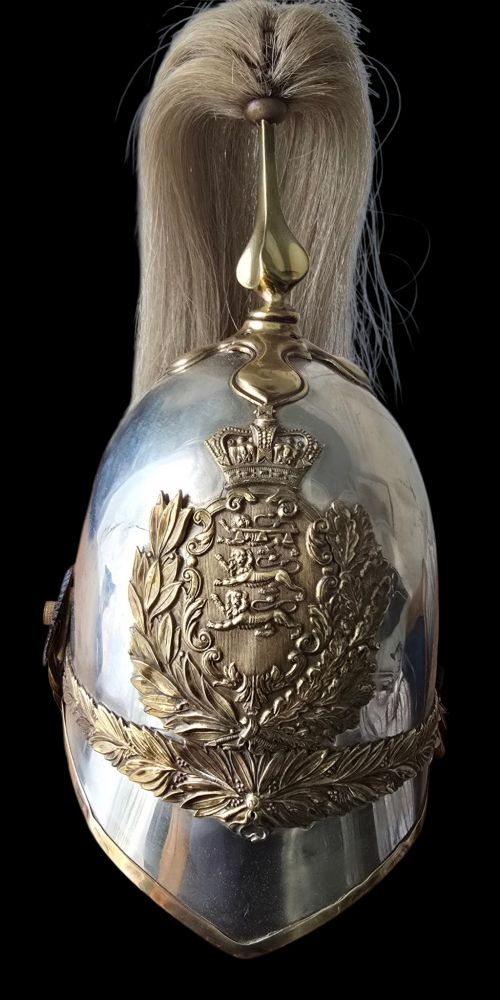
When you search for a victorian brass helmet, you are looking at fireside coal scuttles shaped like military headgear, alongside actual 19th-century military helmets.
Victorian Brass Helmet
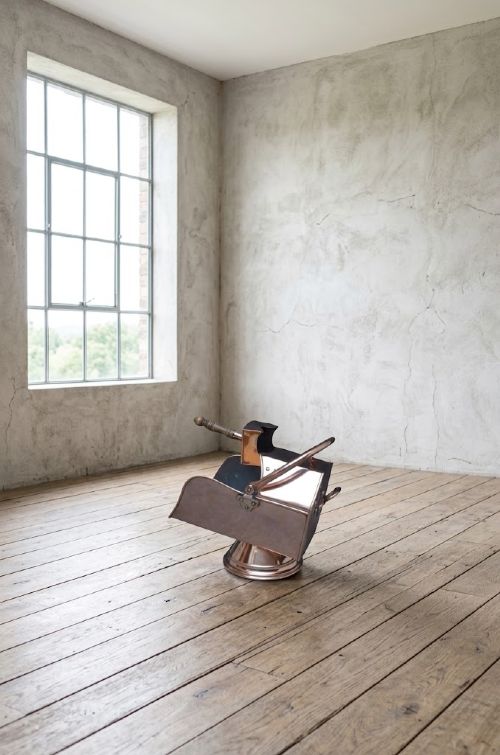
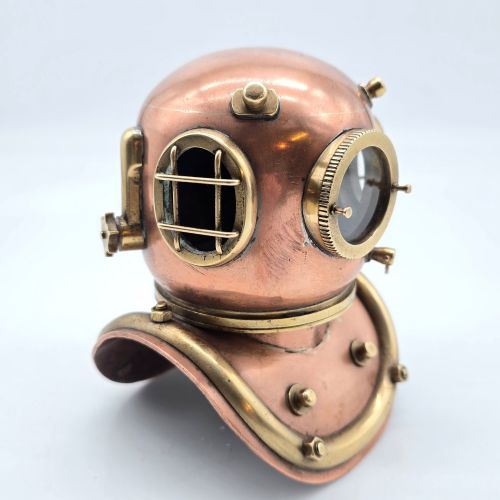
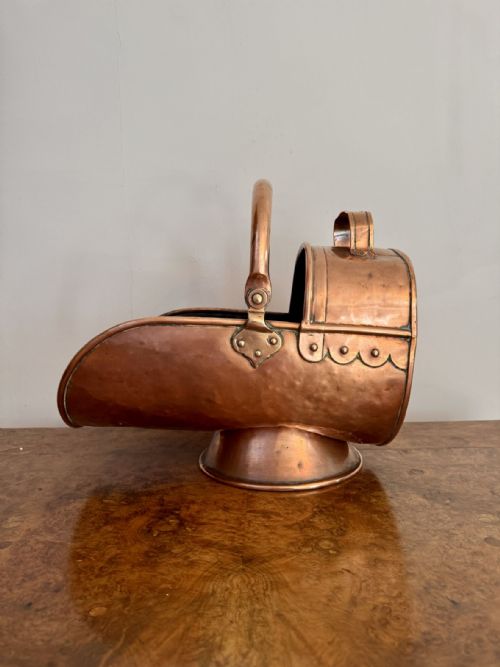
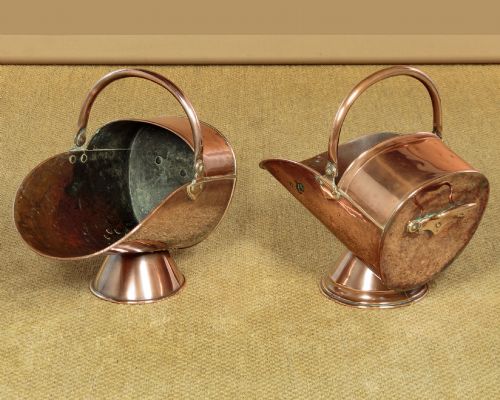
A victorian brass helmet on the market is principally a fireside coal scuttle formed in the distinctive swept profile of a classical military helmet. These domestic scuttles sit beside actual 19th-century military headdress and miniature scale models, reflecting the Victorian fascination with martial forms brought indoors.
Most domestic examples encountered on this page date from the later decades of the nineteenth century, particularly around 1880, produced in brass or copper with wooden or metal handles. Alongside these domestic coal carriers, the category embraces genuine military items such as cavalry helmets, lance caps, and firefighter headgear in brass, white metal, and leather.
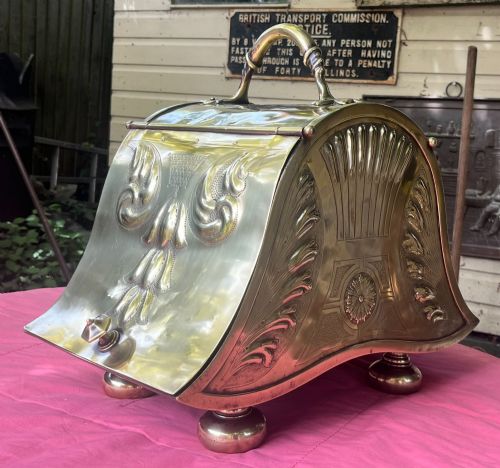
The domestic coal helmet typically includes a flat foot, a hinged lid or open top, and a matching shovel stored in a side sleeve. They served a purely practical purpose in the Victorian parlour, holding coal by the hearth before central heating altered domestic routines.
How they were made
Makers fashioned domestic coal helmets primarily from sheet brass and copper, joining the curved body panels with seams, rivets, or soldering. Heavy cast brass components formed the handles, feet, and decorative mounts, providing the structural rigidity needed to carry heavy loads of coal.
Military helmets relied on a different discipline of metalworking, utilising spun or stamped brass, white metal, and gilt highlights combined with leather internal linings and horsehair plumes. Embossed detailing on copper bodies required skilled hand-beating against wooden or iron stakes to raise decorative patterns from the reverse.
Listings span the nineteenth and early twentieth centuries, dominated by Victorian copper and brass coal helmets alongside genuine military headdress.
What varies in quality
The distinction between ordinary production and finer quality rests on the gauge of the metal and the integrity of the construction. Heavier brass and thicker copper resist denting and maintain the sharp lines of the helmet shape over decades of domestic use.
Makers who supplied top-tier retailers integrated signed work, such as pieces bearing the mark of Benham and Froud or Henry Loveridge, which distinguish factory output from anonymous workshop fabrication. The inclusion of an original matching shovel and robust, well-cast handle mountings further separates the superior pieces from standard domestic hardware.
Benham And Froud·Henry Loveridge
The Victorian Brass Helmet Glossary
- Coal Scuttle
- A domestic container designed to hold coal for a fireplace, often styled as a bucket, box, or helmet.
- Toleware
- Tinplate metal coated with japanned paint or lacquer, used for military hat boxes and domestic wares.
- White Metal
- An alloy of low-melting metals used in military helmets and insignia for its silver-coloured appearance.
- Lance Cap
- A rigid-topped military headdress worn by lancers, featuring a square top plate above a leather or metal skull.
Victorian Brass Helmet: Frequently Asked Questions
What is a brass helmet scuttle?
A brass helmet scuttle is a nineteenth-century domestic coal container shaped to resemble a traditional military helmet. They were kept by the fireplace to replenish the hearth.
These vessels combine utility with decorative display, featuring a wide mouth for scooping fuel and a sturdy handle for carrying. Many retain their original matching shovel slotted into the side.
How do I clean a brass helmet?
Cleaning depends on the desired finish, though most collectors prefer to leave an aged patina intact. Gentle dusting and occasional wiping with a soft cloth preserve the historic surface.
Aggressive metal polishes strip away age and can damage softer copper surfaces or embossed details. Care should be taken around stamped makers' marks so the lettering remains clear.
Were these helmets used by soldiers?
Domestic coal helmets were purely decorative and utilitarian items made for Victorian homes, not worn in battle. They borrowed their styling from the military uniforms of the era.
Actual military helmets listed alongside them, such as cavalry caps and firefighter headgear, saw genuine service. The distinction is clear in the weight, internal linings, and materials used.
How do I date a brass helmet?
Dating relies on construction methods, material thickness, and stylistic cues associated with the Victorian and Edwardian periods. Pieces from around 1880 often feature heavier gauge brass and hand-finished seams.
Makers' stamps provide a reliable guide when present on the base or handle mounts. Comparing the form to documented examples helps narrow the decade of manufacture.