






19th Century Brass Barrel
These 19th century brass barrel pieces combine robust utilitarian construction with decorative metalwork, offering practical storage or striking hallway focal points for collectors.
19th Century Brass Barrel
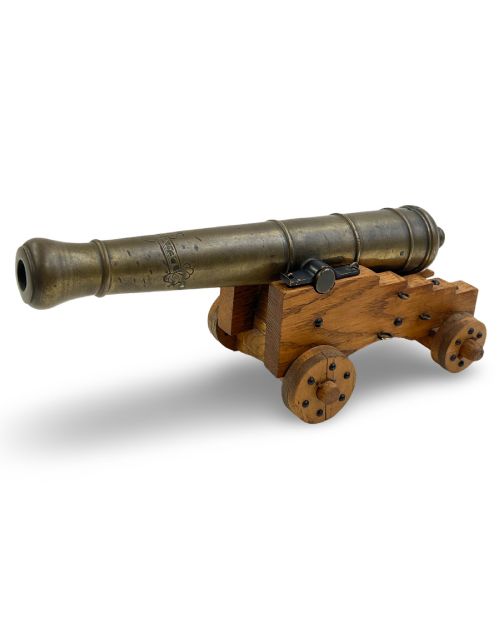
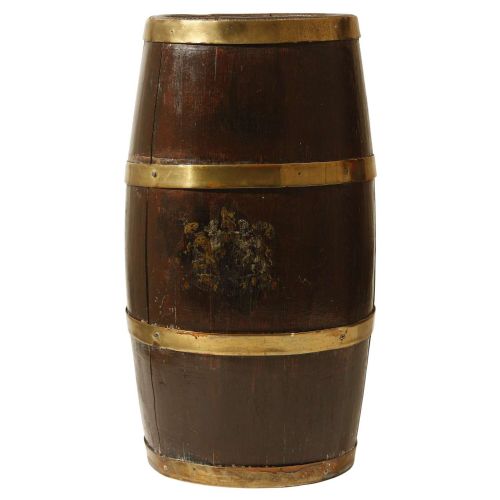
When you search for a 19th century brass barrel, you encounter coopered wooden vessels and maritime equipment defined by metal hoops and fittings. The most frequent examples on this page are oak and hardwood umbrella or stick stands strengthened with heavy brass bands, alongside naval blunderbusses and signal cannons featuring cast metal tubes.
The selection ranges across several decades of the 19th century, drawing on Georgian traditions and extending into the Victorian era. Alongside domestic stick stands and water barrels in copper and brass, the category encompasses firearms with distinctive brass barrels used by military forces and maritime travellers.
Makers and origins vary from English workshops to Dutch country coopers and Scandinavian metalworkers. Buyers select these containers and implements for their functional origins and the rich visual contrast between dark timber staves and polished brass.
How they were made
Coopered vessels are constructed from curved wooden staves of oak, mahogany, walnut or hardwood, tightly bound together by hand-shaped brass braces or hoops. Blacksmiths and metalworkers cast and hammered the brass components to secure the wooden staves against daily moisture and wear.
Firearms and signal cannons employ cast brass barrels fitted to wooden stocks, sometimes incorporating intricate bone and brass inlay work. Craftsmen utilised steel and iron for internal lock mechanisms, combining durable ferrous metals with decorative brass externals.
19th Century Brass Barrel Retail Price Guide 2026
Typical asking prices for 19th century brass barrel among the pieces listed under this phrase on Sellingantiques today, from the lower quarter to the upper quarter. They describe what is for sale here now, not the wider market.
Someone once repurposed a naval signal cannon to announce dinner parties, startling the local livestock and settling village timekeeping for good.
What varies in quality
Quality rests upon the integrity of the cooperage, the weight and thickness of the brass bands, and the crispness of any engraved details or crests. Superior stick stands retain all their original brass braces and exhibit tight, well-fitted wooden staves without excessive shrinkage.
In firearms and cannons, the refinement of the casting, the quality of the timber stock, and the presence of legible maker signatures or proof marks determine the standing of the piece. Untouched surfaces with deep patination outrank items that have undergone aggressive modern cleaning.
Harrods·A.W Spires·Wilson
The 19th Century Brass Barrel Glossary
- Cooper
- A craftsman who builds wooden staves into barrels, tubs and buckets using metal hoops. Traditional coopers shaped each stave by hand to ensure a watertight or structurally sound vessel.
- Blunderbuss
- A muzzle-loading firearm with a large, flared barrel designed to scatter shot at close range. These weapons frequently utilised brass barrels to resist corrosion in maritime environments.
- Percussion pistol
- A firearm ignition system introduced in the 19th century that replaced flintlocks. Shooters struck a percussion cap with a hammer to ignite the gunpowder charge.
- Flintlock
- An ignition mechanism where a flint strikes a steel frizzen to create sparks for firing. This system predates the percussion cap and spans the late 18th and early 19th centuries.
- Stave
- One of the narrow vertical blocks of wood that form the sides of a barrel or stick stand. Staves are traditionally shaped with bevelled edges to fit tightly against one another.
19th Century Brass Barrel: Frequently Asked Questions
What were 19th century brass barrel stick stands used for?
These coopered containers served in domestic hallways and libraries to hold walking sticks, riding crops and wet umbrellas. The metal bindings protected the wooden staves from dampness and heavy daily use.
Over time, they evolved from purely utilitarian household equipment into decorative hallway furnishings appreciated for their rich timber grain and polished brass bands.
How do I distinguish between a domestic barrel and a firearm?
Domestic pieces are constructed as open-topped wooden vessels or umbrella stands bound in brass. Firearms and signal cannons feature closed metal tubes designed for discharging projectiles or signals.
Firearms also incorporate firing mechanisms such as flintlocks or percussion locks fixed to wooden stocks, whereas storage barrels rely purely on stave construction.
How should I clean a brass barrel?
Maintain the brass fittings by dusting them gently with a soft cloth to preserve the historic patina. Avoid harsh chemical polishes that strip away the aged character accumulated over two centuries.
Feed the dry oak or hardwood staves occasionally with a suitable wax to prevent the timber from splitting in centrally heated rooms.
Why do some brass barrels feature coats of arms?
Inscribed crests or applied coats of arms generally denote ownership by military regiments, noble households or institutional bodies. These decorative additions elevate the status of an otherwise standard utility item.
Such heraldic details help historians trace the provenance and original deployment of specific maritime and domestic containers.