
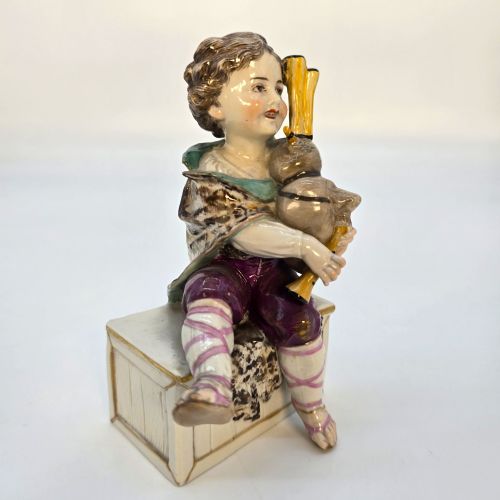
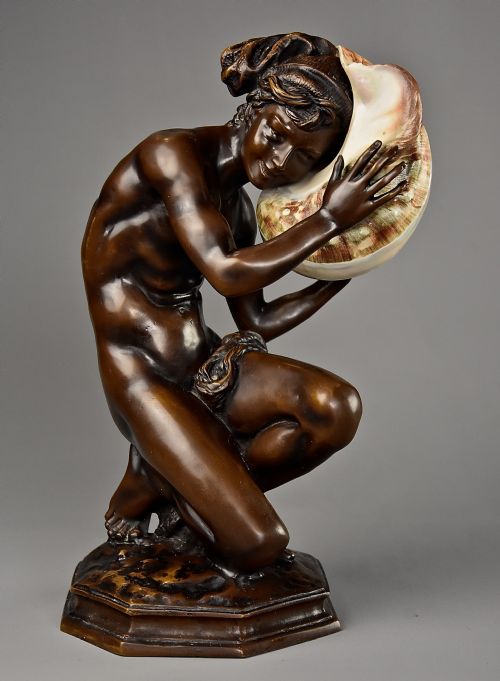


19th Century Boy Statue
A 19th century boy statue captures youthful energy in bronze, porcelain, marble, and terracotta, offering enduring character to interiors.
19th Century Boy Statue
A 19th century boy statue encompasses sculptures and figurines depicting youthful figures in various everyday and classical roles. These pieces range from Fisher Folk and harvesters to street urchins and musicians.
Makers across Europe, including French, German, and Italian foundries and potteries, produced these figures in substantial numbers. Buyers frequently encounter bronze castings alongside hard-paste porcelain and carved alabaster.
The objects serve as decorative studies reflecting Victorian, Neoclassical, and Rococo Revival tastes. Many pieces adopt specific narratives, such as the Spinario or a water carrier.
Materials and methods
Bronzes utilise the lost-wax casting technique, often finished with patination or cold painting to highlight details. Marble and alabaster pieces involve hand carving from solid blocks, while terracotta and ceramic figures rely on moulding and kiln firing.
Porcelain items employ hard-paste composition decorated with hand-painted enamel and occasional gold leaf accents. Wood and root carvings require precise manual shaping to follow natural grain patterns.
Listings feature works from the 19th century through the early 20th century, utilising bronze, porcelain, marble, terracotta, and alabaster.
Assessing quality and execution
Signature markings from documented sculptors or recognised factories elevate the standing of a piece. Original patination and intact hand-painted enamel surfaces retain higher artistic integrity than heavily restored examples.
Jean-Baptiste Carpeaux·Julien Lorieux·Mieczyslaw Leon Zawiejski·Giuseppe Renda·Joaquim Angles·Helena Wolfsohn·Vincenzo Gemito·Antoine Bofill·Auguste Moreau·Ferdinando Vichi·Charles Anfrie·Emile victor BLAVIER·Goldscheider·Eugene Laurent·Enrico Astorri
The 19th Century Boy Statue Glossary
- Patinated bronze
- A metal sculpture treated with chemical solutions to produce a specific surface colour or tone. This process protects the metal and adds depth to the modelling.
- Hard-paste porcelain
- A dense ceramic material fired at high temperatures using kaolin and petuntse. It yields a durable body suitable for detailed figurine production.
- Spelter
- An alloy of zinc and other metals utilised as a cost-effective alternative to bronze. It often receives a bronze-like coating to simulate heavier metal.
- Bisque
- Unglazed ceramic fired once to create a matte, porous white surface resembling marble. It became popular for neoclassical and sentimental figures.
- Spinario
- A classical Hellenistic sculpture depicting a boy extracting a thorn from his foot. 19th-century versions reproduce this iconic ancient subject in bronze or alabaster.
19th Century Boy Statue: Frequently Asked Questions
What materials are typical for these figures?
Sculptors and factories utilised bronze, patinated bronze, marble, terracotta, alabaster, and hard-paste porcelain. Ceramic pieces often feature hand-painted enamel and gold leaf.
Wood and root carvings also appear, alongside spelter and plaster studies representing classical or everyday subjects.
How do I identify the period of a statue?
Examine the casting quality, base construction, and surface patination for signs of period manufacturing techniques. Signatures or factory marks stamped into the material provide direct attribution.
Stylistic cues such as Neoclassical drapery or Victorian sentimentality help align pieces with nineteenth-century production dates.
Where were these sculptures made?
Production centred largely in European workshops, notably in France, Germany, and Italy. Factories like Volkstedt, Sitzendorf, and Samson produced porcelain examples.
Foundries in Paris and regional Italian studios cast the bronze and marble works found in the records.
How should I display a heavy bronze or marble piece?
Place heavy sculptures on stable, level surfaces capable of supporting substantial weight, such as dedicated pedestals or sturdy wooden furniture. Ensure the display area avoids continuous direct sunlight to protect patinas and finishes.
Position pieces away from high-traffic zones to prevent accidental knocks against delicate extremities.