
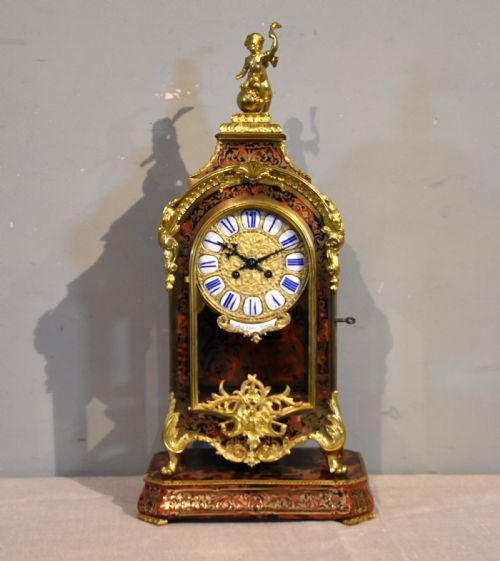


19th Century Boulle Clock
A 19th century boulle clock brings rich tortoiseshell, brass inlay and ormolu mounts to a room, offering striking decorative presence and French horological craft.
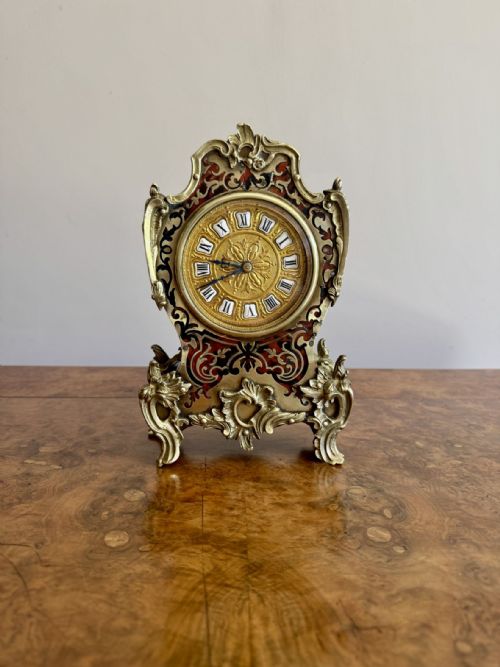
19th Century Boulle Clock
A 19th century boulle clock is a decorative timepiece that draws heavily on the earlier court styles of Louis XIV and Louis XV. These pieces typically take the form of mantel clocks, bracket clocks with matching wall brackets, or occasional wall and pedestal clocks.
The version most commonly met on this page is the French mantel clock, often produced during the Victorian era around 1860 to 1890. Makers frequently employed revival aesthetics such as French Rococo Revival, Louis XIV style and Napoleon III designs.
Buyers seek these objects for their ornate silhouette and the intricate pattern of brass and tortoiseshell marquetry covering the wooden carcase. They function as both timekeepers and focal points for a mantelpiece, bracket shelf or side table.
How they were made
The distinct surface pattern relies on boulle work, a technique of marquetry that cuts sheet brass and tortoiseshell together in interlocking patterns. Artisans glued these contrasted materials to an ebonised wood or stained wood carcase.
Gilt bronze and ormolu mounts were cast and applied to corners, feet and crests to frame the marquetry and accentuate the curves of the case. Enamel cartouches or chapter rings were fitted to the dial, behind glass, to display the hours.
Movements inside these cases were typically eight-day striking mechanisms produced by prominent Parisian clockmakers or volume movement suppliers of the period. The integration of brass inlay, tortoiseshell and heavy cast bronze required specialist cabinet-making and horological skill.
Materials recorded across these objects include brass, ormolu, tortoiseshell, enamel, glass, gilt bronze, ebonised wood, and stained wood.
What varies in quality
The distinction between tiers of production lies in the crispness of the ormolu casting and the precision of the brass and tortoiseshell marquetry. Finer examples display deeply chased gilt bronze mounts and tight, seamless joints in the inlay.
The depth of colour in the tortoiseshell and the complexity of the engraving on the brass panels separate standard decorative output from superior workshop pieces. Furthermore, the presence of an original matching bracket or a signed movement by a known maker elevates the standing of the clock.
HENRI MARC OF PARIS·Samuel Marti·Vincenti
The 19th Century Boulle Clock Glossary
- Boulle work
- Marquetry technique utilising brass and tortoiseshell inlaid into a wooden carcase. It is named after André-Charles Boulle, the cabinetmaker to Louis XIV.
- Ormolu
- Gilt bronze mounts applied to furniture and clock cases for ornamentation. The finish provides a bright golden appearance that contrasts with dark wood and tortoiseshell.
- Bracket clock
- A portable clock designed to sit on a matching wall bracket or shelf. Many 19th century examples retain their original hanging support.
- Cartouche
- A separate small enamel plaque bearing a single numeral on the clock dial. These were pinned to the backing plate rather than painting numbers directly on a single enamel face.
- Garniture
- A set comprising a central clock and matching ornamental sidepieces such as vases or candelabra. They were designed to sit together on a mantelpiece.
- Marquetry
- Decorative patterns formed by fitting pieces of veneer into a wood foundation. In boulle work, this involves sheet metal and organic shell.
19th Century Boulle Clock: Frequently Asked Questions
What is a boulle clock?
A boulle clock is a French timepiece decorated with tortoiseshell and brass marquetry, named after the historic inlay technique developed in seventeenth-century France. 19th century versions revive these earlier court styles using contemporary Victorian manufacturing methods.
These clocks range from small mantel pieces to large bracket clocks with matching wall supports, all designed to make a strong visual statement in an interior.
How do these clocks keep time?
Most 19th century boulle clocks utilise an eight-day mechanical movement driven by springs, requiring a key wind through the dial face roughly once a week. They often feature a striking mechanism that chimes on the hour or half-hour using a bell or gong.
Movements were frequently supplied by specialist French makers, and buyers should expect to service older mechanisms periodically to maintain accurate timekeeping.
Where should I place a bracket clock?
Bracket clocks are traditionally designed to sit upon their own wooden or ormolu-mounted wall bracket, elevating the piece so the dial is easily viewed. Securing the bracket firmly to a solid wall is essential to support the substantial weight of the timber, metal and glass carcase.
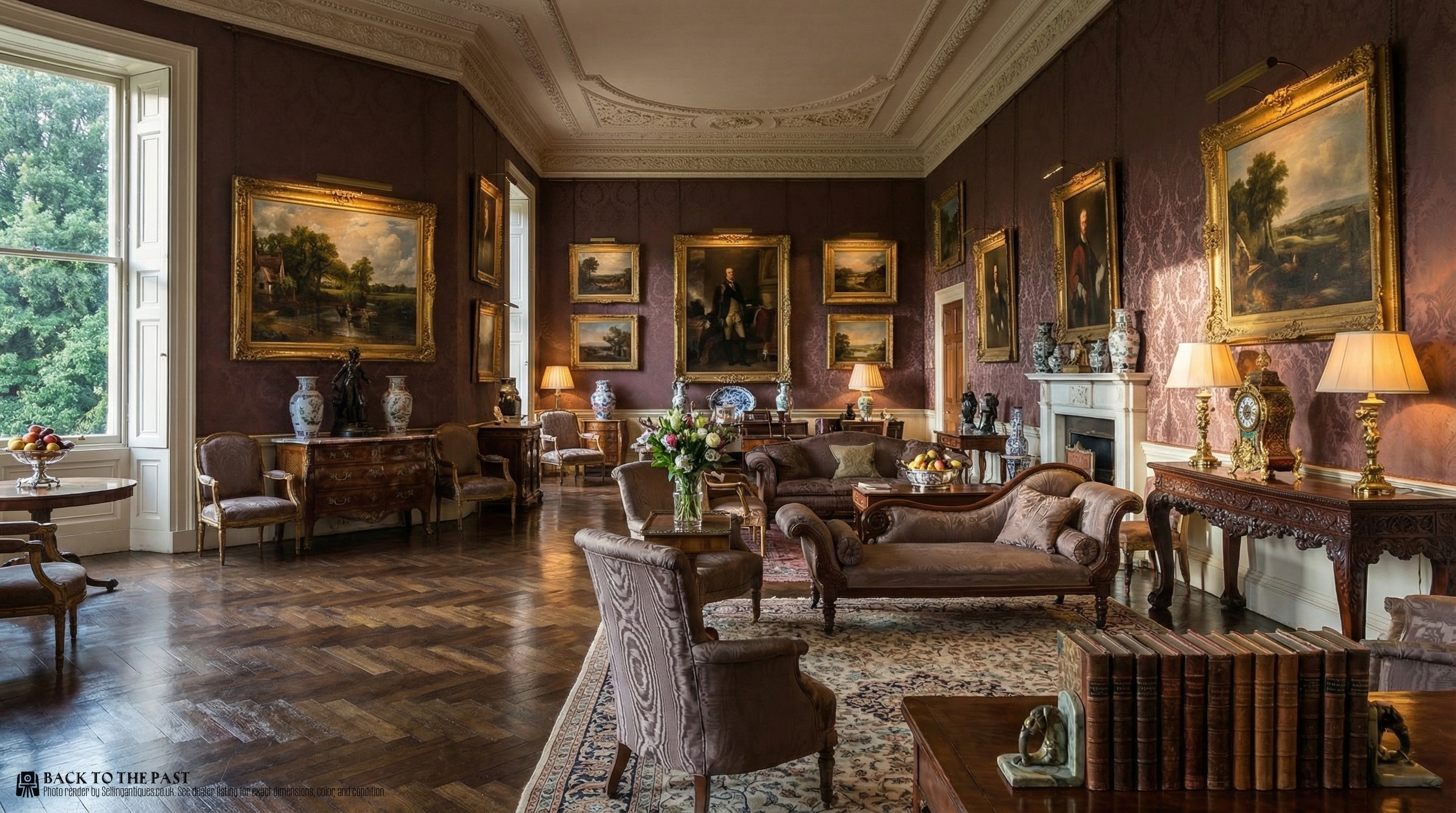
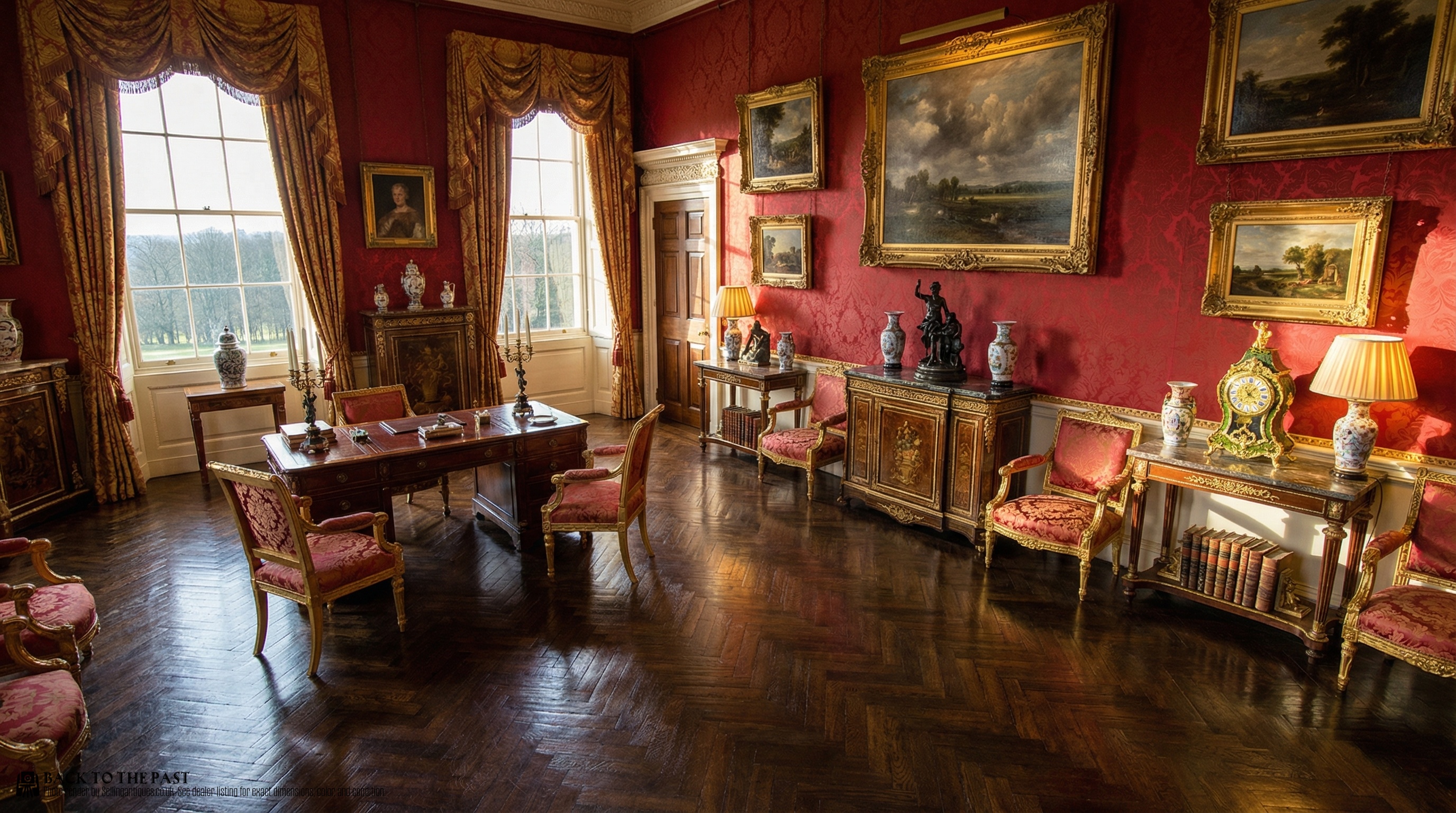
Alternatively, many bracket clocks and mantel clocks sit comfortably on a sturdy mantelpiece, sideboard or console table where the reflective brass and tortoiseshell catch the room's light.
How do I identify the period of a boulle clock?
Dating relies on examining the style of the ormolu mounts, the shape of the wooden case, and any signatures on the enamel dial or internal movement. 19th century versions often reference Louis XIV, Louis XV or Napoleon III revival styles rather than being authentic seventeenth-century pieces.
Indicators such as the type of brass engraving, the composition of the enamel dial, and mechanics associated with Victorian French workshops help narrow the date of manufacture.