
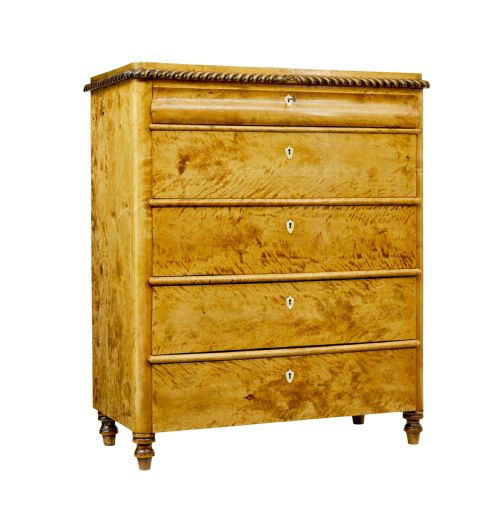
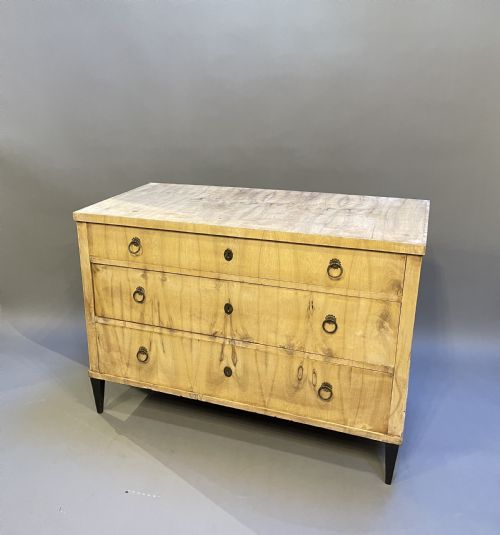

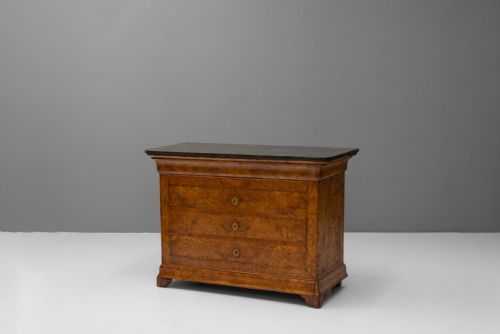


19th Century Biedermeier Chest
A 19th century biedermeier chest brings clean architectural lines and figured wood grains into a room, offering practical storage with restrained continental elegance.
19th Century Biedermeier Chest
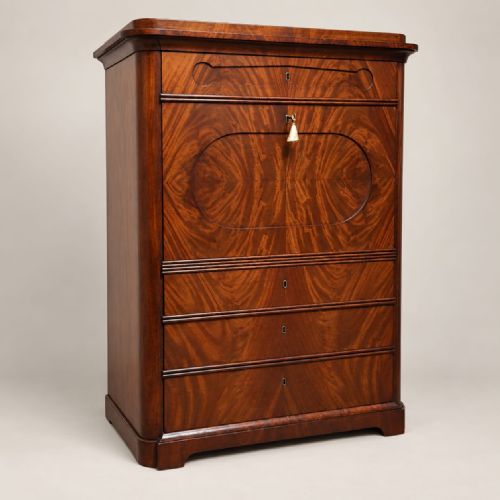
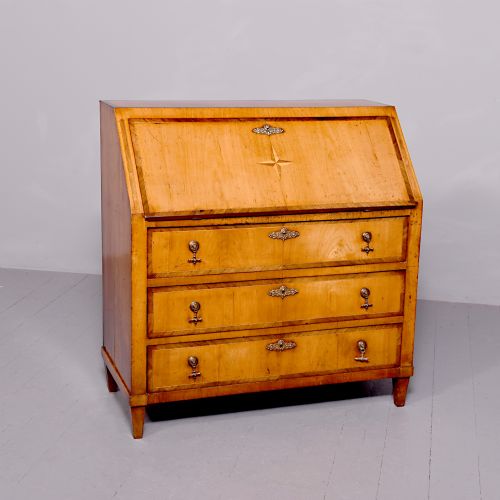
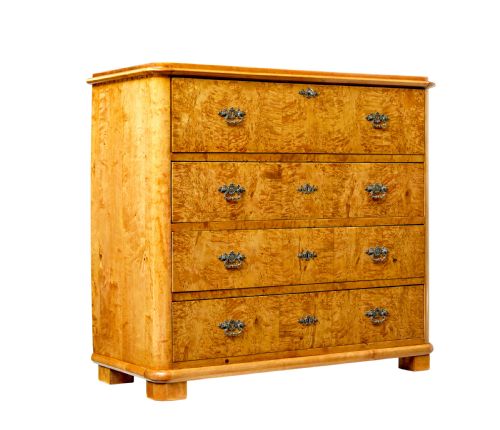
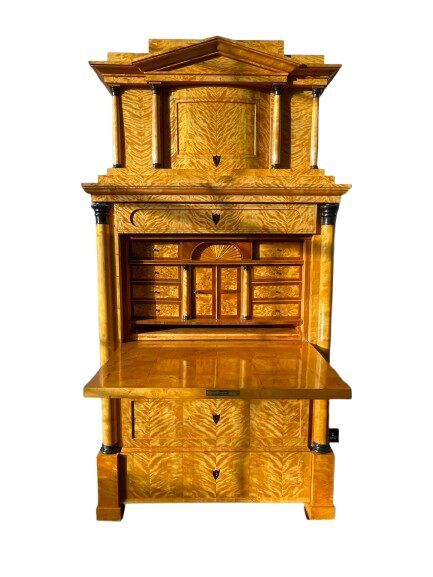
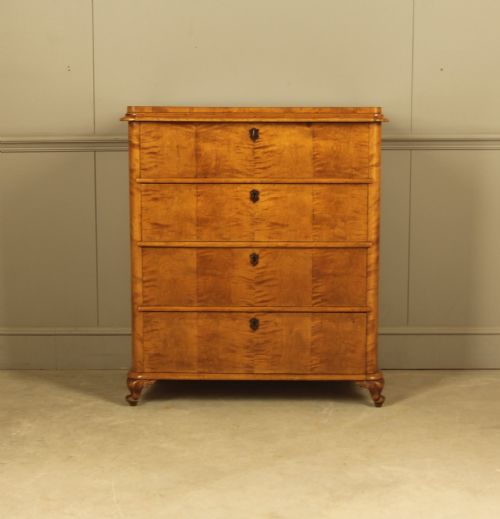
A 19th century biedermeier chest encompasses various drawer configurations, from straightforward straight-drawer units to taller secretaire chests and fitted escritoires. The selection draws heavily from Scandinavian workshops, particularly Swedish makers, alongside continental examples influenced by French styles.
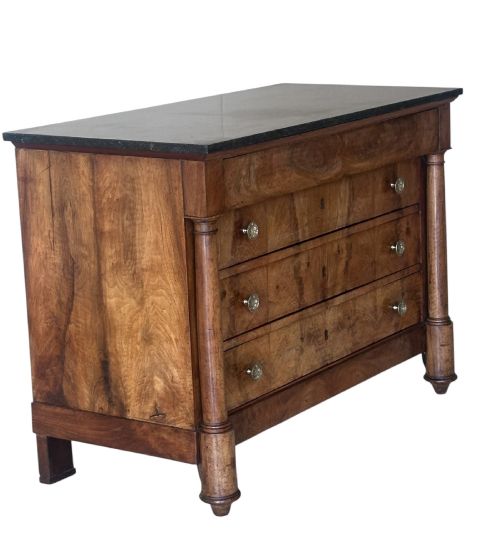
Pieces frequently feature multi-drawer layouts, drop-front writing compartments, and marble tops paired with timber carcases. These items served domestic bedroom and study spaces, prioritising functional storage combined with a calm exterior.
The aesthetic discards heavy ornamentation in favour of polished timber surfaces and balanced proportions. Buyers encounter both compact commodes and imposing taller cabinets across the inventory.
Evaluating the Pieces
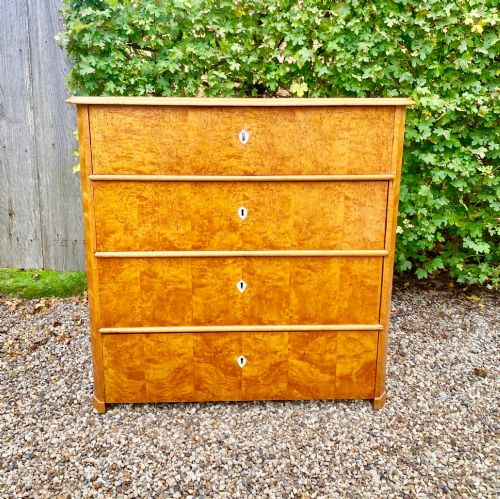
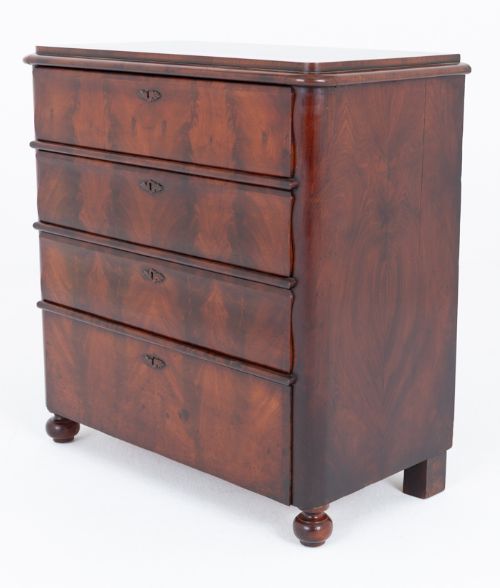
Differentiation across the range rests primarily on the choice and matching of timber veneers. Master craftsmen arranged grain patterns symmetrically across drawer banks to create striking visual rhythms.
Proportion and structural restraint also separate standard examples from finer pieces. Successful execution depends on clean lines, precise joinery, and integration of writing flaps or secretaire drawers without disrupting the unified surface.
Listings feature birch, mahogany, walnut, elm, and cherry, with birch variants appearing most frequently across Swedish pieces.
The 19th Century Biedermeier Chest Glossary
- Secretaire
- A chest of drawers incorporating a fitted drop-front writing drawer with internal compartments and small drawers. This dual-purpose form allows the piece to function as both a storage chest and a desk.
- Veneer
- A thin layer of finely figured wood applied over a secondary timber carcase. This technique permitted cabinetmakers to display expensive woods like mahogany and birch across wide drawer fronts.
- Commode
- A low chest of drawers or cabinet originating from French furniture types. They frequently stand on shorter legs and occasionally feature marble tops.
- Masur birch
- A decorative timber variant characterised by dark swirls and natural knot clusters within the grain. Swedish makers prized this material for its distinctive speckled appearance.
19th Century Biedermeier Chest: Frequently Asked Questions
How do I use a secretaire chest?
Pull out the top drawer front to drop the hinged writing surface down into a horizontal position. Inside you will find small pigeonholes and letter drawers intended for correspondence.
Once finished writing, simply lift the flap back into vertical alignment and secure it. The mechanism hides the workspace entirely when not in use.
Where were these chests made?
Most surviving examples originate from Sweden and broader continental Europe during the nineteenth century. German, Austrian, and French regional workshops also produced similar restrained designs.
Scandinavian makers favoured lighter local timbers like birch, while continental makers often turned towards darker mahogany and walnut.
How do I clean the wood surface?
Dust the polished timber regularly with a soft, dry cloth to prevent grit accumulation. Avoid modern silicone sprays or household polishes that can build up on nineteenth-century finishes.
Feed the dry veneer periodically with a traditional beeswax wax applied sparingly and buffed gently. Keep the piece away from direct heat sources and strong sunlight to prevent the timber from splitting.
What is flame birch?
Flame birch refers to wood grain featuring a distinct undulating pattern resembling flickering fire flames. Cabinetmakers booked-matched these veneer slices to create symmetrical designs across drawer fronts.
This decorative figuring occurs naturally in specific birch trees and was heavily utilised by Scandinavian makers to add visual depth to minimalist furniture.