




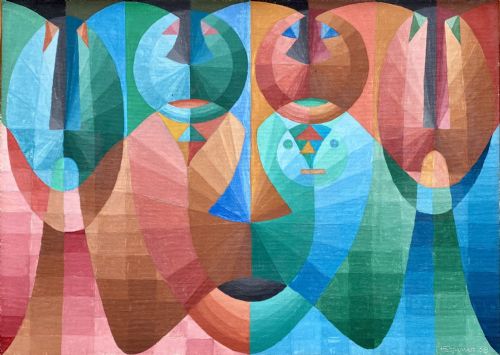


1960s Canvas Artwork
1960s canvas artwork brings mid-century modernism and expressive brushwork directly into a room, offering tactile depth and vibrant colour.
1960s Canvas Artwork
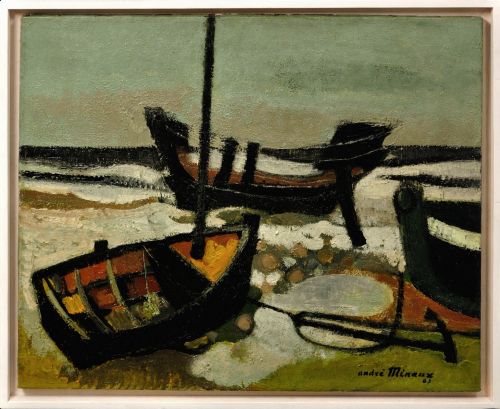
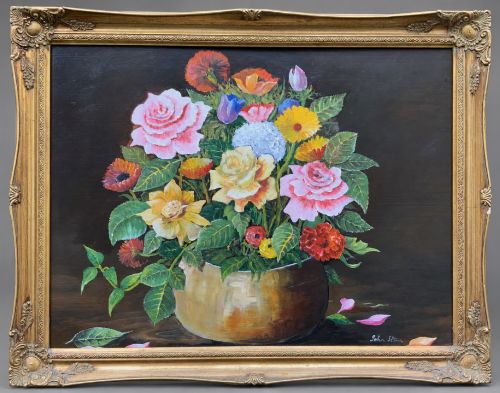
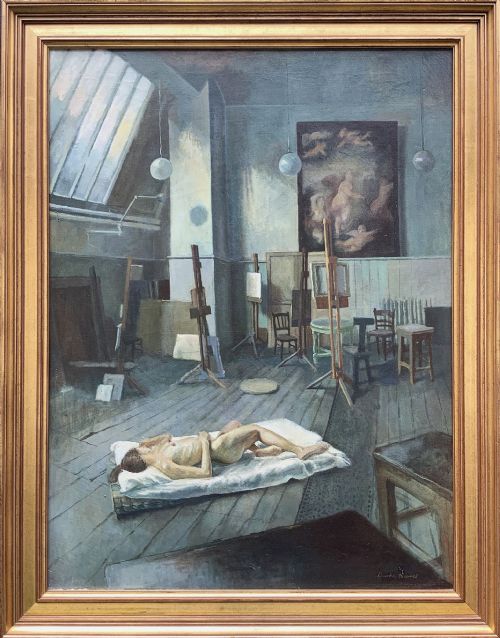
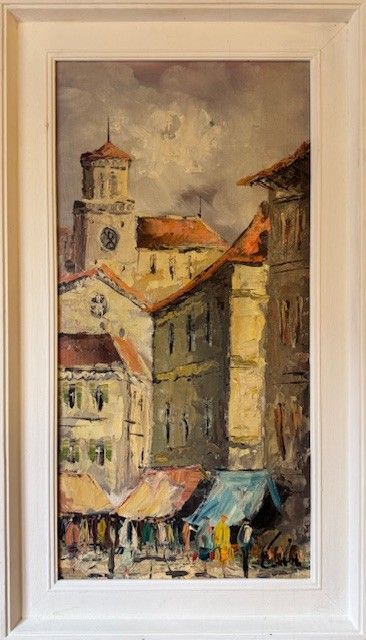
When you search for 1960s canvas artwork, you encounter oil paintings spanning mid-century impressionism, abstract compositions, and naive scenes. These works capture the energetic visual vocabulary of the period through varied regional lenses.
You are most likely to meet French and English paintings featuring cityscapes, coastal views, floral still lifes, and figure studies. Many pieces carry signatures from established regional painters or show the hand of outsider artists.
How they were made
Artists painted primarily in oil on stretched canvas, often building thick, textured surfaces using impasto techniques alongside flat geometric planes. Wood frames, sometimes finished with gilt, complete the construction of these mid-century works.
The physical build relies on traditional stretcher frames supporting heavy woven fabric primed to hold dense layers of oil paint. Brushwork ranges from controlled linear abstraction to thick, energetic applications of pigment.
1960s Canvas Artwork Retail Price Guide 2026
Typical asking prices for 1960s canvas artwork among the pieces listed under this phrase on Sellingantiques today, from the lower quarter to the upper quarter. They describe what is for sale here now, not the wider market.
Canvas supports range from mid-century abstract compositions to late nineteenth-century portraiture executed in oil paint.
What varies in quality
Quality rests on the confidence of the brushwork and the strength of the composition, distinguishing bold mid-century modernism from routine decorative output. Masterful handling of pigment creates spatial depth and optical vibration.
The distinction between a casual studio piece and a resolved gallery work lies in the distinctiveness of the palette and the structural rigour of the abstract or figurative forms.
Deidre Daines·Tony Giles·Helen Layfield Bradley·Raymond Picque·Gabriel Dauchot·Amile Coppieters·Ron Folland·William Littlejohn·Noel Quintavalle·Christian Caillard·William Ernst Burwell·Donald McIntyre·Dion Pears
The 1960s Canvas Artwork Glossary
- Impasto
- Paint applied thickly to a canvas so that it stands out from the surface. This technique leaves visible brush or palette knife marks that catch the light.
- Mid-Century Modern
- Design and art style spanning roughly the middle decades of the twentieth century. It prioritises clean lines, bold forms, and abstracted representations of subjects.
- Op Art
- A style of visual art that uses optical illusions through geometric patterns and contrasting colours. These compositions create a sense of movement or swelling on a flat canvas.
- Naive Art
- Work created by artists without formal academic training, often characterised by a childlike perspective and direct use of colour. Perspective and proportion are handled intuitively rather than geometrically.
1960s Canvas Artwork: Frequently Asked Questions
How do I identify a canvas from this period?
Look closely at the preparation of the fabric and the type of pigments used by the painter. Mid-century works often employ specific oil formulations that show distinct drying patterns.
Examine the stretcher frames and the style of the wooden framing surrounding the canvas. Construction methods and framing materials frequently offer reliable clues to the decade of creation.
Where should I hang a large abstract painting?
Position the artwork on a neutral wall where natural light can strike the textured surface of the oil paint. Generous space allows large compositions to command the room without visual crowding.
Keep the painting away from direct heat sources and strong direct sunlight to protect the canvas and pigments. Balanced ambient lighting enhances the depth of the colours.
What is the difference between impressionism and abstraction here?
Impressionist pieces capture fleeting atmospheric effects, landscapes, and daily scenes with loose, visible brushstrokes. The subject remains clearly recognizable even when rendered with loose paint.
Abstract works prioritize pure form, line, and colour over the literal representation of a subject. These compositions invite interpretation through geometric arrangements or expressive colour fields.
How do I care for vintage oil on canvas?
Dust the surface gently with a soft, dry brush to prevent particulate buildup on the impasto paint layers. Avoid using any liquid cleaners or chemical solvents on the canvas.
Maintain stable indoor humidity levels to prevent the canvas fabric from slackening or the wood frame from warping. Professional conservation checks help preserve the stability of the paint.