
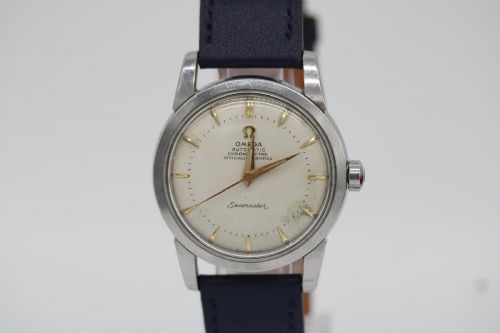


1950s Luxury Timepiece
A 1950s luxury timepiece brings mid-century design to the wrist, offering reliable mechanical movements and classic precious metal cases that collectors prize for everyday wear.
1950s Luxury Timepiece
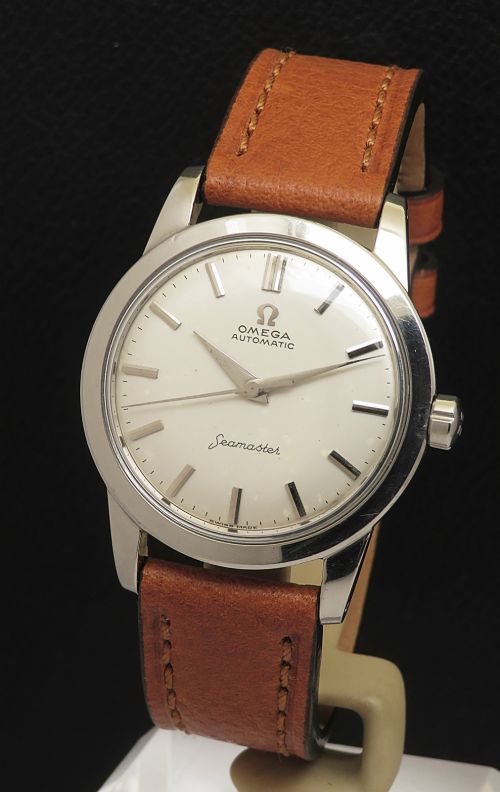
A 1950s luxury timepiece represents a pivotal era of post-war horology, featuring wristwatches driven by automatic and manual wind movements. Buyers seeking these items will find pieces originating primarily from the 1950 period, embodying the mid-century modern aesthetic.
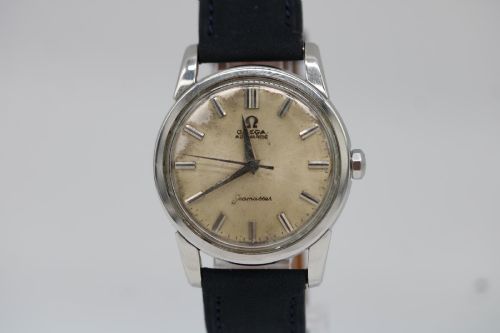
The selections available here predominantly consist of wristwatches housed in precious metals or stainless steel, often paired with leather straps. Prominent makers such as Omega, Baume & Mercier, Tudor, Rolex, and Longines define the standard form of these mid-century objects.
Forms range from the robust Seamaster and Oyster Perpetual lines to refined dress watches with distinctive dials and original boxes. These items capture the precise mechanical character of mid-century engineering while maintaining wearable proportions.
Materials and construction
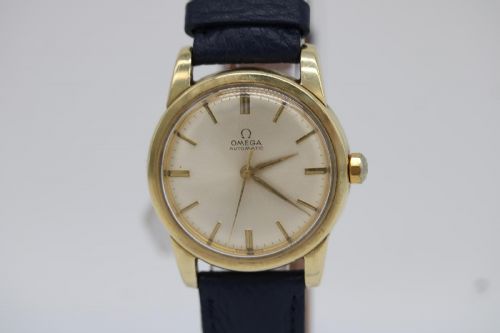
Cases utilise solid 9ct gold, 9K gold, gold plate, stainless steel, and acrylic glass crystals to protect the dials. These materials were chosen for durability and elegance, reflecting the high manufacturing standards of mid-century Swiss and international watchmakers.
Movements rely on mechanical calibres, featuring both automatic winding mechanisms and manual wind systems. Artisans fitted these movements into carefully proportioned cases, often pairing them with leather straps and protecting the dial beneath acrylic glass.
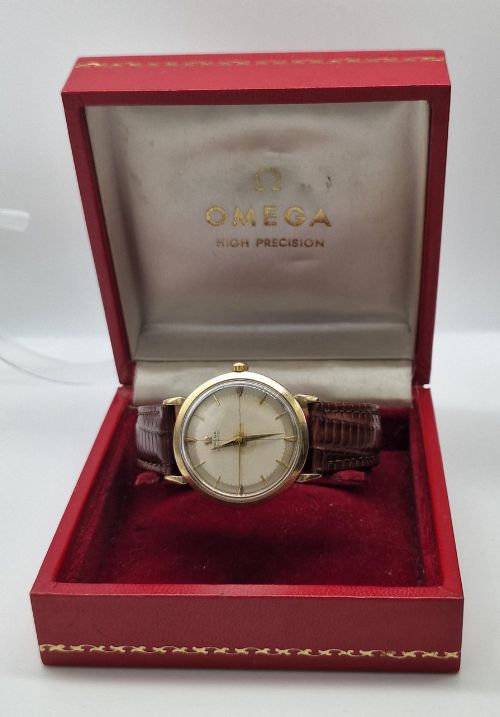
Several watches come with their original boxes, preserving the cardboard and velvet time-capsule experience from the Eisenhower administration.
Distinguishing quality
Quality rests upon the preservation of the original dial, case proportions, and the movement's mechanical integrity. Pieces retaining factory finishes and accompanying original boxes stand apart from those with altered components.
The choice of case material alters the standing of a piece, with solid 9ct or 9K gold constructions representing a higher tier than gold-plated alternatives. Precision in movement calibres and the clarity of acrylic glass further divide standard examples from finer specimens.
Omega·Baume & Mercier·Tudor·Rolex·Longines
The 1950s Luxury Timepiece Glossary
- Automatic
- A self-winding mechanical movement that uses a weighted rotor to wind the mainspring through natural wrist motion. This system became standard for luxury watches during the mid-century period.
- Manual wind
- A mechanical movement that requires the wearer to turn the crown by hand to tension the mainspring. Traditional dress watches of the era frequently utilised this mechanism.
- Calibre
- The specific internal movement design and model created by a watch manufacturer. Collectors examine the calibre number to verify the authenticity and production period of the mechanism.
- Acrylic glass
- A lightweight, shatter-resistant synthetic material used for watch crystals during the mid-century. It can be polished to remove surface scratches while maintaining period-accurate dome profiles.
- Chronometer
- A high-precision mechanical watch that has passed rigorous accuracy tests conducted by an official certifying body. These movements represent the peak of mid-century timekeeping performance.
1950s Luxury Timepiece: Frequently Asked Questions
Are 1950s watches waterproof?
Mid-century watches possessed varying degrees of moisture resistance, often described as water-resistant rather than waterproof by modern standards. Gaskets and seals degrade over decades, meaning original water resistance cannot be assumed today.
Collectors generally keep vintage pieces away from water to preserve the internal mechanical components and original dial condition. Even models designed for diving or sports require professional gasket replacement and testing before any exposure to moisture.
How do I wind a manual watch?
To wind a manual movement, gently rotate the crown clockwise between your thumb and forefinger until you feel firm resistance. Stop winding immediately once resistance increases to avoid damaging the mainspring.
Establish a consistent daily routine for winding, preferably at the same time each morning. This practice ensures steady tension on the mainspring and maintains consistent timekeeping throughout the day.
Can I wear a vintage watch daily?
Many collectors wear mid-century timepieces daily, provided the movement has been recently serviced by a qualified professional. Regular maintenance ensures that lubricants remain fresh and internal friction is minimised.
Care should still be taken to avoid heavy impacts, magnetic fields, and extreme temperatures which can affect mechanical movements. Pairing the watch with a suitable leather strap ensures comfort for everyday use.
What is an acrylic crystal?
Acrylic crystal is a clear, lightweight plastic material commonly fitted over watch dials during the middle of the twentieth century. It offers a warm visual distortion and can be easily buffed to remove surface scuffs.
Unlike modern sapphire glass, acrylic is softer and more prone to scratching during rough use. However, its flexibility provides excellent shock absorption for the delicate dial underneath.