


1950s Gold Wristwatch
A 1950s gold wristwatch delivers mid-century horology with distinct character, combining precious metal cases and classic dials for everyday wear.
1950s Gold Wristwatch
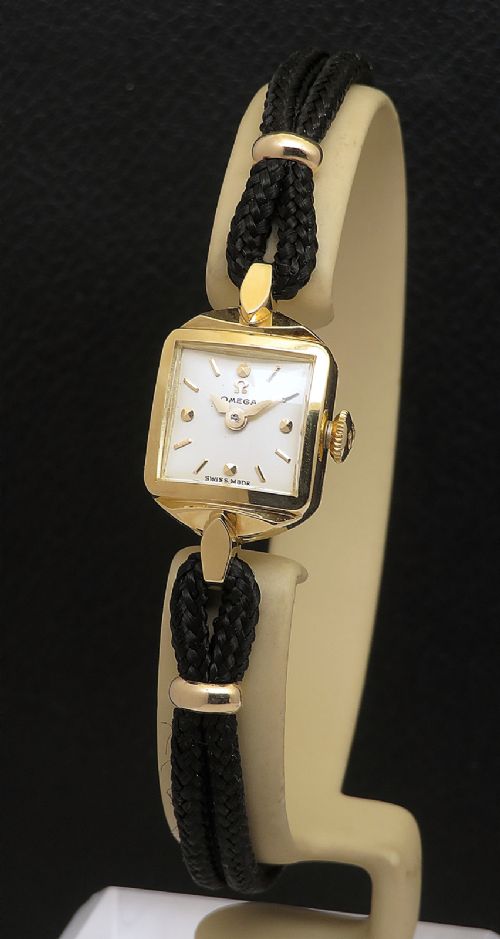
A 1950s gold wristwatch represents the horological output of the mid-century period, spanning styles from minimalist dress models to complex chronographs and calendar designs. When you examine this selection, you encounter pieces designed primarily for gentlemen, alongside select ladies cocktail watches and dress pieces.
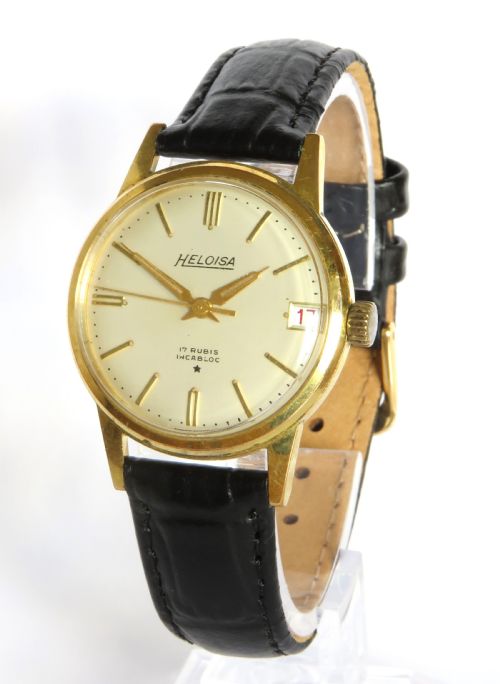
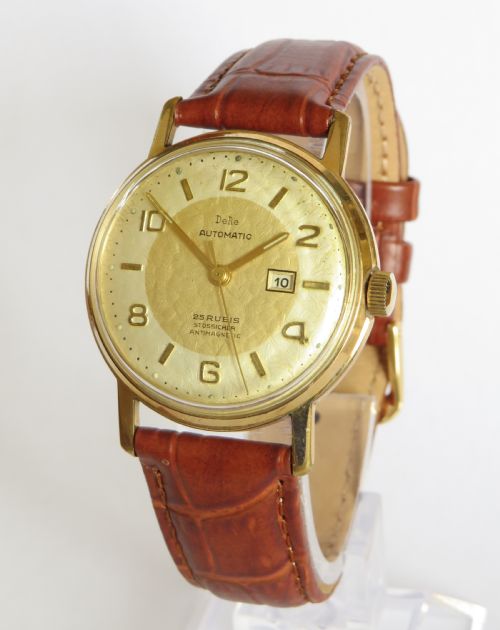
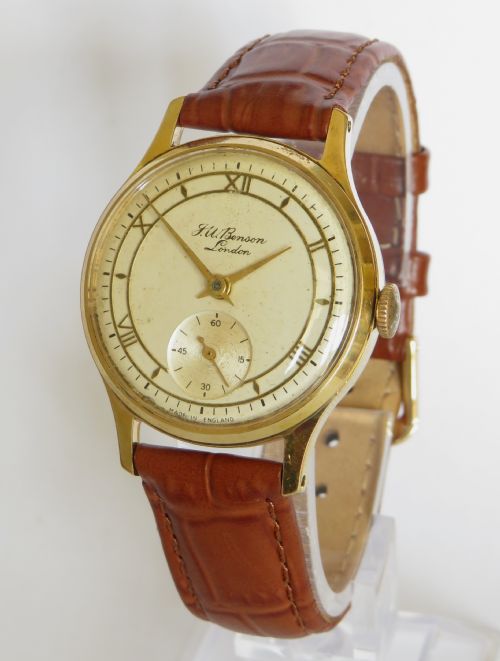
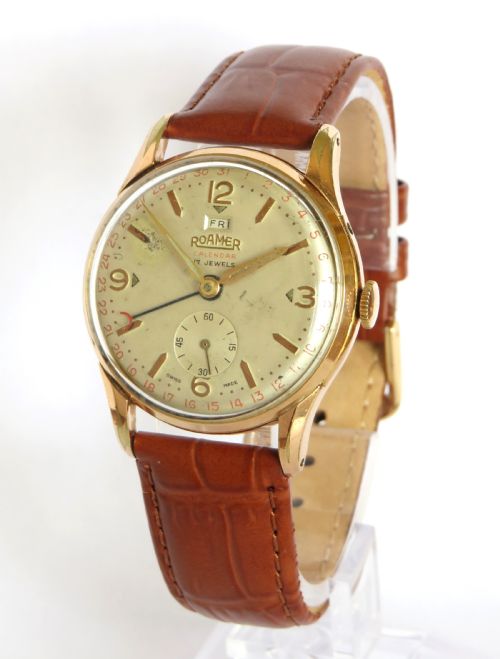
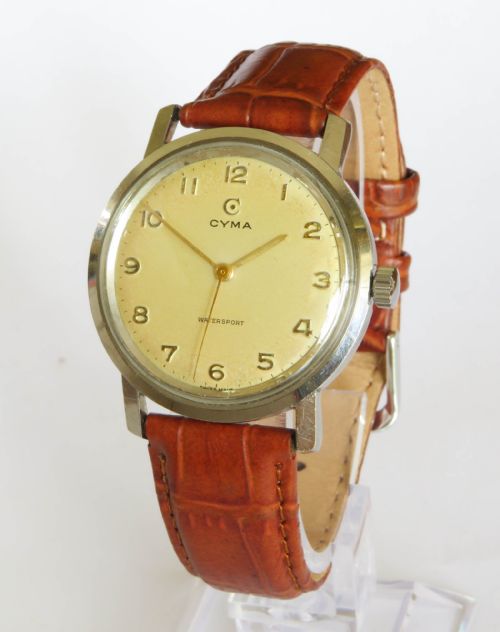
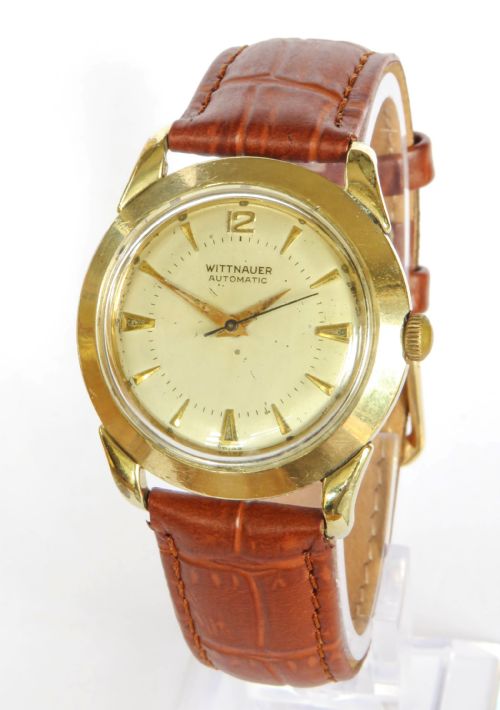
The most common versions met on this page are gents wristwatches housed in solid 9ct gold, 18ct gold, or gold plate. Makers such as Smiths, Omega, and Longines dominate the listings, offering mechanical movements ranging from manual wind to bumper automatic and centre seconds configurations.
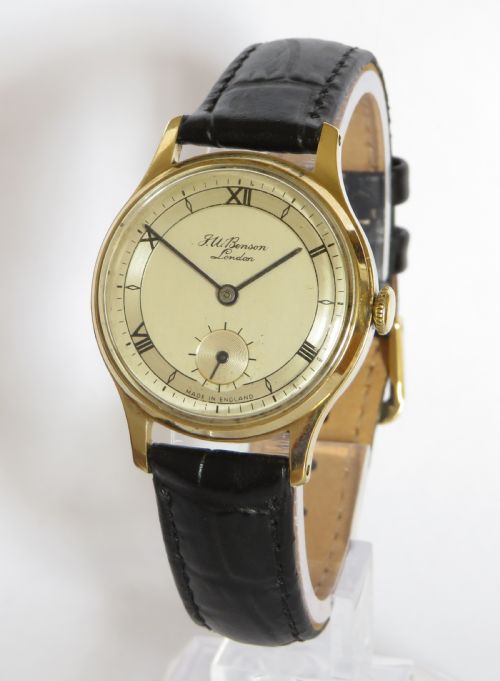
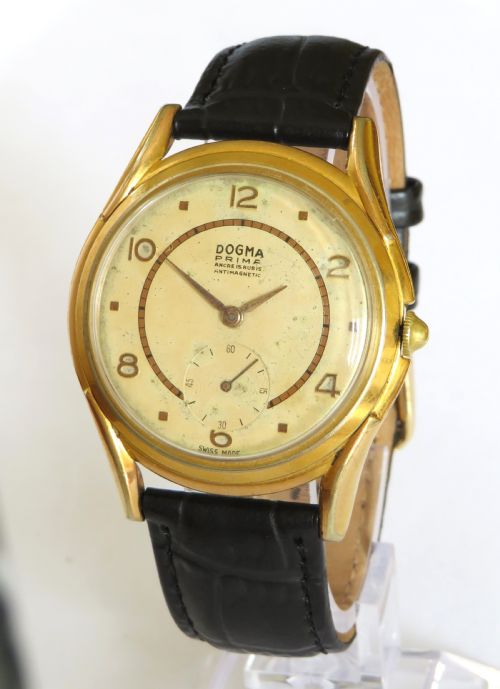
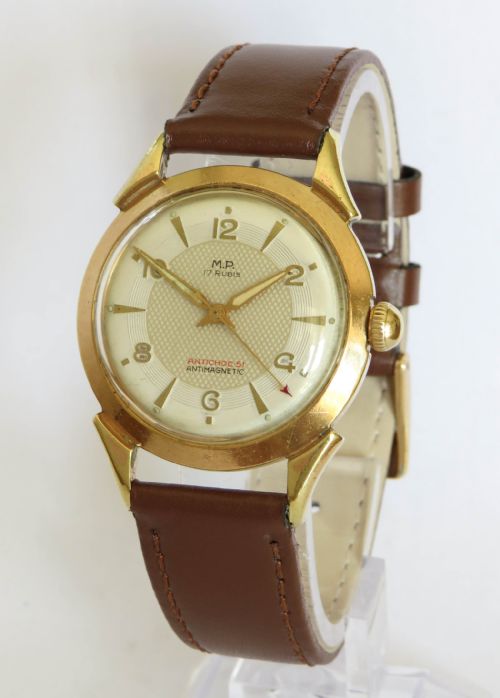
Origins lean heavily toward Swiss manufacture alongside notable British production, particularly through firms like Smiths utilising domestic movements. Dials typically exhibit Arabic numerals or baton markers, occasionally paired with subsidiary seconds or specialised complications like moonphase displays.
How they were made
Cases utilise precious metals including solid 9ct and 18ct gold, alongside gold plate and stainless steel combinations, paired with acrylic or glass crystals to protect the dial. Strap construction relies on traditional materials such as leather and fabric, matching the formal and casual intentions of the era.
Movements are mechanical, driven by internal springs and gears that require manual winding or make use of early automatic oscillating weights, such as bumper mechanisms. Dials incorporate applied metal markers and painted numerals, housed within cases styled in mid-century modern and art deco design idioms.
Materials recorded across the inventory include leather, stainless steel, glass, acrylic, and 9ct or 18ct gold.
What varies in quality
The distinction between tiers of production rests in the movement complexity and the purity of the casing material. Solid 18ct or 9ct gold housings sit above gold-plated alternatives, while specialised calibres like chronographs or triple calendar mechanisms represent higher manufacturing ambition than standard time-only watches.
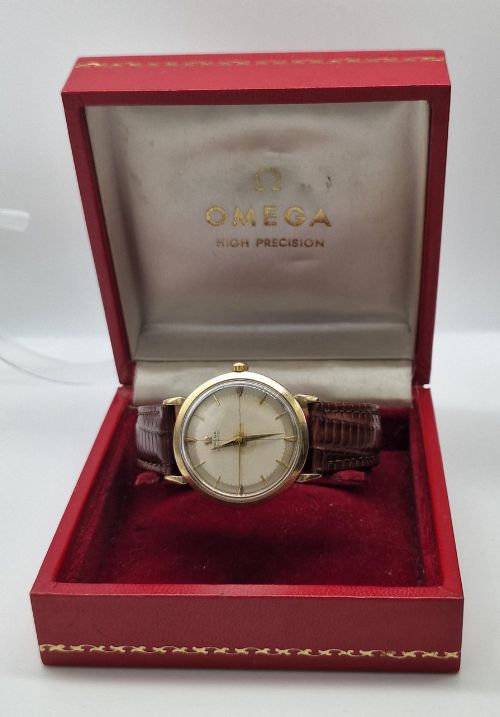
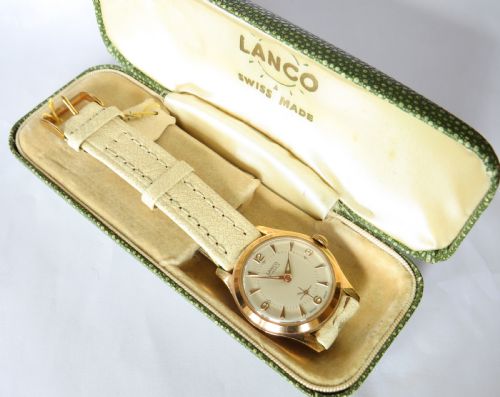
Execution of the dial and the inclusion of original presentation boxes or specific maker signatures elevate certain examples above standard production. The presence of fully signed movements from established Swiss and British houses denotes a higher grade of horological assembly.
Omega·Heloisa·Smiths·DeRe·Roamer·Cyma·Wittnauer·Dogma Prima·Baume Bimatic·Lanco·Certina·Fludo·Ebana·Baume and Mercier·Longines·Jaeger-LeCoultre·Tudor·Rolex·LeCoultre·Wyler·Mappin·Richard·Eterna
The 1950s Gold Wristwatch Glossary
- Bumper automatic
- An early self-winding mechanical movement where the rotor swings through a limited arc and hits springs, rather than rotating fully 360 degrees. This provides a distinct physical nudge to the wrist as the watch winds itself.
- Chronograph
- A watch equipped with a stopwatch function alongside its standard timekeeping display. These complications often feature additional subsidiary dials for measuring elapsed minutes and hours.
- Calibre
- The specific manufacturer's designation for a particular watch movement design. Collectors use this number to identify the exact mechanical engine housed inside the metal case.
- Gold-filled
- A method of bonding a layer of gold to a base metal core using heat and pressure, resulting in a much thicker layer than standard gold plating. It offers durable wear resistance while avoiding the cost of solid precious metal.
- Subsidiary seconds
- A small separate dial, usually positioned at the six o'clock mark, dedicated to tracking the passing seconds independently of the main hour and minute hands.
1950s Gold Wristwatch: Frequently Asked Questions
Are 1950s watches waterproof?
Mid-century timepieces were generally resistant to splashes or rain rather than sealed for swimming or diving. Gaskets and seals degrade over decades, so modern wearers should keep these vintage pieces away from moisture entirely.
Even models designated as waterproof or oyster-cased require professional testing and new seals before encountering water. Treat the movement as vulnerable to humidity and liquid ingress.
How do I wind a manual watch?
Gently rotate the crown clockwise between your thumb and forefinger until you feel firm resistance, known as meeting the mainspring's full tension. Stop immediately at this point to avoid over winding and snapping the internal spring.
Establish a consistent daily routine for winding if you wear the piece regularly. This keeps the mechanical movement operating with steady tension and accurate timekeeping.
What is a bumper automatic?
A bumper automatic uses an oscillating weight that swings back and forth across a restricted arc instead of spinning in a full circle. You will feel a gentle physical tap against your wrist as the internal spring absorbs the motion.
This technology represents an early step in self-winding wristwatches before full rotor movements became standard practice. It offers a charming mechanical reminder of mid-century engineering on your arm.
Can I wear a vintage watch daily?
These pieces served as reliable everyday accessories when manufactured, and many continue to do so with sensible care. Pairing a solid gold case with a sturdy leather strap provides a reliable daily setup for modern schedules.
Remember to avoid wearing them during heavy physical labour, contact sports, or exposure to strong magnetic fields. Regular servicing by a watchmaker ensures the internal gears withstand routine use.