
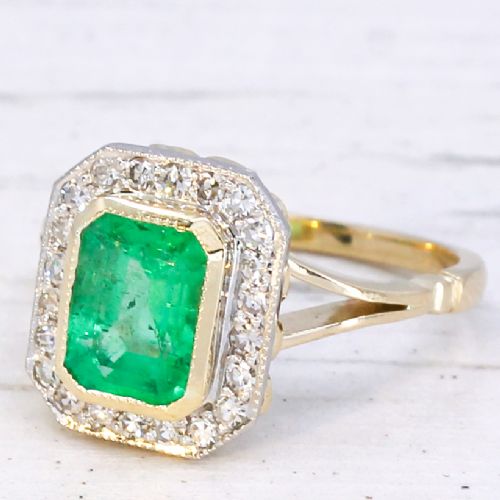


1950s Gold Dress Ring
A 1950s gold dress ring delivers mid-century design through substantial cocktail clusters, bold rubies and heavy yellow gold settings.
1950s Gold Dress Ring
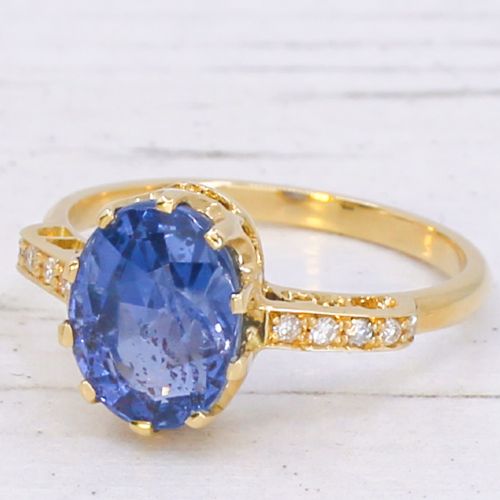
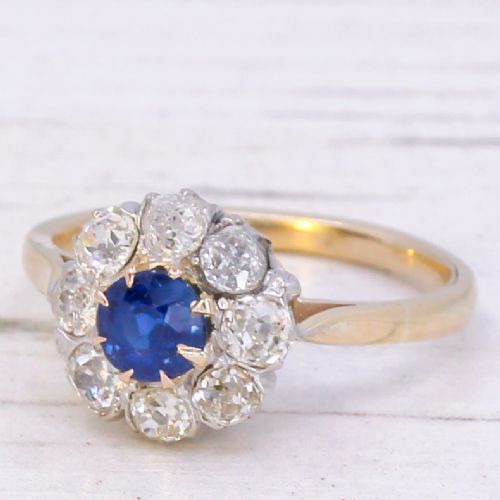
A 1950s gold dress ring embodies mid-century styling through varied gemstone configurations, ranging from prominent solitaire aquamarines and sapphires to intricate multi-stone cluster designs. These pieces often draw upon earlier aesthetics, displaying Victorian revival motifs or structured Art Deco influences within a mid-century framework.
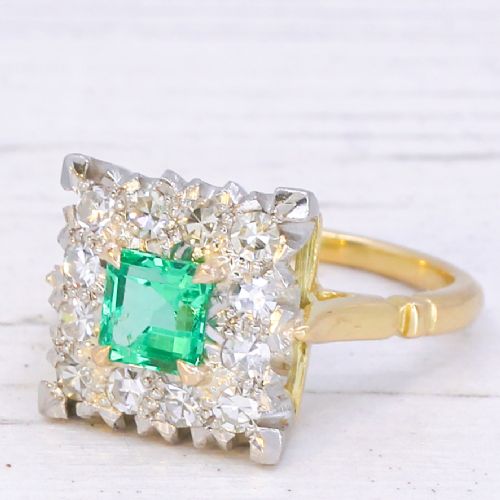
Makers utilised both yellow and white gold alongside platinum to frame significant central gems, including emeralds, rubies, pearls and large diamonds. Cocktail rings dominate the selection, built with substantial proportions designed to catch the eye.
French and American workshops contributed distinct regional styles, incorporating scroll panels, bombé silhouettes and marquise cuts into the era's jewellery repertoire.
Materials and Construction
Goldsmiths worked primarily in 14ct and 18ct yellow and white gold, frequently pairing white gold or platinum settings with diamonds to enhance brilliance while maintaining warm gold shanks.
Gemstones underwent varied cutting techniques, featuring old cut diamonds, emerald cuts, rose cuts and single cuts alongside unheated sapphires and emeralds with minor or negligible oil treatments.
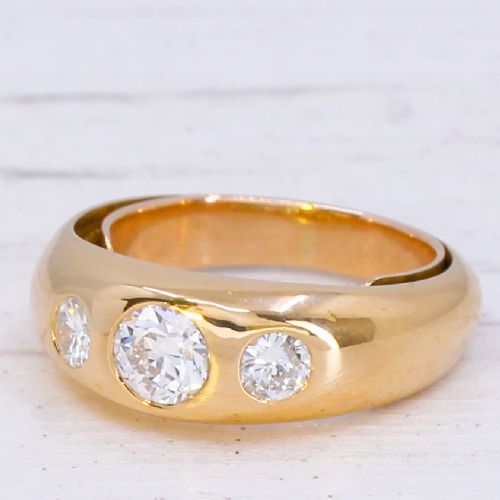
Mid-century ring designs on this page span French workshop creations, American retro scroll panels and Victorian revival styles.
Distinctions in Standard
The calibre of a 1950s gold dress ring depends heavily on the scale, origin and natural state of the central gemstones, such as unheated Ceylon sapphires or emeralds carrying minimal treatment certificates.
Execution of the metalwork defines the superior examples, where intricate scroll panels, bombé contours and secure cluster settings display precise hand assembly rather than mass production.
Kutchinsky
The 1950s Gold Dress Ring Glossary
- Bombé
- A rounded, dome-shaped ring profile that swells outward from the finger. This volumetric style gained popularity during the mid-century period for cocktail jewellery.
- Cluster
- An arrangement of smaller gemstones clustered tightly around a larger central stone. This layout maximises overall sparkle and visual presence on the hand.
- Gypsy ring
- A design where gemstones are flush-set directly into the thick metal band rather than held by traditional prongs. The metal tapers smoothly up to the stone.
- Old cut
- A diamond cutting style predecessor to modern brilliant cuts, characterised by a smaller table, higher crown and larger culet. These stones exhibit a softer glow under candlelight.
- Marquise
- A boat-shaped gemstone cut featuring pointed ends and curved sides. This elongated profile maximises perceived carat weight and flatters the finger.
1950s Gold Dress Ring: Frequently Asked Questions
What defines a 1950s gold dress ring?
These rings combine mid-century modern aesthetics with bold gemstone selections, frequently taking the form of large cocktail clusters or substantial solitaires.
Craftsmen utilised yellow gold, white gold and platinum to support prominent sapphires, emeralds, diamonds and pearls within structured, architectural mountings.
How do I style a cocktail ring?
A cocktail ring is designed as a standalone statement piece for evening wear or special occasions, requiring minimal additional hand jewellery to let the central stones dominate.
The substantial metal weight and large gemstone carat sizes pair naturally with simple, understated clothing.
Are these rings made from solid gold?
The pieces utilise solid 14ct and 18ct yellow or white gold, alongside platinum elements used primarily for secure diamond claw settings.
Heavier cocktail designs incorporate significant gold weight to support large centre stones like aquamarines and turquoise.