
1950s Dress Watch
A 1950s dress watch brings mid-century refinement to the wrist, offering classic proportions and mechanical integrity.
1950s Dress Watch
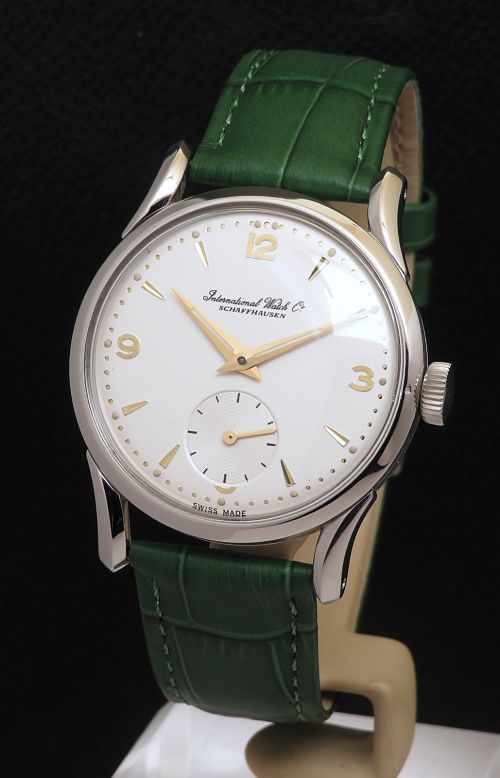
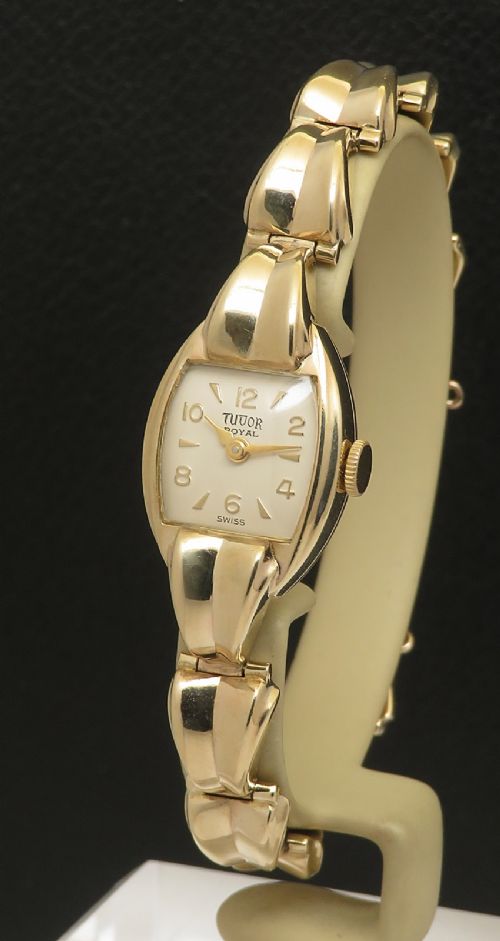
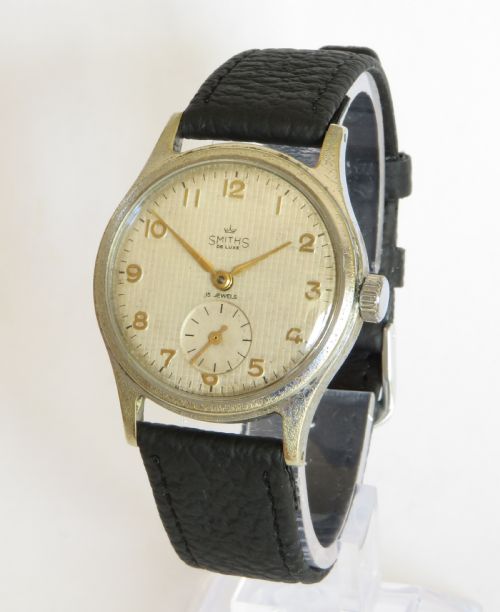
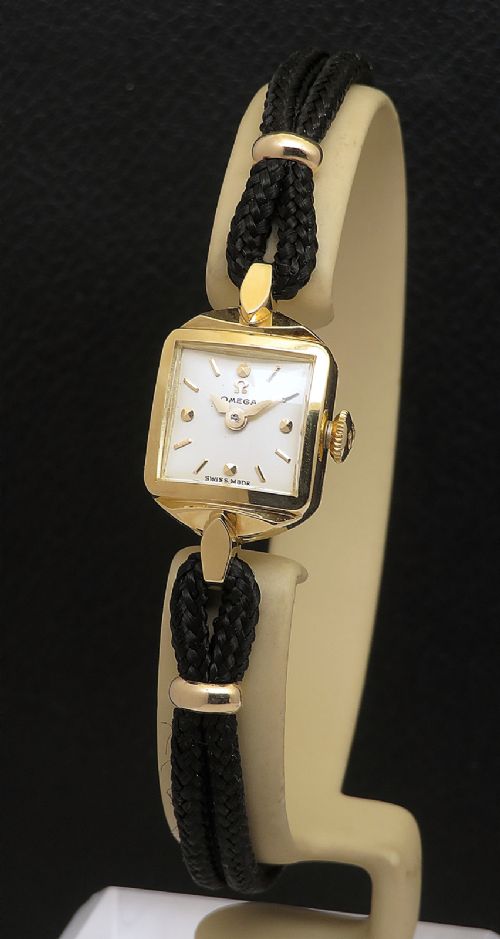
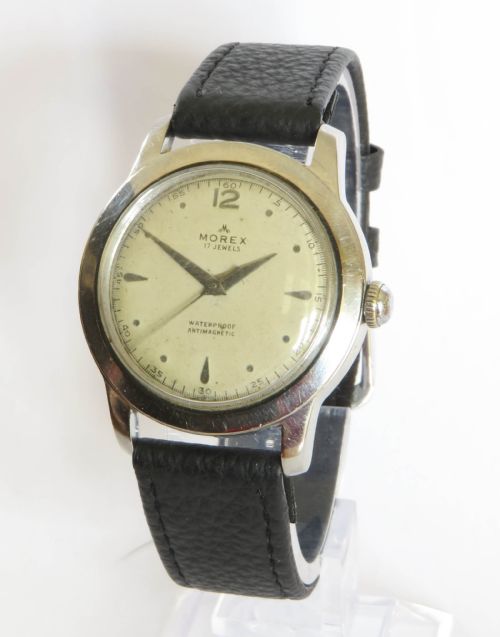
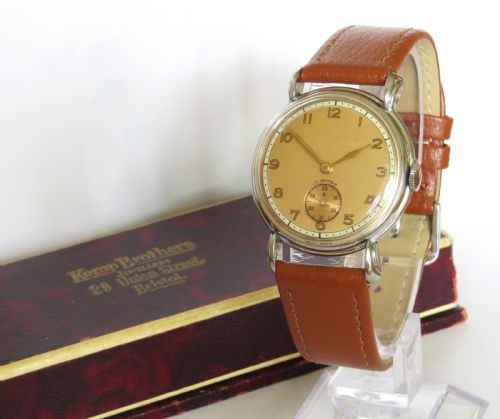
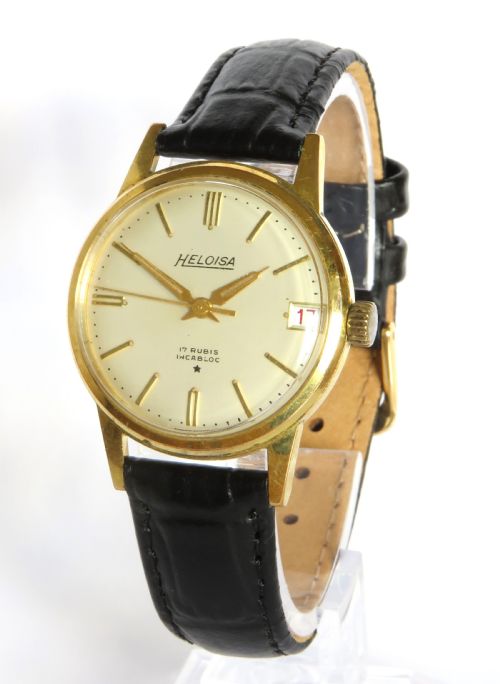
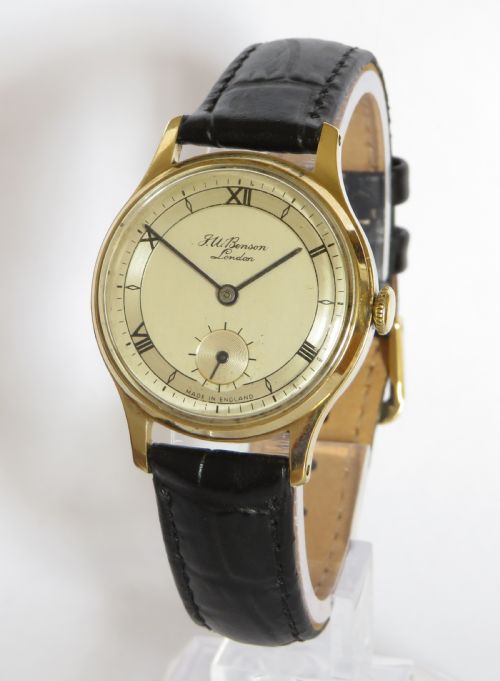
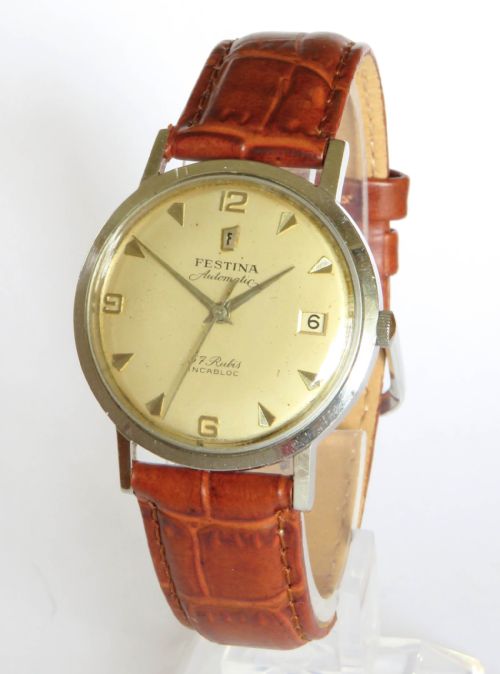
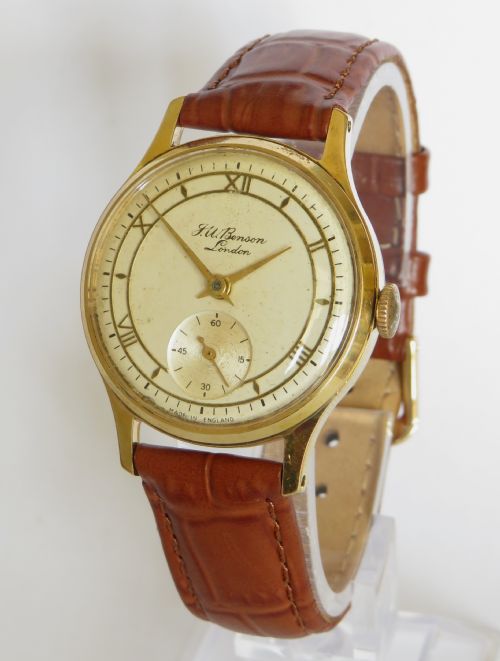
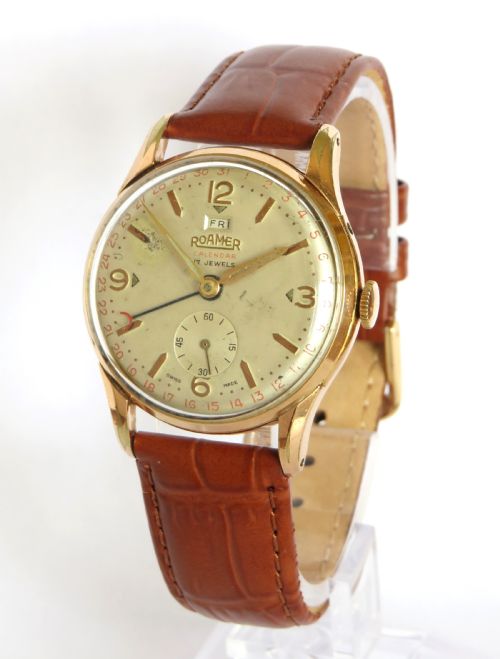
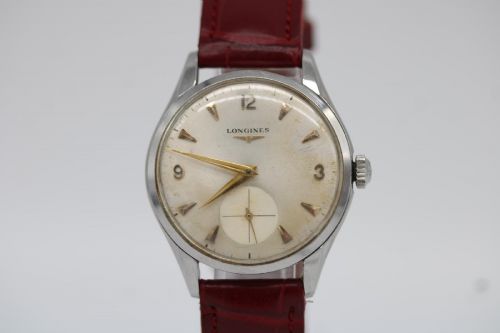
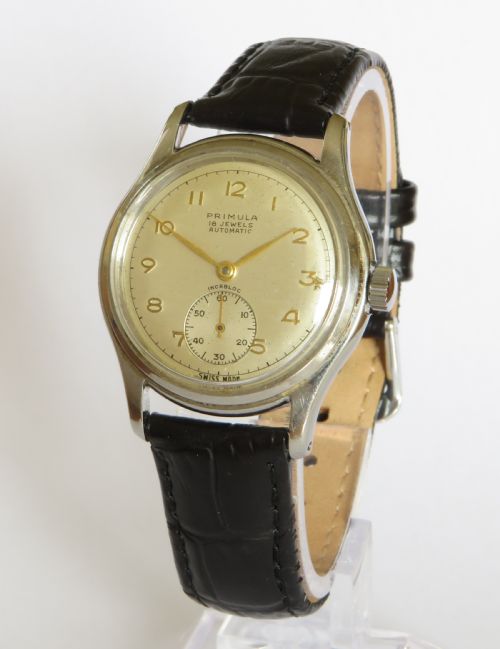
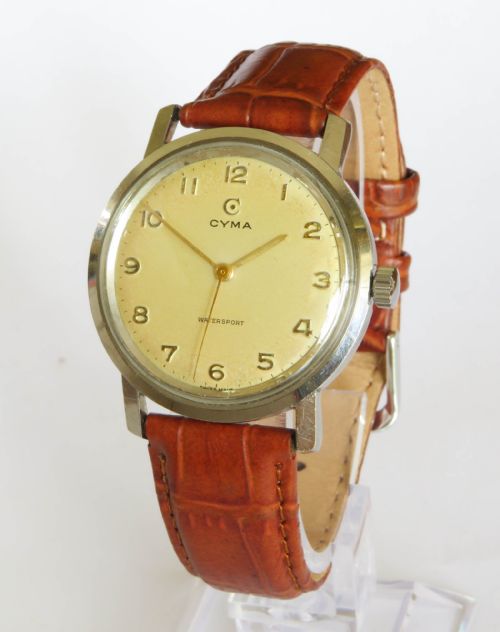
A 1950s dress watch embodies the mid-century aesthetic, taking the form of gents wristwatches, ladies cocktail watches, and pocket watches. These timepieces stem from periods noted as the 1940s, 1950s, and 1960s, reflecting mid-century modern and Art Deco styles.
The selections available lean heavily toward gentlemans wristwatches alongside ladies cocktail watches. Pieces bear origins linked to British horology as well as Swiss production, housing manual wind and automatic movements.
Materials and construction
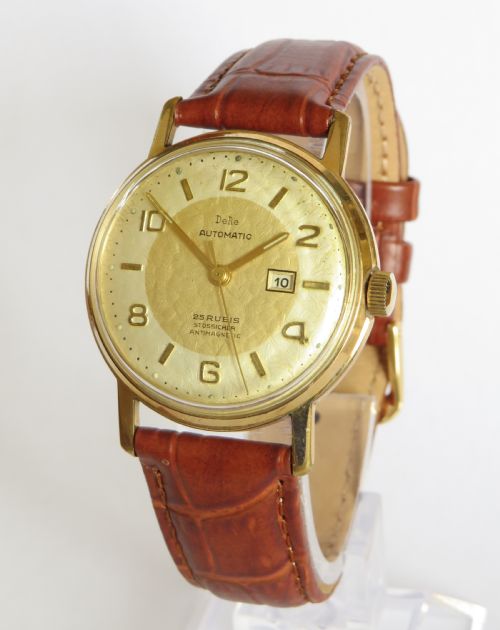
Casings utilise solid 9ct gold, 18ct gold, gold plate, gold-filled metals, chrome, stainless steel, and platinum, often paired with diamond accents on ladies cocktail pieces. Dials sit beneath glass or acrylic crystals, while leather straps secure the watches to the wrist.
Movements rely on mechanical calibres, featuring manual wind mechanisms and bumper automatic systems. Construction encompasses specialised components such as honeycomb dials and calendar complications.
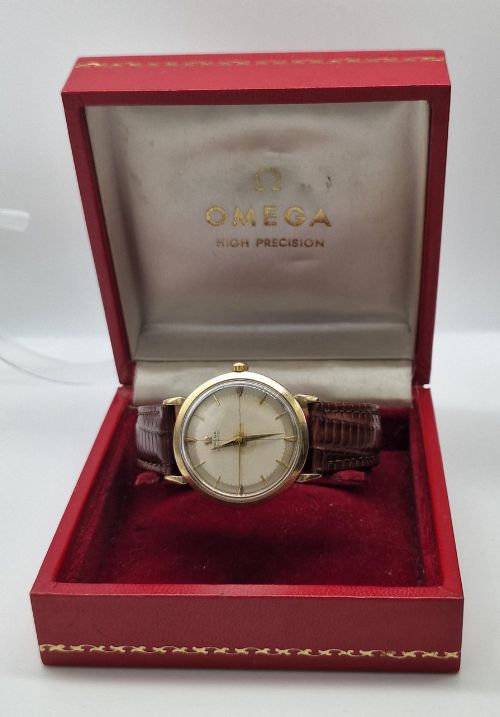
Some timepieces arrive accompanied by their original presentation boxes, preserving a touch of mid-century retail theatre.
Determining quality and distinction
Quality rests in the grade of casing materials, ranging from gold plate and chrome up to solid 9ct gold, 18ct white gold, and platinum. Precious metal variants combined with gemstones elevate the standing of a piece.
The calibre of the movement dictates mechanical merit, with fully restored maker-signed movements commanding attention. Originality of dials and the presence of dedicated boxes further distinguish individual items.
International Watch Company IWC·Rolex Tudor Royal·Montilier·J W Benson·Festina·Longines·Cyma·Omega·Wittnauer·Dogma Prima·Kered·Rotary·Lanco·Baume Bimatic·Prisma·Marvin·Certina·Ebana·Tissot
The 1950s Dress Watch Glossary
- Automatic
- A self-winding mechanical movement that uses a weighted rotor to wind the mainspring through natural wrist motion.
- Manual wind
- A mechanical movement that requires the wearer to turn the crown by hand to tension the mainspring.
- Bumper automatic
- An early self-winding movement where the rotor swings back and forth against springs rather than rotating fully.
- Calibre
- The specific manufacturer designation for a particular watch movement design.
1950s Dress Watch: Frequently Asked Questions
What defines a 1950s dress watch?
A 1950s dress watch is characterised by its mid-century styling, typically featuring a slim profile, clean dial design, and a mechanical movement. These timepieces were designed primarily for formal or daily professional wear rather than heavy sports use.
Materials commonly include solid gold, gold plate, and stainless steel, usually attached via a leather strap. The aesthetic reflects the design sensibilities of the period, ranging from restrained minimalism to ornate Art Deco touches.
How do manual wind and automatic watches differ?
Manual wind watches require the wearer to turn the crown by hand to tension the mainspring, which then powers the movement as it unwinds. These movements tend to be thinner, suiting the slim profile of mid-century dress watches.
Automatic watches incorporate a weighted internal rotor that winds the mainspring automatically using the natural motion of the wearers wrist. Bumper automatics represent an early form of this technology, using a limited swing path with absorbing springs.
How should I care for a vintage watch?
Vintage mechanical watches require gentle handling, avoiding moisture and severe impacts due to their age and delicate internal components. Regular servicing by a qualified horologist ensures the mechanical oils remain fresh and the gears operate smoothly.
Leather straps should be kept dry and replaced when worn, while acrylic crystals can often be polished to remove minor scuffs. Manual watches should be wound at a consistent time each day without over-tightening the spring.