




1950s Automatic Wristwatch
These 1950s automatic wristwatches offer mechanical self-winding movements wrapped in mid-century design, giving collectors daily wearability alongside mid-century style.
1950s Automatic Wristwatch
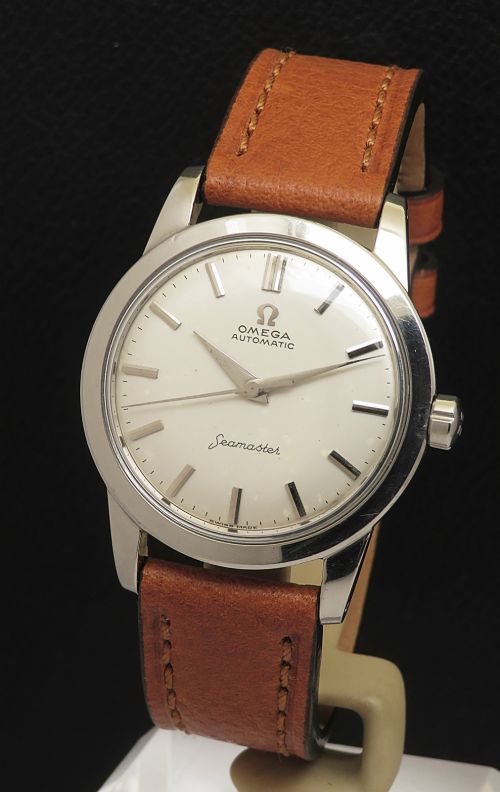
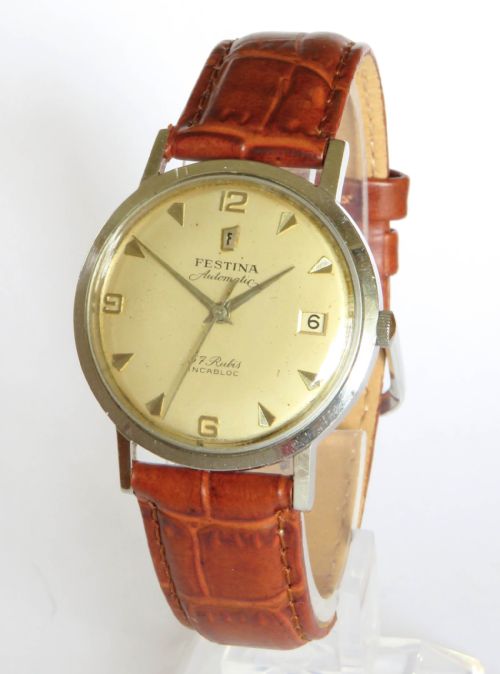
A 1950s automatic wristwatch represents a period of transition in horology when self-winding movements became standard for gents wristwatches. These pieces emerge from the 1950 era, adopting Mid-Century Modern and mid-century aesthetic traits.
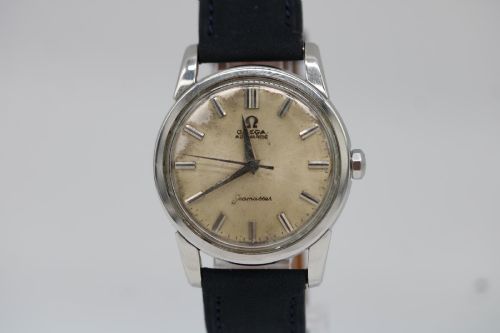
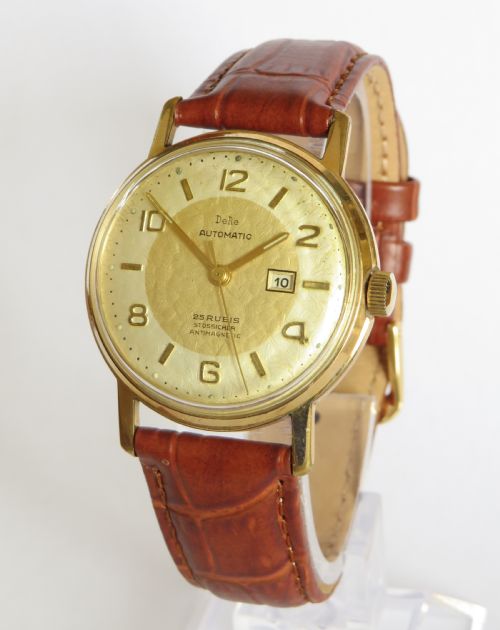
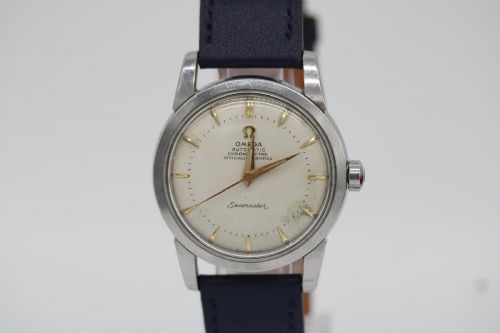
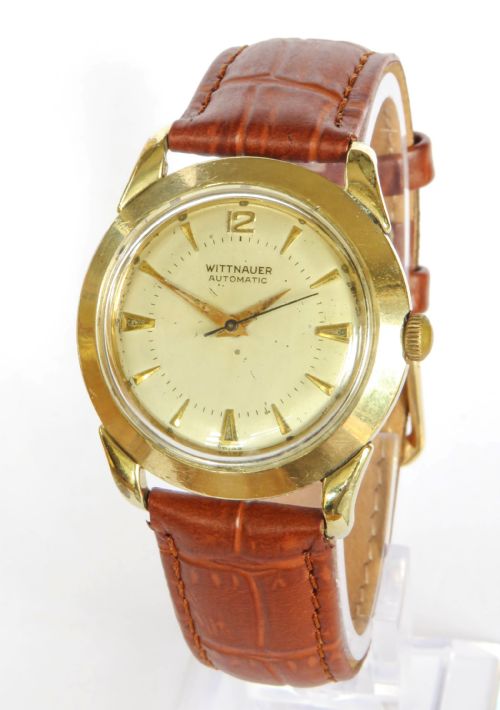
The most common version met on this page is the gents wrist watch, often housed in stainless steel, gold plate, or 9K gold cases. Makers such as Omega, Rolex, and Festina dominate the offerings, alongside names like Wittnauer, Baume Bimatic, and MuDu.
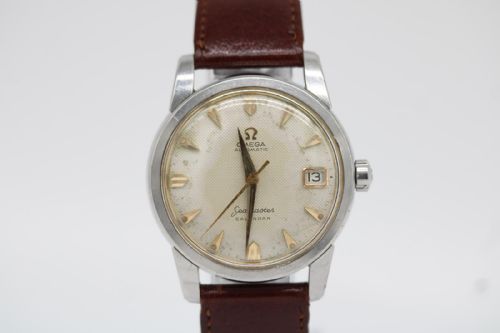
Buyers encounter standard automatic calibres alongside specialised bumper automatic movements and chronometer-rated pieces. Formats span simple three-hand layouts to calendar models featuring honeycomb dials.
How they were made
Cases utilise stainless steel, 9K gold, gold-filled metals, and gold plating to house the self-winding mechanical movements. Crystals fashioned from glass and acrylic protect the dials.
Straps typically employ leather to secure the watch to the wrist. The internal machinery relies on self-winding technology, including early bumper automatic mechanisms that gently oscillate against internal springs.
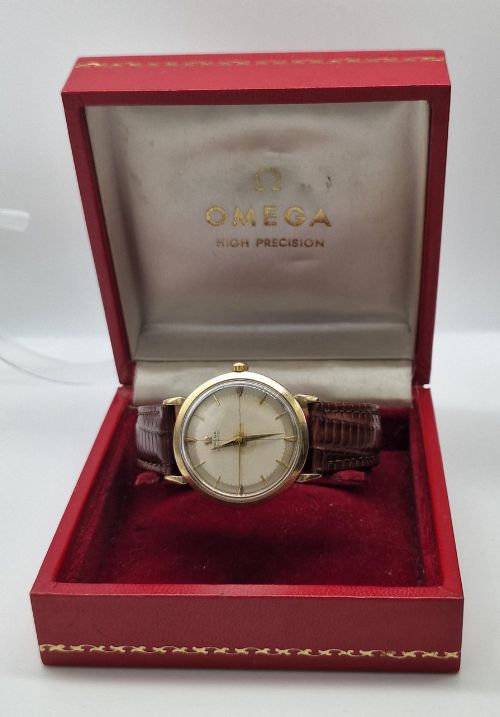
Some watches arrive tucked inside their original branded presentation boxes, waiting over half a century to see the light.
What varies in quality
Quality differences rest in the preciousness of the casing materials and the sophistication of the movement. Solid 9K gold and gold-filled housings sit above standard gold plate and stainless steel in material hierarchy.
Movement pedigree separates standard output from chronometer-grade calibres and specialised calibres like the bumper automatic. The presence of original presentation boxes or New Old Stock condition elevates specific examples.
Festina·Omega·DeRe·Wittnauer·Baume Bimatic·Prisma·Rolex·MuDu·Benfre·Geneve·JW Benson·Colant·Waltham·Richard
The 1950s Automatic Wristwatch Glossary
- Automatic
- A self-winding mechanical movement that uses the motion of the wearer's arm to power the mainspring. This technology replaced manual winding as the dominant everyday standard.
- Bumper automatic
- An early form of self-winding movement where a weighted rotor swings back and forth within a restricted arc, hitting springs that bounce it back. Wearers can physically feel the movement knock against the internal buffers.
- Chronometer
- A precision watch that has been tested and certified to meet strict accuracy standards over various temperatures and positions. Omega Seamaster models often carried this high-grade certification.
- Honeycomb dial
- A textured dial face featuring a raised grid pattern resembling a bee's honeycomb. This decorative treatment adds depth and visual interest to mid-century watch faces.
- New Old Stock
- Unsold vintage items that remain in their original unworn condition, often accompanied by factory packaging. These pieces offer collectors a glimpse of the watch as it appeared when first retailed.
1950s Automatic Wristwatch: Frequently Asked Questions
What is a bumper automatic?
A bumper automatic uses a oscillating weight that swings through a partial circle rather than rotating fully through three hundred and sixty degrees. Springs absorb the momentum at each end of the swing.
This early mechanical design provides a tactile sensation on the wrist as the weight taps against the internal buffers with each movement of the arm.
How do I wear a vintage watch daily?
Wearing a 1950s watch daily involves pairing the mechanical self-winding movement with regular motion to keep the mainspring wound. Leather straps offer comfort and easy replacement for everyday use.
Care must be taken around water and moisture, as these mid-century pieces lack modern diving-grade waterproofing seals.
Are these watches waterproof?
Most 1950s wristwatches offered basic dust and moisture resistance rather than true modern waterproofing. Gaskets and case sealing degrade over decades.
Owners should avoid submerging these watches in water or wearing them while swimming to protect the dial and movement from corrosion.
What size are 1950s watches?
Watches from this decade generally measure between thirty-three and thirty-five millimetres in diameter. This proportion reflects the tailoring standards of the era.
These dimensions sit smaller than contemporary wristwatches, offering a discreet and elegant profile on the wrist.