


1940s Platinum Dress Ring
A 1940s platinum dress ring brings sturdy metalwork and striking gemstones together, offering enduring style for everyday wear.
1940s Platinum Dress Ring
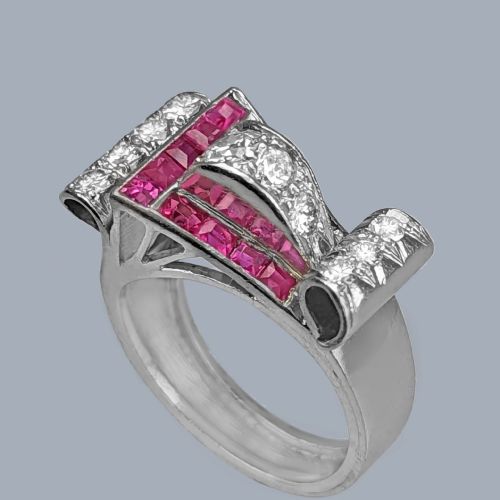
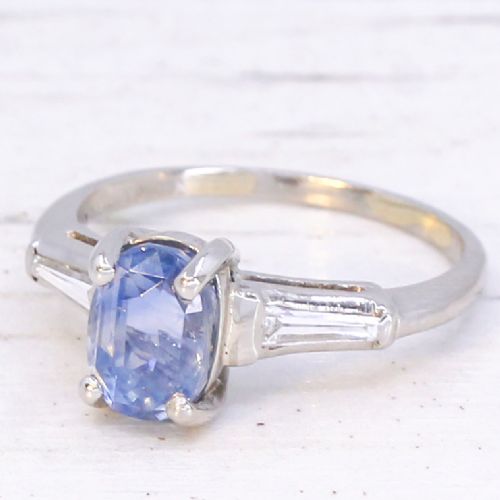
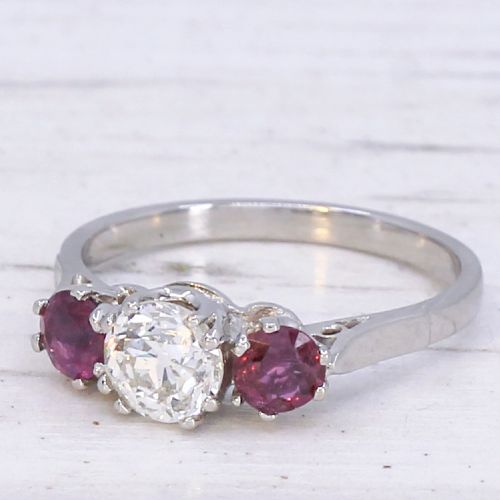
When you examine a 1940s platinum dress ring, you encounter pieces originating from the 1940 period that display distinct Art Deco, Mid-Century, and Retro influences. The forms include cluster rings, buckle rings, three-stone rings, trilogy rings, and solitaires.
The version you are most likely to meet on this page combines a substantial central gemstone, such as a diamond or sapphire, set securely within bright platinum mountings that often incorporate smaller supporting diamonds.
Materials and Construction
The pieces utilise strong platinum metal to construct secure settings for large gemstones without adding excessive visual bulk. This dense white metal holds intricate shapes reliably while maintaining structural integrity.
Goldsmiths combined platinum with contrasting materials such as 18ct yellow gold accents, deep black onyx, and colourful stones including rubies, opals, and unheated Kashmir or Ceylon sapphires.
The site listings feature platinum rings exclusively from the 1940 period, incorporating diamonds, sapphires, rubies, opals, onyx, and chrysoberyl.
Defining Quality
Quality rests upon the selection and pairing of the primary gemstones, where clarity, carat weight, and natural origin set the finest examples apart. Natural unheated sapphires and large old cut diamonds elevate a piece significantly.
The precision of the metalwork defines the construction standard, distinguishing standard production from exceptional jeweller output through the crispness of the platinum settings and the balanced distribution of smaller accent stones.
The 1940s Platinum Dress Ring Glossary
- Platinum
- A dense, durable white precious metal used extensively for secure jewellery settings. It holds intricate designs firmly without tarnishing over time.
- Old Cut Diamond
- A diamond cut by hand before modern machinery standardisation, featuring smaller tables and broader facets that catch candlelight warmly.
- Ceylon Sapphire
- A sapphire originating from Sri Lanka known for its vivid and bright blue coloration. These stones are prized for their lively brilliance.
- Cluster Ring
- A ring design featuring a central prominent gemstone surrounded by a tight border of smaller stones. This layout maximises visual impact on the hand.
1940s Platinum Dress Ring: Frequently Asked Questions
How do I care for a platinum ring?
Platinum is a robust metal that resists wear well, making it suitable for regular daily use. Clean the piece gently with warm soapy water and a soft brush to maintain the sparkle of the diamonds and coloured stones.
Store each ring separately in a lined box to prevent the harder gemstones from scratching adjacent pieces or softer metals.
Can I wear these rings daily?
The inherent strength of platinum makes these rings durable enough for everyday wear when handled with reasonable care. Ensure that prong settings are checked periodically by a professional jeweller to secure the stones.
Remove jewellery during heavy manual work or gardening to protect fragile gemstones like opal from accidental impacts.
What styles define 1940s rings?
The pieces span Art Deco, Mid-Century, and Retro design aesthetics, combining geometric clarity with bold dimensional shapes. Large central stones paired with cluster surrounds or architectural shoulders typify the period.
Yellow gold details occasionally appear alongside platinum, reflecting transitional design phases during the decade.
Are these rings handmade?
Jewellery from this era frequently involved skilled manual fabrication, particularly when mounting old cut diamonds and substantial sapphires into platinum. Hand-carved details and precise claw work typify the construction methods of the period.
Individual variations in stone cut and setting style confirm the hand-finished nature of these historical dress rings.