

1940s Diamond Jewellery
1940s diamond jewellery combines weighty precious metals with bold gemstones from a distinct era of transition.
1940s Diamond Jewellery
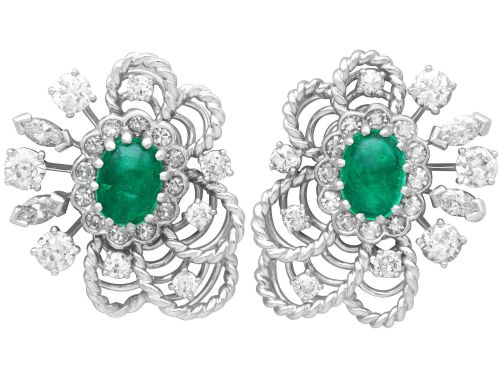
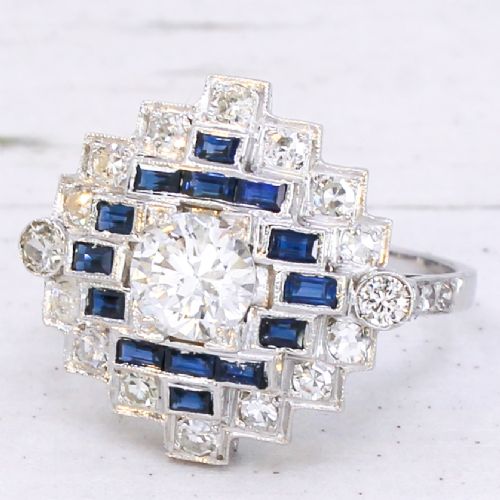
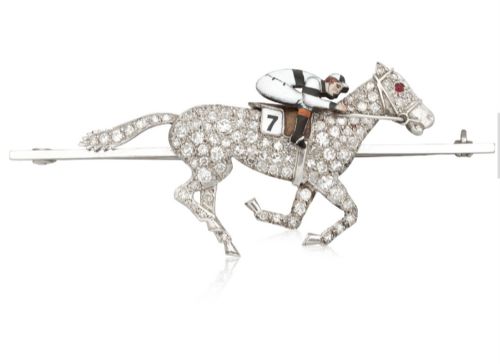
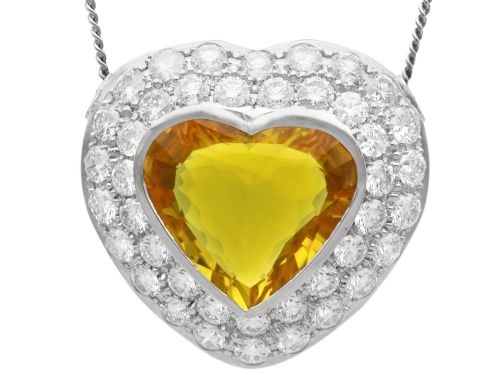
When you examine 1940s diamond jewellery, you encounter pieces born during the wartime and post-war decades that bridge late Art Deco strictness and the volumetric curves of Retro Modern design. These survivals span a varied catalogue of rings, earrings, engagement rings, bracelets, pendants, brooches, necklaces, and ladies watches.
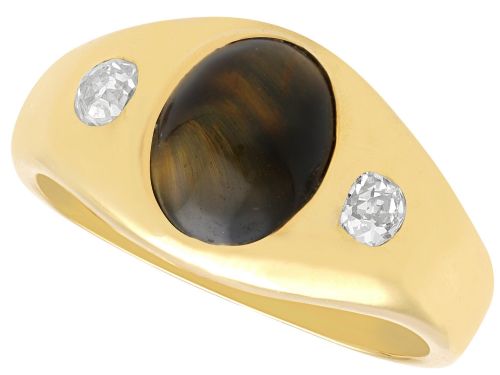
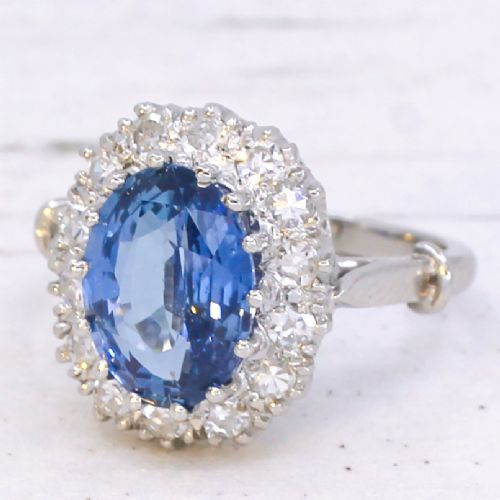
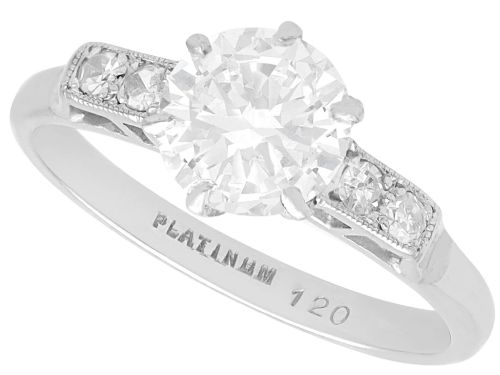
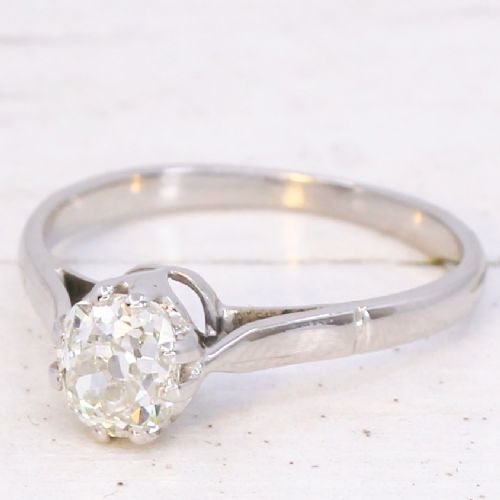
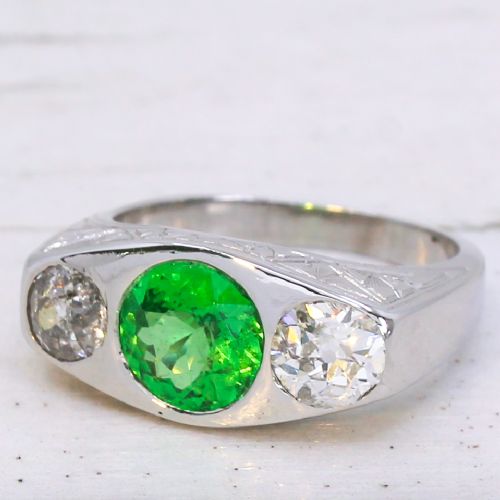
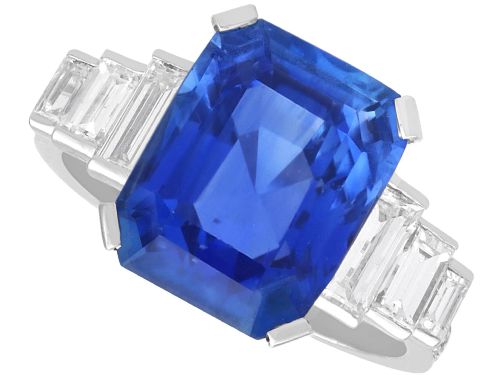
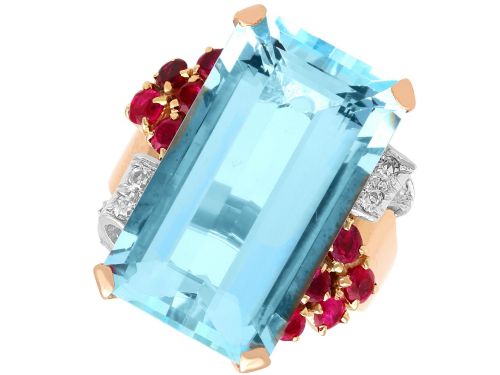
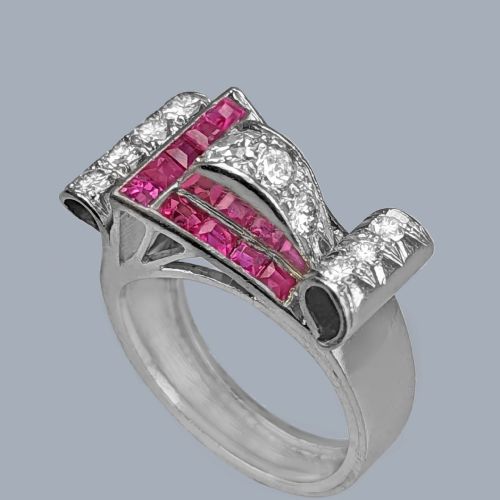
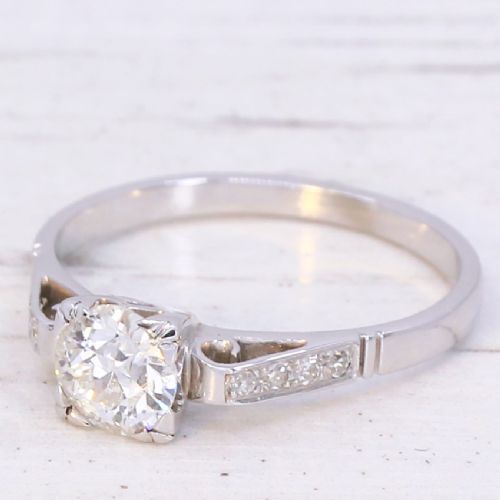
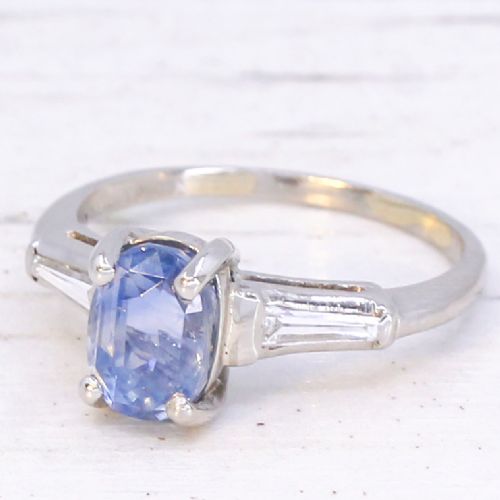
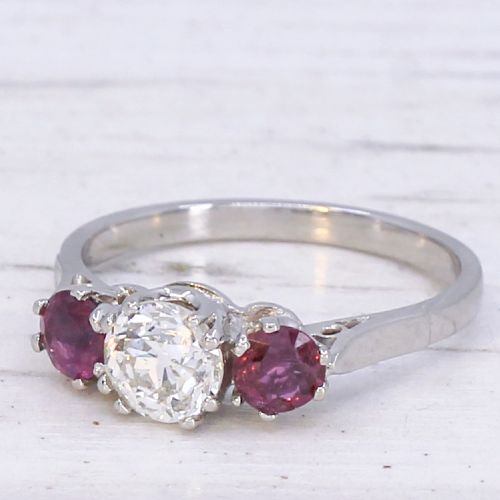
The most frequent encounters on this page are engagement rings and cocktail rings featuring central old cut diamonds flanked by colourful accent stones. Designers of this period utilised substantial gold settings and platinum mounts to display sizeable centre stones alongside rubies, sapphires, and emeralds.
The aesthetic vocabulary draws heavily on both 1940s Retro and lingering Art Deco geometries. Surviving items often demonstrate a heavy, architectural presence on the hand or wrist, reflecting the material constraints and stylistic shifts of the 1940 and 1950 years.
Materials and construction methods
Metalsmiths of this era worked extensively in platinum alongside 18ct yellow gold, 18ct white gold, and occasional rose gold variations. These robust metals provided the necessary structural strength to support large carat weights of diamonds and coloured stones without excessive fragility.
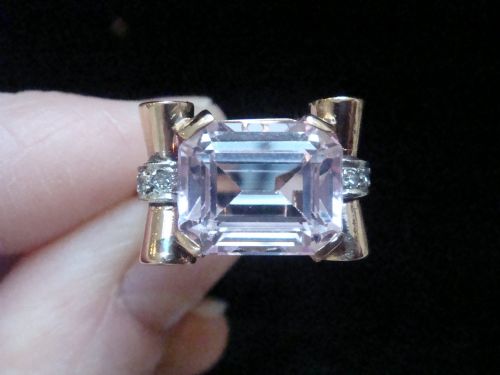
Gemstone selection prioritised old cut diamonds, often paired with unheated or heat-treated sapphires, rubies, kunzite, and aquamarines. Stones were typically hand-set into heavy bezels, channel tracks, or claw configurations that emphasised volume and three-dimensional presence.
1940s Diamond Jewellery Retail Price Guide 2026
Typical asking prices for 1940s diamond jewellery among the pieces listed under this phrase on Sellingantiques today, from the lower quarter to the upper quarter. They describe what is for sale here now, not the wider market.
Object types represented in the current selection include engagement rings, cocktail rings, twin-stone brooches, drop earrings, and ladies fob watches.
Quality factors in period pieces
The distinction between ordinary and superior pieces rests largely on the quality and carat weight of the central gemstones. Large, clean old cut diamonds and untreated sapphires or rubies elevate a piece significantly above examples set with smaller or heavily included stones.
Execution of the metalwork also dictates overall standing. Superior examples display crisp architectural lines in platinum or heavy gold casting, maintaining structural integrity and intricate detailing without undue wear on the prongs and settings.
C'est Laudier
The 1940s Diamond Jewellery Glossary
- Old Cut Diamond
- A diamond cut by hand before modern brilliant-cut standards were established. These stones typically feature smaller tables, higher crowns, and open culets that produce a distinctive soft candlelight glow.
- Tank Ring
- A bold jewellery style originating in the 1940s characterised by heavy, three-dimensional gold work that mimics military machinery and industrial forms. These substantial cocktail rings often incorporate large centre stones.
- Trilogy Ring
- A ring featuring three primary gemstones set in a row, traditionally symbolising the past, present, and future. In this period, they frequently combine a central diamond with smaller side diamonds or coloured stones.
- Platinum
- A dense, strong, and malleable white metal utilised extensively for mounting diamonds securely. Its durability allowed jewellers to create fine claw settings and delicate wirework without risking stone loss.
1940s Diamond Jewellery: Frequently Asked Questions
How do I wear 1940s diamond jewellery daily?
These pieces were built for durability using heavy platinum and gold, making them well-suited for regular wear. Take care to remove cocktail rings and bracelets during heavy physical tasks to protect the older stone settings.
Store each item in a separate fabric-lined compartment to prevent the heavy gold and platinum mounts from scratching softer adjacent gemstones or wearing down delicate metal edges.
What defines the Retro style in these pieces?
Retro design emerged during the 1940s, replacing flat geometric patterns with three-dimensional curves, ribbons, and industrial motifs. Jewellers favoured heavy yellow and rose gold settings that conveyed substance during wartime restrictions.
Coloured gemstones such as aquamarines, rubies, and citrines often took centre stage alongside diamonds, creating a warm and bold visual impact quite distinct from earlier white metal styles.
How can I tell old cut diamonds apart?
Old cut diamonds display smaller table facets, steeper crowns, and distinctly chunky proportions when viewed under magnification. Their facets were shaped by hand rather than precise machinery, resulting in a unique pattern of light return.
Look for a small open facet at the very base of the stone, known as a culet, which marks a primary visual difference from modern brilliant-cut diamonds.
Are these rings suitable for modern engagements?
Engagement rings from this era offer exceptional individuality and robust construction that withstands everyday use. The combination of durable platinum mounts and secure old cut diamonds makes them practical choices for modern wearers.
Check the security of the original prongs with a professional jeweller before daily use to ensure the centre stones remain firmly anchored in their historical settings.