


1930s White Gold Jewellery
When you handle 1930s white gold jewellery, you encounter the sharp geometry and brilliant diamond settings of the Art Deco period.
1930s White Gold Jewellery
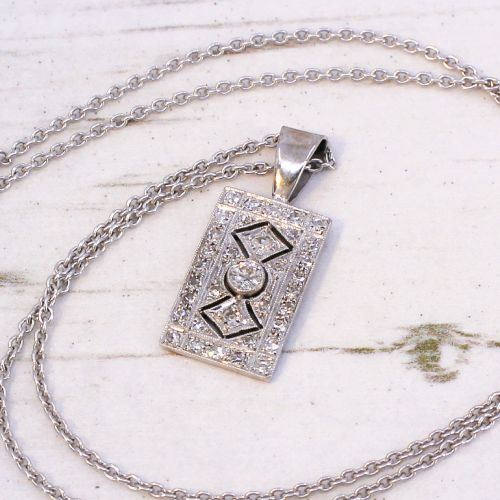
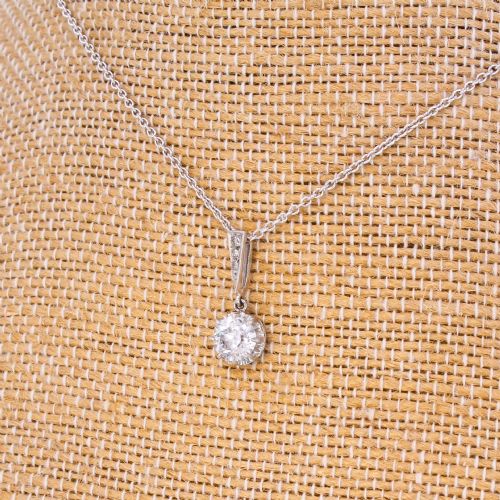
When you search for 1930s white gold jewellery, you encounter pieces defined by the geometric restraint and streamlined elegance of the Art Deco style. The items listed span rings, drop earrings, pendants, brooches and necklaces set with diamonds alongside coloured stones like sapphires, rubies and emeralds.
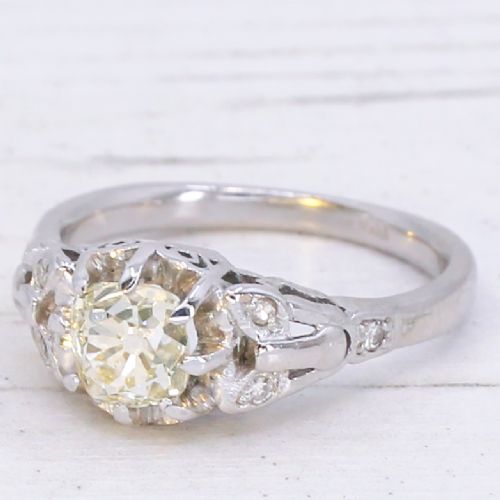
You are most likely to meet engagement rings and cluster rings on this page, often utilising 18ct white gold or platinum mountings. These pieces combine old cut diamonds with millegrain edges and openwork galleries typical of the era.
The material palette of these objects frequently pairs bright white precious metals with contrasting gemstones such as Ceylon yellow sapphires or natural Burmese rubies. Surviving examples demonstrate the shift towards durable white metal alloys during the interwar decades.
How they were made
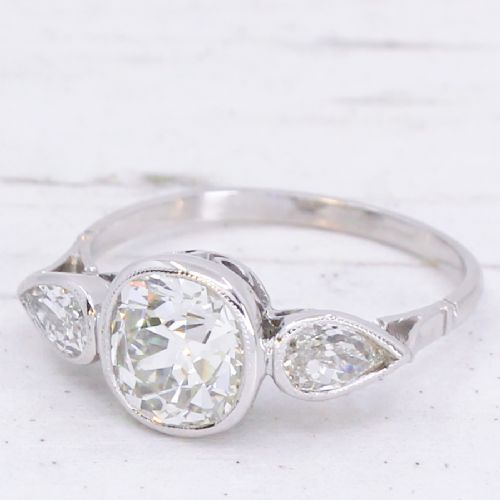
Goldsmiths constructed these pieces by combining 18ct white gold and platinum with hand-cut diamonds shaped as old cuts, old cushions and old pears. Stones were secured using delicate claw settings and grain settings designed to maximise light return.
Craftsmen utilised die-striking and hand-piercing techniques to achieve openwork geometric motifs, incorporating millegrain detailing along the edges of bezels and mounts. Coloured gemstones were calibrated and bezel-set to contrast sharply with surrounding pavé diamond work.
Materials recorded across the page include diamonds, sapphires, rubies, emeralds, opals, pearls, 14ct gold, 18ct gold, white gold and platinum.
What varies in quality
The distinction between tiers rests upon the precision of the stone-setting and the clarity of the metalwork. Finer examples display crisp, even millegrain lines and secure, hand-finished claw work that holds old cut diamonds firmly without excess metal.
Superior items maintain balanced proportions in their geometric motifs, where contrasting sapphires, rubies or emeralds match the brilliance and cut quality of the accompanying diamonds rather than serving as secondary fillers.
The 1930s White Gold Jewellery Glossary
- Old cut
- A diamond cut popular before the modern brilliant, characterised by a smaller table, higher crown and open culet which produce a softer, candlelight sparkle.
- Millegrain
- A decorative technique featuring a row of tiny, raised metal beads along the edge of a setting, common in Art Deco design.
- Cluster ring
- A ring style featuring a central gemstone surrounded by a border of smaller stones, frequently diamonds framing a sapphire or ruby.
- Bombé
- A ring design with a rounded, dome-shaped profile that rises prominently from the finger.
- Trilogy ring
- A ring set with three stones arranged in a row, often interpreted symbolically as representing the past, present and future.
1930s White Gold Jewellery: Frequently Asked Questions
How do I care for 1930s white gold jewellery?
Clean these pieces gently using warm soapy water and a soft brush, avoiding harsh chemical dips that can damage delicate settings.
Store them individually in lined boxes to prevent old cut diamond facets from scratching softer adjacent stones or metal.
Are these rings suitable for daily wear?
Many of these items function well as engagement rings, but older claw and millegrain settings require periodic inspection by a jeweller.
Removing rings during heavy manual tasks protects the original white gold prongs from bending or wearing down.
What defines the Art Deco style in these pieces?
Art Deco design relies on symmetry, straight lines, chevrons and stylised floral motifs rather than the flowing curves of earlier periods.
White gold and platinum provided a neutral backdrop that emphasised the sharp geometric patterns of the set stones.
How can I tell a 1930s ring from a later reproduction?
Examine the facet patterns of the diamonds, as genuine pieces from this era typically feature hand-cut old stones with irregular culets.
Hand-finished gallery work and subtle wear consistent with age further distinguish period items from modern castings.