


1930s Walnut Tier Table
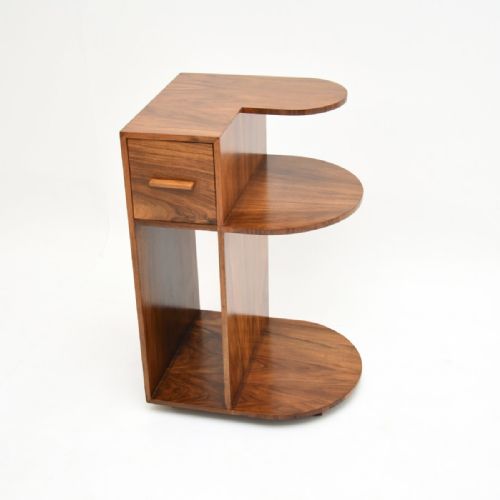
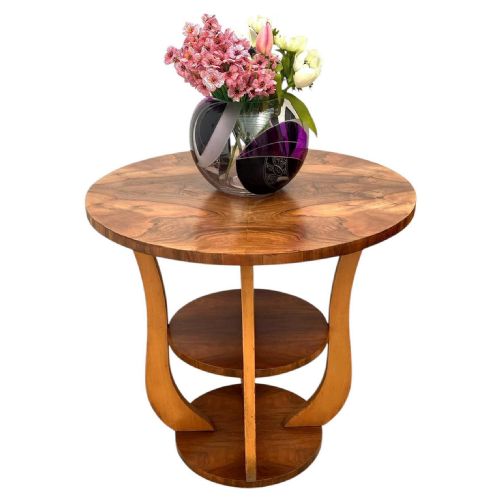
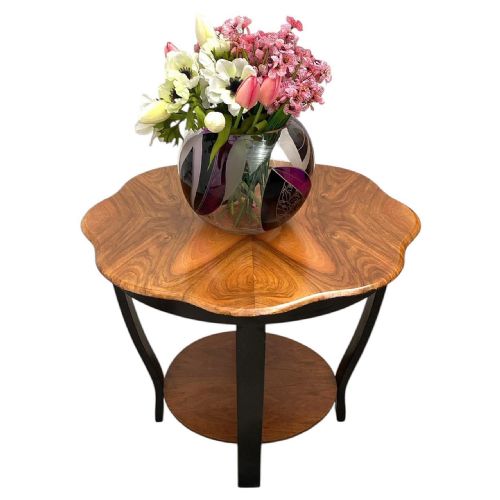
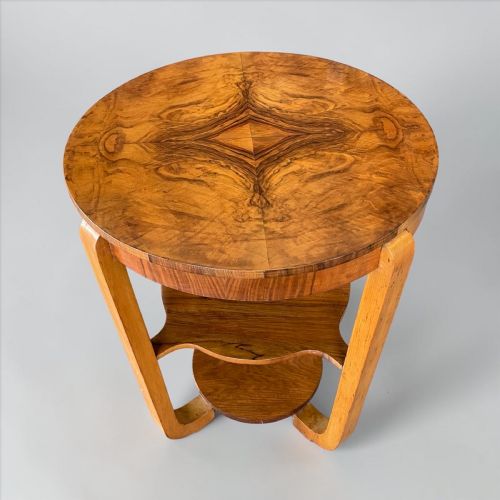
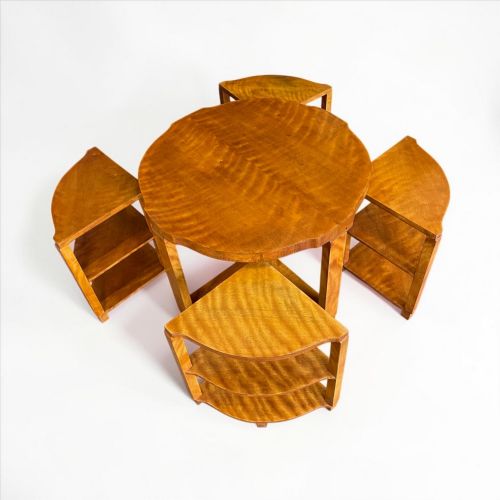
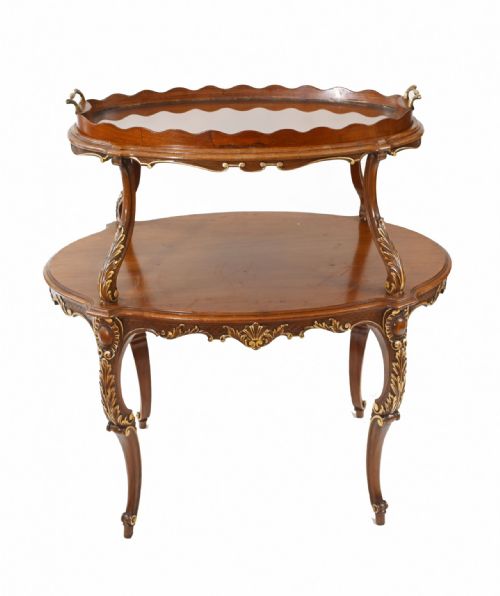
A 1930s walnut tier table brings warmth and geometric polish to a room, offering practical surface space across multiple levels.
1930s Walnut Tier Table
A 1930s walnut tier table provides stacked surfaces designed for serving, display, and daily use in living spaces. Most examples found here date from the 1930 period, though related pieces appear from the 1920 and 1940 decades.
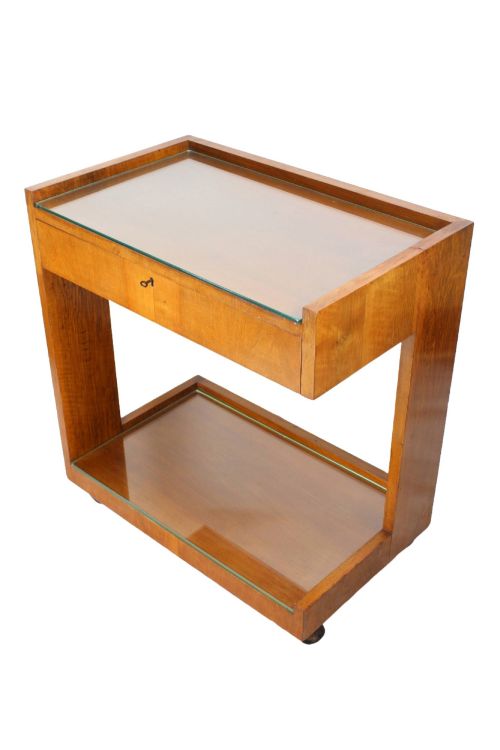
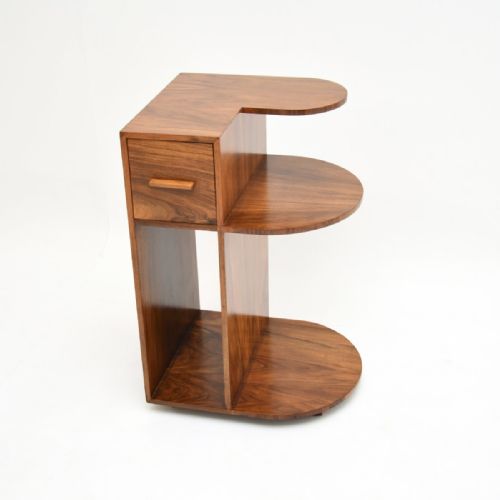
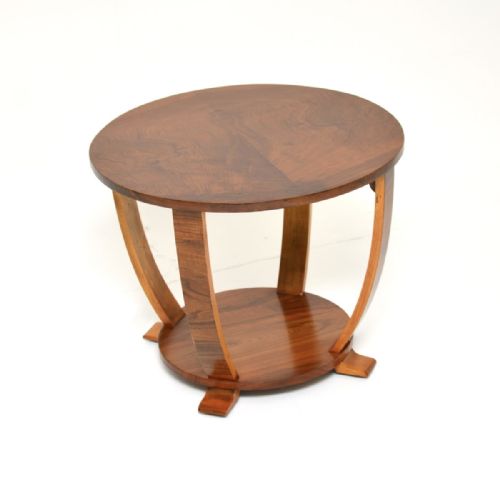
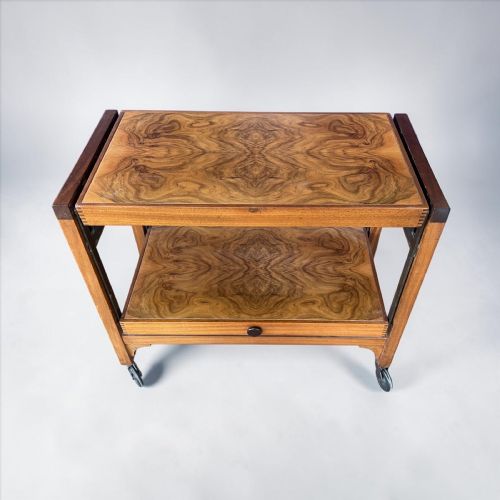
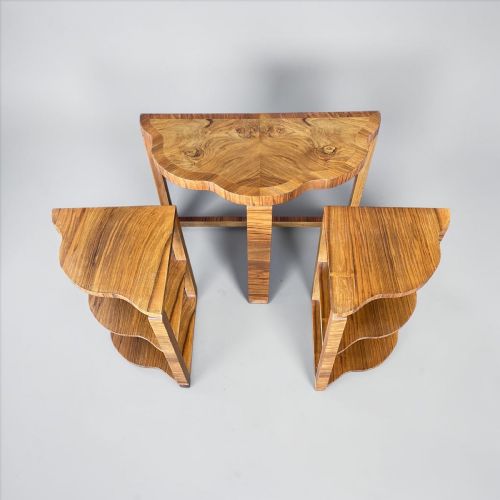
The dominant style across these pieces is Art Deco, incorporating sleek lines alongside occasional Rococo Revival touches. Forms range from two-tier and three-tier coffee tables to side tables, occasional tables, nests of tables, drinks trolleys, lamp tables, and games tables.
Origin points span English and French workshops, encompassing specialised servers, etagere tables, and modernist centre tables. These items function as versatile focal points that balance decorative wood grain with tiered utility.
Distinguishing quality in tiered walnut furniture
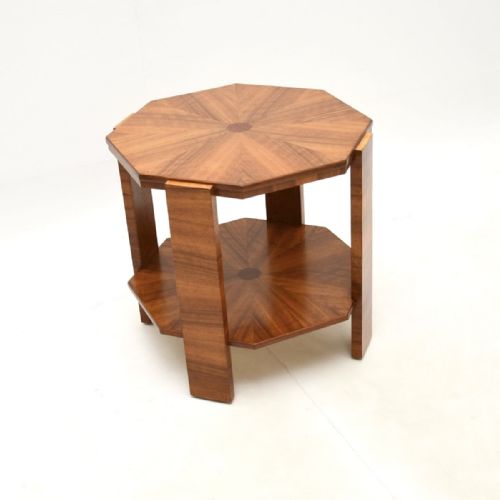
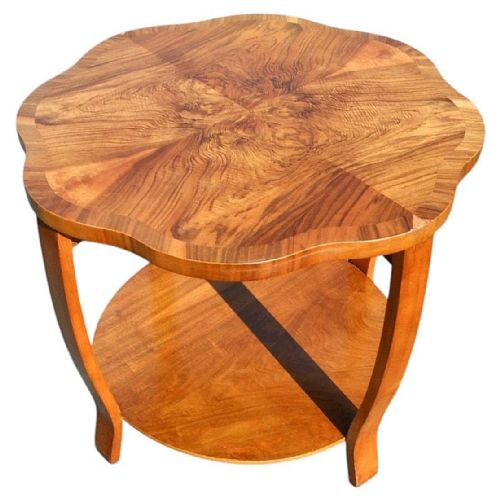
Quality rests upon the choice and matching of wood veneers, where heavily figured burr walnut or carefully arranged grain patterns elevate a piece above plain timber surfaces. The complexity of the tier configuration and the integration of contrasting materials like chrome, brass, or maple also distinguish standard models from high-end commissions.
Execution of the Art Deco form separates mass production from finer workshop output, evident in balanced proportions and clean geometric transitions between tiers. Structural integrity in multi-level designs determines longevity, particularly in pieces featuring casters or metamorphic mechanisms.
Some 1930s tables hide folding card surfaces or roll silently on original casters, ready to host an impromptu cocktail hour.
Gilbert Rohde·Hille·Michel Dufet
The 1930s Walnut Tier Table Glossary
- Burr walnut
- A wood veneer taken from the burl growth of a walnut tree, producing swirling, highly decorative grain patterns. It was favoured by Art Deco cabinet makers for focal table tops.
- Etagere
- A piece of furniture consisting of open shelves or tiers for displaying objects. In 1930s designs, these often take the form of tiered side or serving tables.
- Figured walnut
- Timber exhibiting distinctive, natural grain deformations that catch the light. Craftsmen arranged these veneers symmetrically to enhance the visual appeal of occasional tables.
- Metamorphic
- Describing furniture designed to transform its shape or function, such as a table that converts into a card table or serving trolley. These pieces incorporate hidden hinges or sliding tiers.
- Occasional table
- A small, movable table designed for intermittent use in a living space. Examples from this era frequently utilise multiple tiers to maximise surface area.
1930s Walnut Tier Table: Frequently Asked Questions
What is a tier table?
A tier table is a multi-level piece of furniture featuring two or more stacked surfaces connected by vertical supports. This design maximises display and utility space without expanding the table footprint.
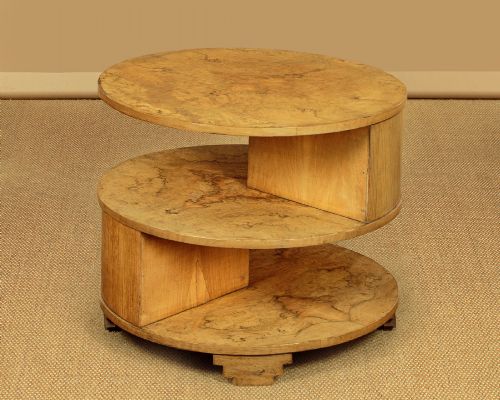
In 1930s walnut examples, these tiers often step back or rotate to create dynamic geometric silhouettes typical of the Art Deco period.
How were these tables used?
These tables served multiple domestic purposes, acting as coffee tables, lamp stands, tea trolleys, and game surfaces in period sitting rooms. Multiple tiers allowed households to keep reading materials, drinks, or decorative items close at hand.
Some variants included castors for mobility or metamorphic mechanisms that expanded the surface area when hosting guests.
How do I identify Art Deco style?
Art Deco design relies on clean geometric lines, symmetrical wood grain arrangements, and streamlined silhouettes. Look for stepped tiers, rounded corners, and a lack of excessive ornamentation.
Makers frequently combined figured walnut with contrasting materials like chrome, brass, or ebonised wood to accentuate the modern aesthetic.
How do I care for walnut veneer?
Protect walnut veneer by keeping tables away from direct sunlight and consistent heat sources, which can dry out the timber and cause lifting. Dust regularly with a soft, dry cloth and avoid harsh chemical cleaners.
Applying a quality wax occasionally helps maintain the lustre of the polished wood surface.