


1930s Walnut Storage Cupboard
These pieces give a 1930s walnut storage cupboard its characteristic depth, pairing rich veneers with practical interior compartments for the modern home.
1930s Walnut Storage Cupboard
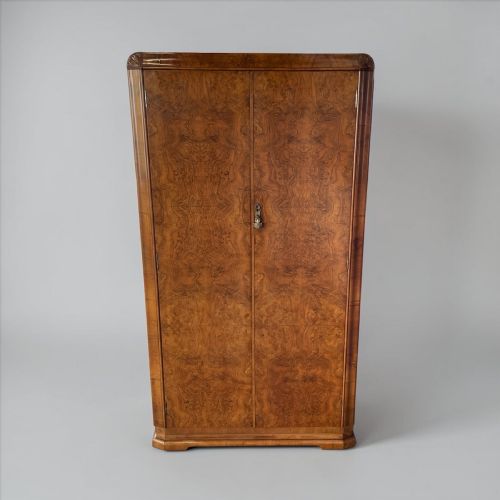
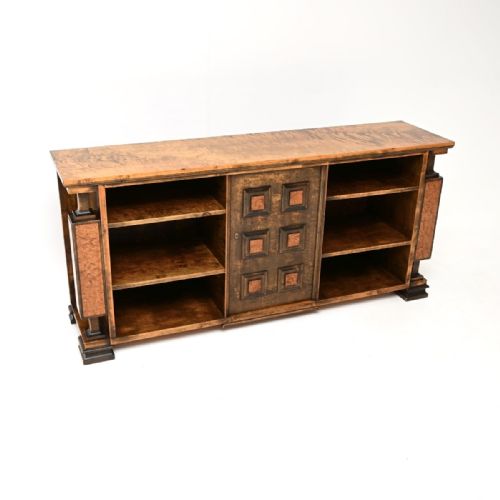
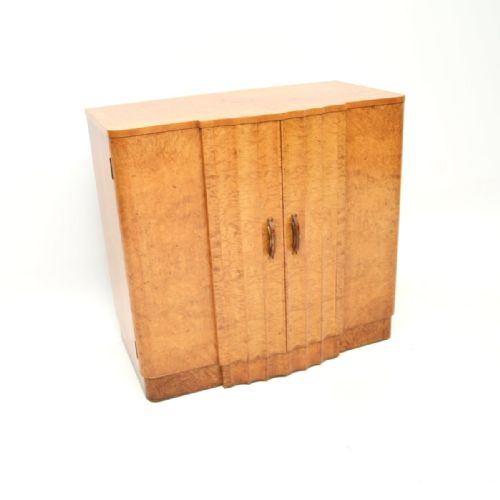
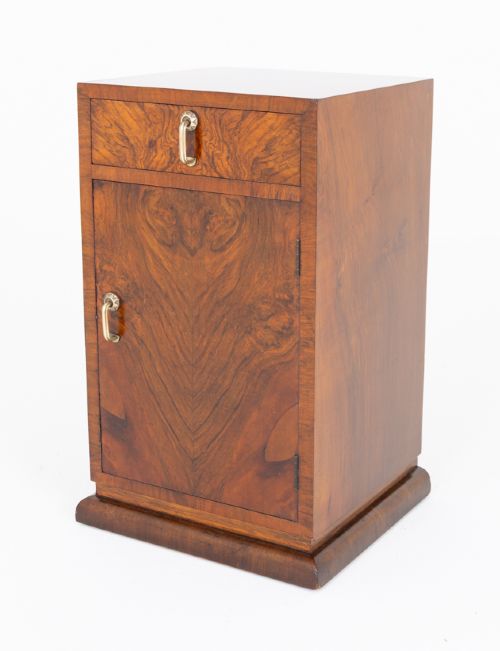
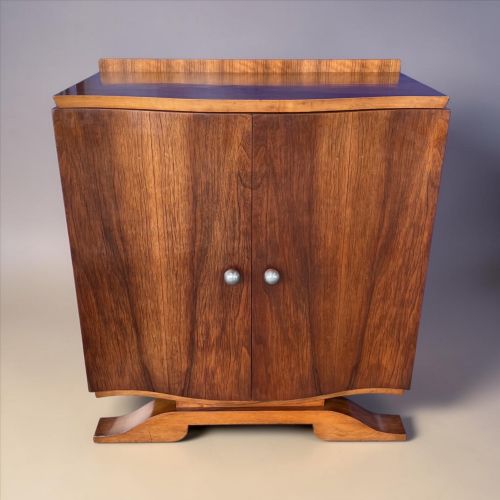
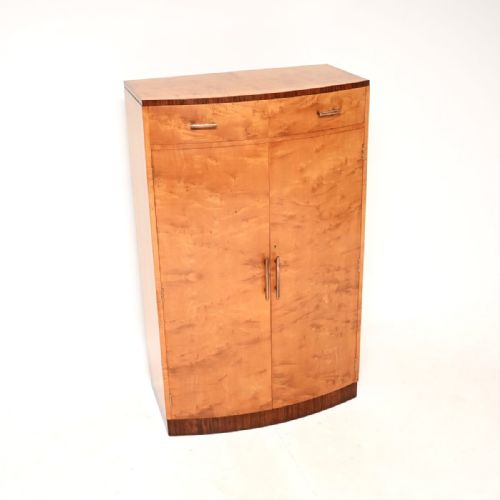
A 1930s walnut storage cupboard brings together the robust forms of the interwar years and the striking grain patterns favoured by period cabinet makers. Buyers searching for a 1930s walnut storage cupboard typically encounter pieces designed for specialised domestic roles, ranging from compact bedside cabinets and tallboys to cocktail cabinets and multi-section compactum wardrobes.
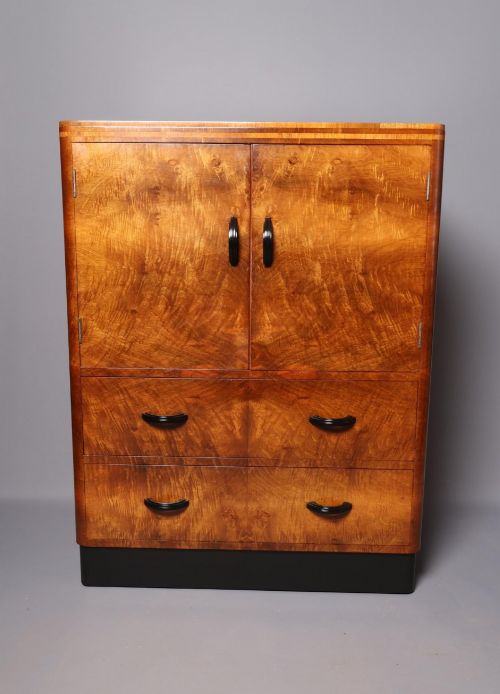
The dominant aesthetic across these listings follows the geometric lines of Art Deco design, alongside occasional revivals of Louis XVI and French Provincial styles. Many examples utilise burr walnut veneers to create striking symmetrical patterns across the doors and panels, giving ordinary storage a distinct decorative presence.
Beyond the standard wardrobe or linen cupboard, the selection includes specialised furniture such as sheet music cabinets and drinks bars. These smaller items provide closed storage tailored to specific collections while maintaining the dark, warm tones characteristic of walnut furniture from this decade.
Materials and construction
Makers of the period relied on solid wood and wood veneers, employing walnut and burr walnut as the primary visible surfaces. Secondary timbers, satin birch, maple, and mahogany support the internal structures and drawer linings, while brass and metal hardware provide functional hinges and handles.
Veneering techniques allowed craftsmen to cover large surfaces with symmetrical slices of burr walnut, creating dramatic grain movement across cupboard doors. Bakelite occasionally appears in the detailing of handles and fittings, marking the technological shifts of the era alongside traditional cabinet making methods.
Cabinet interiors frequently incorporate contrasting lighter woods like satin birch alongside the primary walnut and burr walnut exteriors.
Distinguishing quality in period storage
The standard of a piece rests heavily on the selection and matching of the veneer. Superior examples display mirrored burr patterns that flow seamlessly across multiple doors, whereas lesser pieces use mismatched grain alignment.
Construction methods also divide the range, from straightforward utilitarian carcases to complex compactum wardrobes featuring fitted internal shelving, trays, and specialised compartments. The inclusion of recognizable maker attribution and integrated hardware further separates standard production items from distinguished workshop outputs.
Harry and Lou Epstein·Hille·The Bowman Brothers·Heal's
The 1930s Walnut Storage Cupboard Glossary
- Burr walnut
- A veneer taken from the knotted growth of a walnut tree, prized for its swirling and intricate grain patterns. It creates a highly decorative surface on cupboard doors.
- Compactum
- A large fitted wardrobe or storage cabinet combining hanging space, drawers, and shelving within a single unit. These units often feature split sides or multiple internal compartments.
- Tallboy
- A tall chest of drawers or a combination of drawers and cupboards arranged vertically to save floor space. They offer substantial vertical storage within a relatively small footprint.
- Satin Birch
- A pale, fine-grained timber often used for interior linings or contrasting highlights within cabinet interiors. It provides a bright contrast to darker exterior walnut veneers.
1930s Walnut Storage Cupboard: Frequently Asked Questions
What is a compactum wardrobe?
A compactum wardrobe is a large multi-functional storage piece designed to hold an extensive wardrobe within a single footprint. These units typically combine hanging space with internal drawers, shelves, and sliding trays.
They represent the fitted furniture ideals of the interwar period, offering dedicated compartments for every category of clothing.
How do I identify Art Deco furniture?
Art Deco furniture relies on clean geometric lines, symmetrical shapes, and the extensive use of figured wood veneers like burr walnut. Decoration is kept minimal, allowing the natural grain patterns to serve as the primary visual interest.
Pieces often feature stepped cornices, rounded corners, and contrasting metal or Bakelite hardware rather than historical carved ornamentation.
Where should I place a cocktail cabinet?
Cocktail cabinets function well in living rooms or dining spaces where entertaining takes place. Their drop-front surfaces and internal mirrored compartments provide a dedicated station for glassware and bottles.
Keeping them out of direct sunlight helps protect the delicate walnut veneer from fading over time.
What is the difference between a tallboy and a compactum?
A tallboy is primarily a tall chest of drawers or a small cupboard stacked vertically to maximise storage without taking up much floor space. A compactum is a wider, more complex wardrobe combining multiple internal storage configurations.
Tallboys focus on vertical drawer capacity, whereas compactums integrate hanging space alongside their shelving and drawers.