



1930s Walnut Dresser
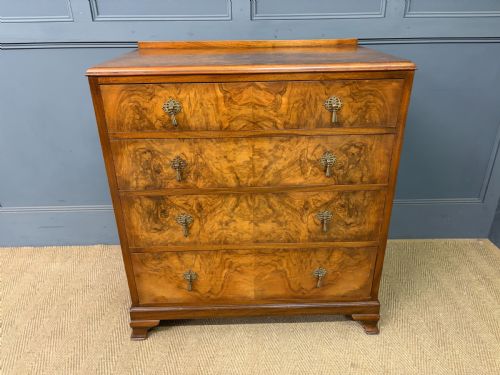
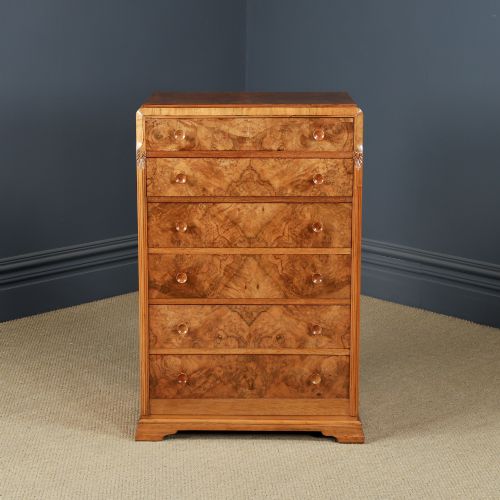
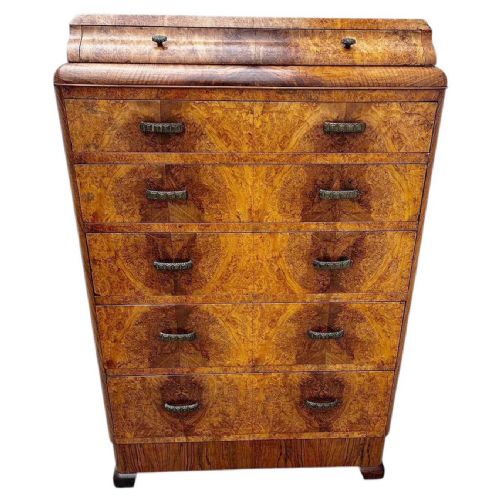
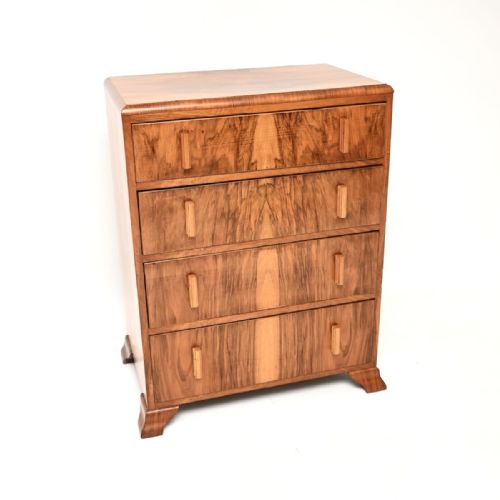
A 1930s walnut dresser brings geometric Art Deco elegance and rich burr figures to a room, offering practical storage with striking period character.
1930s Walnut Dresser
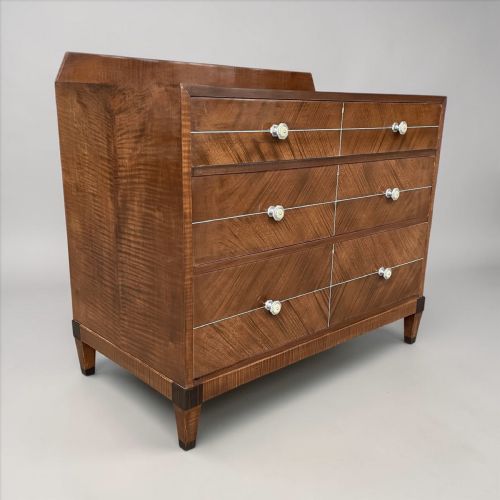
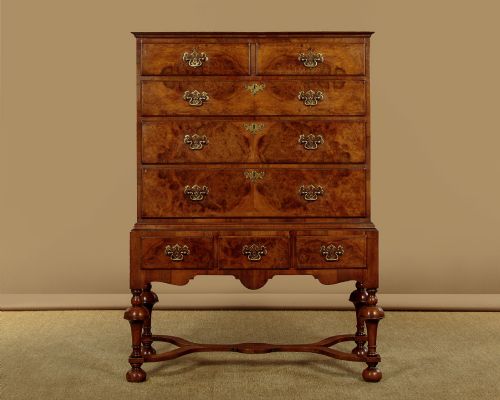
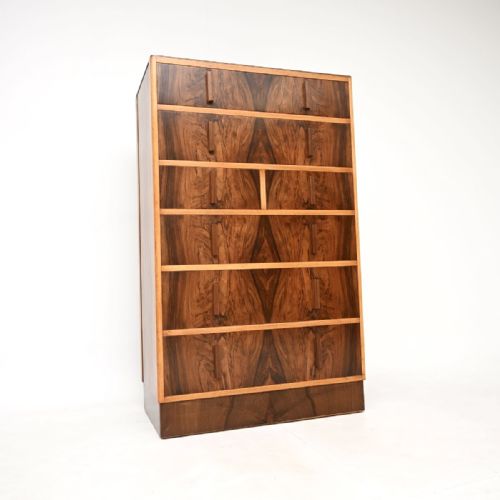
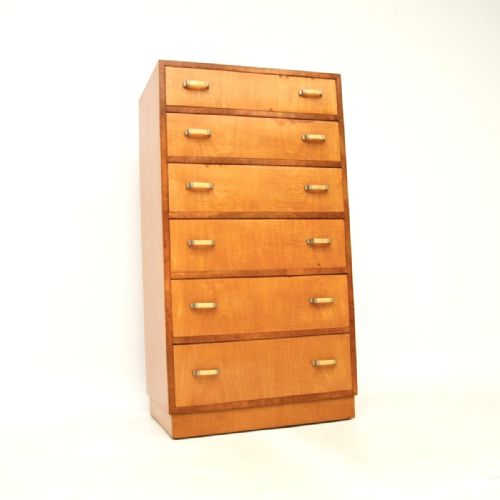
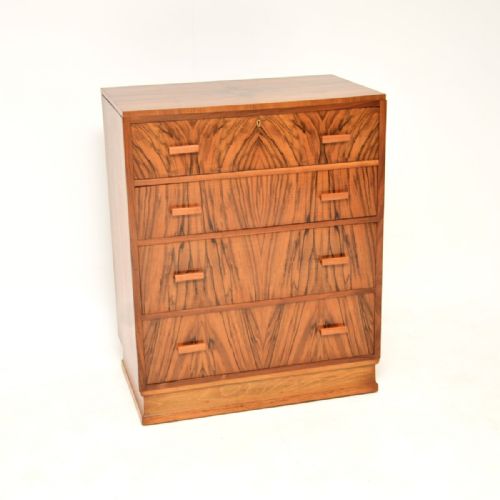
A 1930s walnut dresser on this page typically takes the form of a chest of drawers or a sideboard dating from the Art Deco period. These items range from tall chests to wide sideboards, serving as functional storage units with strong stylistic presence.
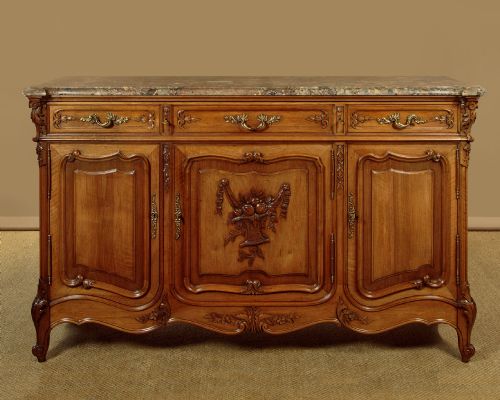
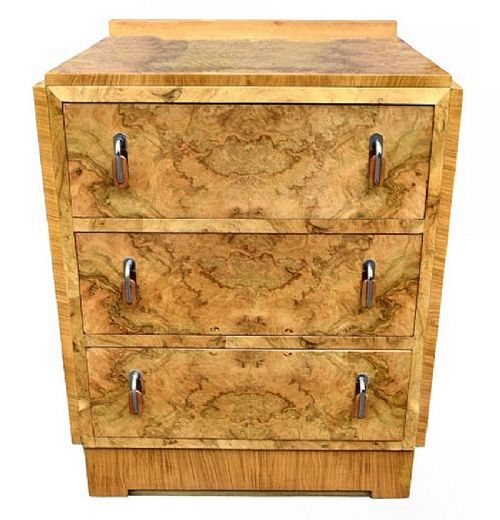
The dominant aesthetic is firmly Art Deco, though French Provincial styles also appear alongside English pieces. Walnut is the defining wood, often enriched with figured grains and burr walnut veneers.
How they were made
Cabinet makers utilised solid walnut and walnut veneer, frequently selecting burr walnut veneer or figured walnut to create striking symmetrical patterns across drawer fronts and cabinet doors. Satinwood and bleached blonde walnut also feature as contrasting surface elements.
Metal, brass, chrome, and bakelite appear as hardware and decorative accents, completing the distinctive material palette of the decade.
1930s Walnut Dresser Retail Price Guide 2026
Typical asking prices for 1930s walnut dresser among the pieces listed under this phrase on Sellingantiques today, from the lower quarter to the upper quarter. They describe what is for sale here now, not the wider market.
Bakelite handles bring a touch of early plastic fantastic to the solemn gravity of burr walnut.
What varies in quality
The distinction between standard examples and the finest pieces often lies in the choice and application of veneer, particularly where burr walnut or figured grain is matched across multiple drawers. High quality execution is evident in the careful handling of contrasting timbers like satinwood alongside walnut.
Design complexity and maker attribution also set pieces apart, moving from simpler chests to substantial cabinets by known firms such as the Bowman Brothers, or pieces featuring integrated marble tops.
Bowman Brothers
The 1930s Walnut Dresser Glossary
- Burr walnut
- A veneer taken from the growth node of a walnut tree, producing highly twisted, decorative patterns of grain. It was widely utilised on Art Deco drawer fronts.
- Art Deco
- A design movement prevalent in the 1930s characterised by sleek geometric shapes, streamlined forms, and modern materials.
- Walnut veneer
- A thin layer of walnut timber applied to a core structure, allowing makers to display dramatic grain figures across large flat surfaces.
- Satinwood
- A pale, hard timber used alongside walnut to provide sharp visual contrast in decorative inlay and banding.
- Bakelite
- An early form of synthetic plastic used for handles and decorative details on 1930s furniture.
1930s Walnut Dresser: Frequently Asked Questions
What styles define a 1930s walnut dresser?
The primary style seen among these pieces is Art Deco, characterised by clean lines and bold geometric forms. French Provincial examples also occur within the period.
Cabinet makers made extensive use of walnut, burr walnut veneer, and contrasting timbers like satinwood to achieve a sophisticated decorative finish.
How are these dressers used today?
These items function primarily as chests of drawers and sideboards, providing practical storage for bedrooms, living spaces, and hallways. Their strong visual presence allows them to serve as focal points in a room.
Care should be taken to place them away from direct heat sources to protect the wood and veneer surfaces.
What materials are typical for these pieces?
Walnut is the essential material, appearing as solid wood, figured veneer, and burr walnut veneer. Satinwood and bleached blonde walnut are also utilised for contrast.
Hardware and accents frequently incorporate brass, chrome, metal, and bakelite.
Are English and continental pieces different?
English examples often showcase clean Art Deco lines with figured walnut, while French pieces introduce specific regional variations such as marble top sideboards.
Both origins share a commitment to high quality timber selection and sophisticated surface patterning characteristic of nineteen thirty furniture production.