

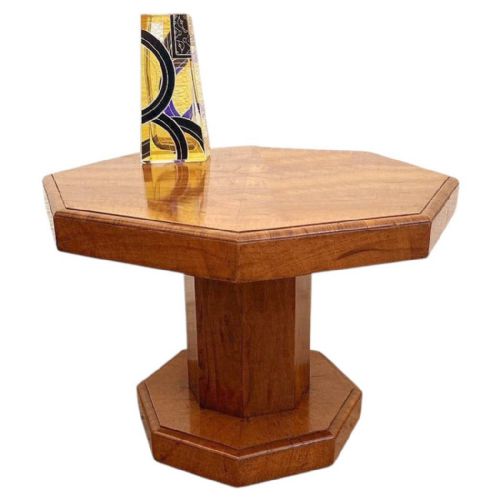


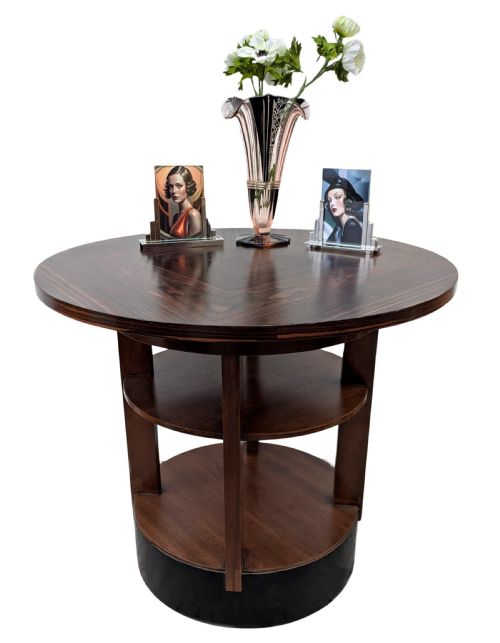
1930s Walnut Centre Table
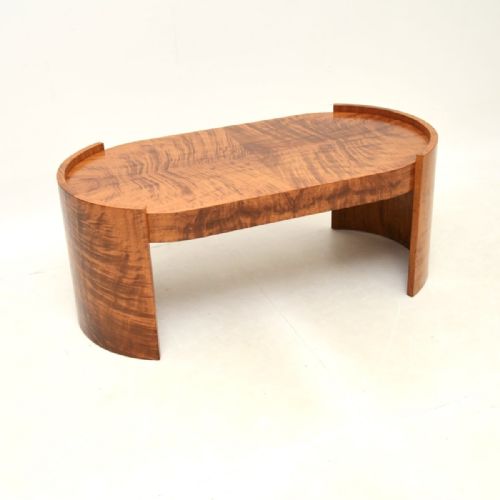
A 1930s walnut centre table brings bold Art Deco presence and rich grain to a room.
1930s Walnut Centre Table
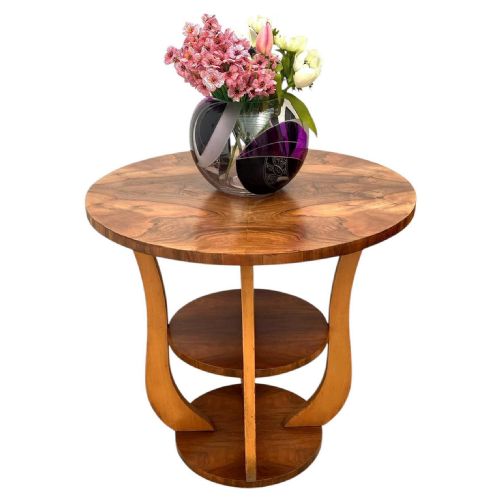
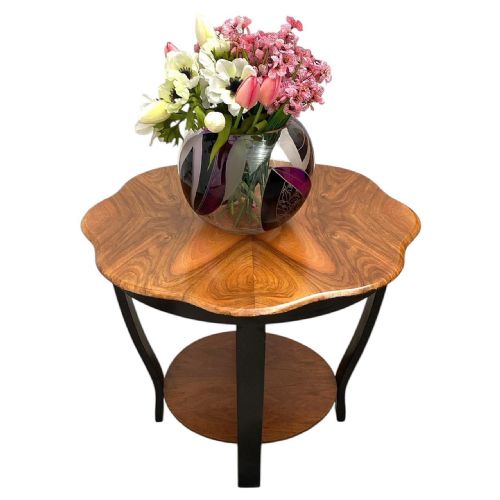
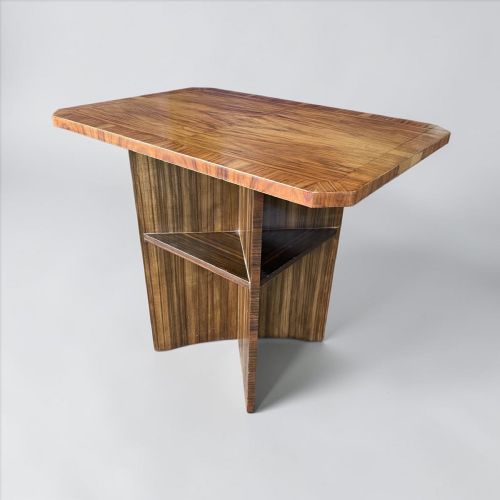
A 1930s walnut centre table spans low coffee tables, multi-tiered occasional designs, and freestanding centre pieces from the interwar decades. English and French workshops produced these forms in the Art Deco and Moderne styles, using rich timber to anchor a room.
The version most commonly met on this page is the Art Deco coffee table or occasional table. These pieces often feature two or three tiers, low profiles, and practical display surfaces suited to modern living spaces.
How they were made
Cabinet makers utilised walnut, hardwood, and specialised veneers to build these tables. Figured walnut and burr walnut were selected for their striking grain patterns, applied across flat tops and curved tiers.
Some examples incorporated glass inserts or bleached walnut finishes to alter the tone of the timber. Construction methods relied on sturdy woodwork to support tiered shelving and central storage compartments.
1930s Walnut Centre Table Retail Price Guide 2026
Typical asking prices for 1930s walnut centre table among the pieces listed under this phrase on Sellingantiques today, from the lower quarter to the upper quarter. They describe what is for sale here now, not the wider market.
Table forms span coffee tables, occasional tables, and multi-tiered centre tables in the Art Deco style.
What varies in quality
The distinction between standard and superior pieces rests on the choice of veneer and the handling of the wood grain. Figured and burr walnut displays natural movement and depth that plain timber lacks.
Design complexity also separates the range, moving from simple single-surface tables to elaborate three-tier occasional pieces and tables with integrated bookcase storage.
The 1930s Walnut Centre Table Glossary
- Art Deco
- A design style spanning the 1920s and 1930s characterised by streamlined forms and geometric symmetry. It heavily influenced the architecture of these tables.
- Burr walnut
- A prized timber harvested from tree growths, yielding intricate, swirling grain patterns. It provides a decorative finish on high-end tabletops.
- Figured walnut
- Wood with a naturally attractive grain distortion that catches the light. Cabinet makers positioned these veneers for maximum visual impact.
- Veneer
- A thin layer of superior wood applied over a secondary timber base. This technique allowed makers to display expensive grain patterns efficiently.
- Occasional table
- A small, versatile table designed for specific, intermittent use within a room. Many examples on this page feature multiple tiers for this purpose.
1930s Walnut Centre Table: Frequently Asked Questions
What defines an Art Deco table?
Art Deco tables emerge from the design movement of the 1920s and 1930s, favouring geometric shapes and streamlined silhouettes.
They frequently incorporate tiered surfaces and modern materials alongside traditional hardwoods.
How do I use a centre table?
These pieces serve as functional focal points in living spaces, holding books, lamps, or decorative objects.
Multi-tiered versions offer extra shelving for storage without taking up additional floor area.
What is burr walnut?
Burr walnut comes from a tree growth that produces highly complex, swirling grain patterns.
Its distinct appearance makes it a sought-after finish for tabletops.
Are these tables English or French?
Both English and French workshops produced these designs during the interwar period.
French pieces often embrace bolder Moderne styling, while English examples lean towards practical tiered coffee tables.