

1930s Storage Chest
A 1930s storage chest brings geometric rhythm and warm timber tones to an interior, offering practical containment with distinct interwar style.
1930s Storage Chest
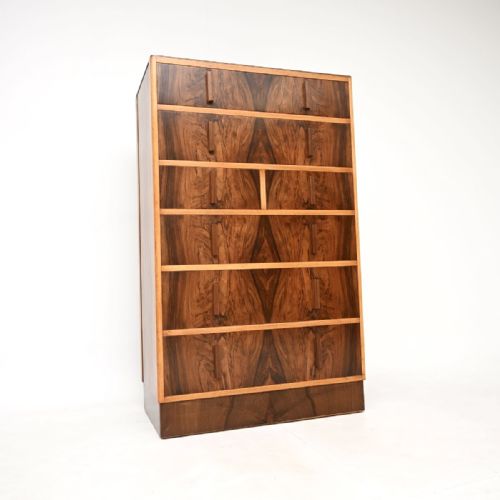
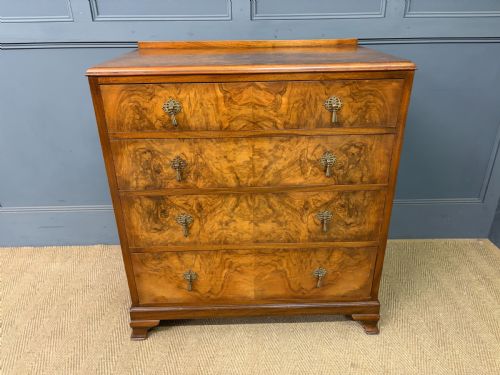
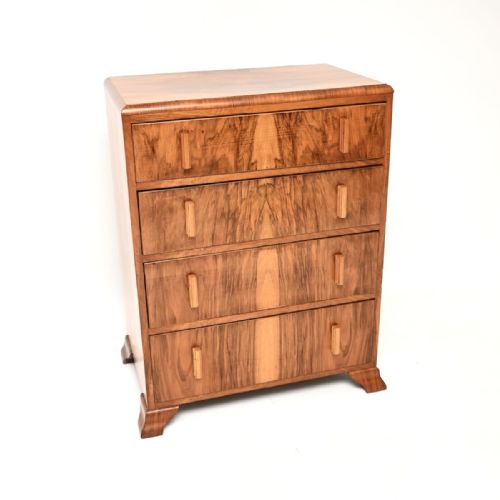
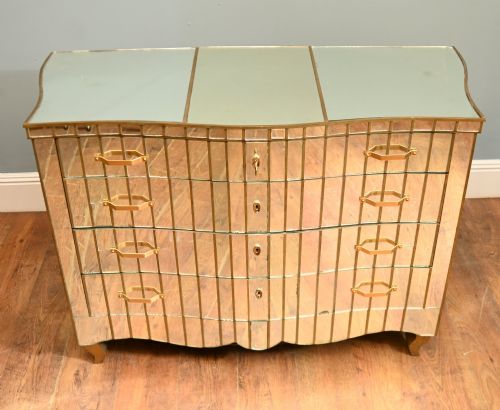
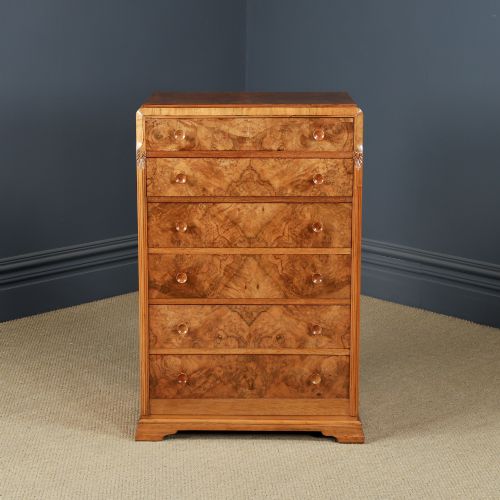
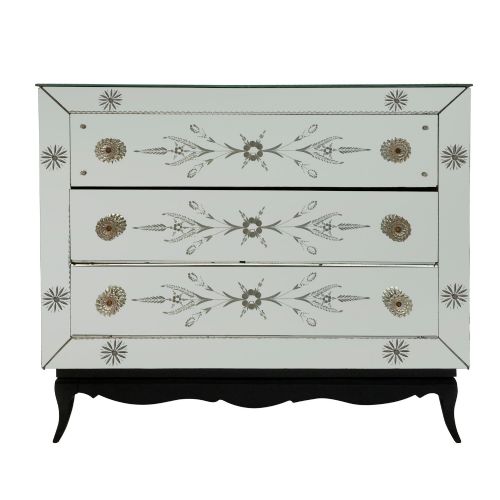
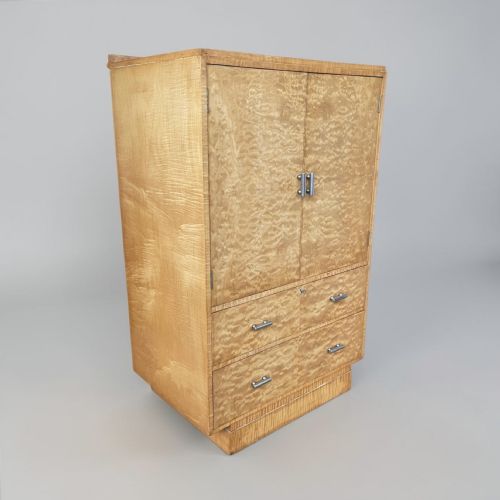
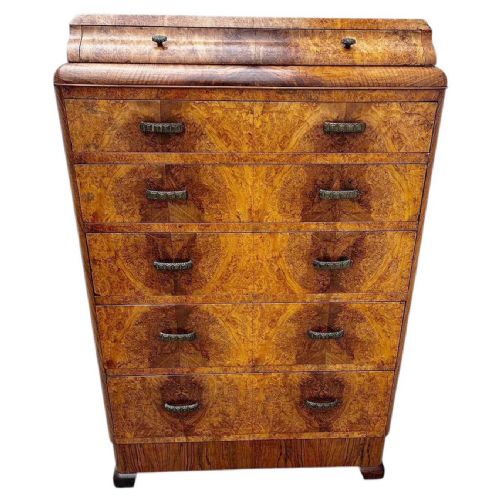
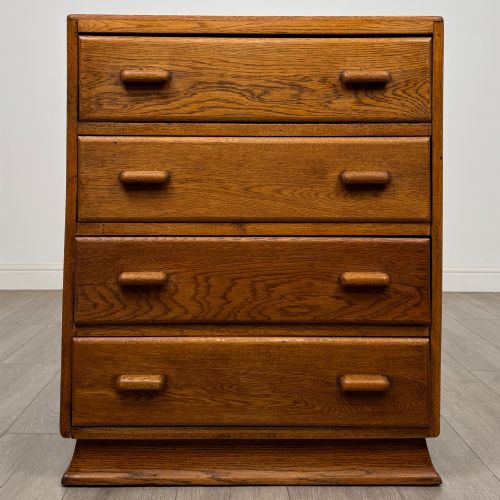
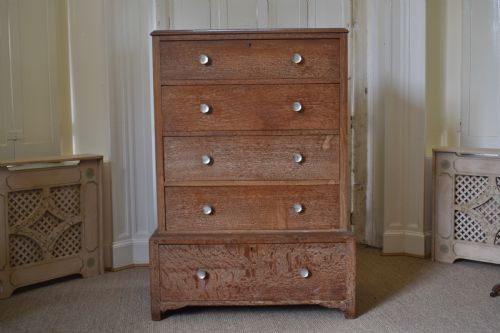
A 1930s storage chest encompasses various interwar forms, most commonly found here as chests of drawers, tallboys, and commodes shaped by Art Deco design. Pieces range from French and English workshop productions to travel trunks and blanket chests, reflecting the diverse domestic storage needs of the period. Alongside these, buyers encounter bedside cabinets, music cabinets, and specialised small chests in oak and walnut.
The aesthetic leans heavily toward the clean lines of Art Deco, though examples influenced by the Arts and Crafts movement, Edwardian style, and rustic country traditions also appear. Walnut and oak dominate the domestic pieces, while specialist travel items introduce brass hardware and timber construction suited to mobility. These vessels served bedrooms and hallways alike, providing deep drawers or lidded compartments for garments and personal belongings.
Materials and Technique
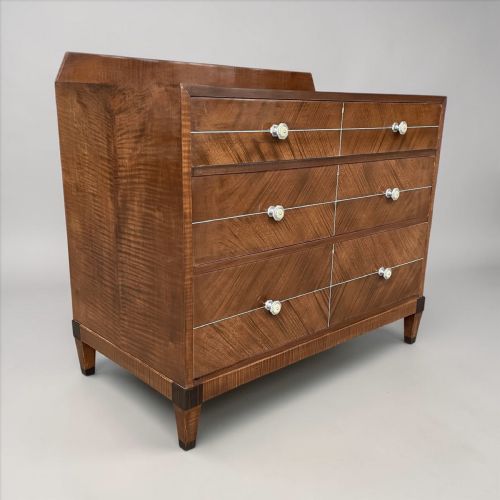
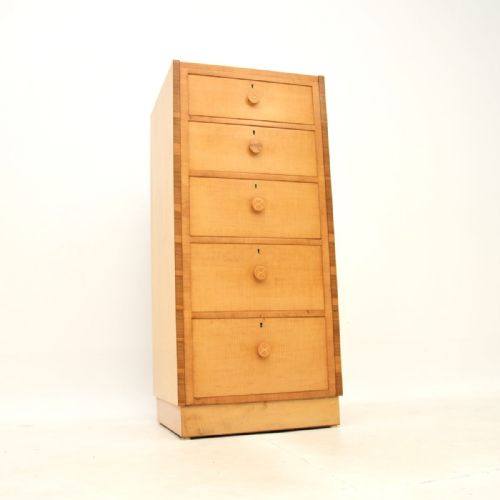
Cabinetmakers of the era utilised solid timbers like oak and pine alongside decorative hardwood veneers such as burr walnut, figured walnut, and bleached blonde walnut. Surfaces often display careful grain matching on drawer fronts, complemented by specialised materials like sycamore, satinwood, palisander, and ebonised finishes. Metal components, including original brass handles and Bakelite details, complete the construction of these pieces.
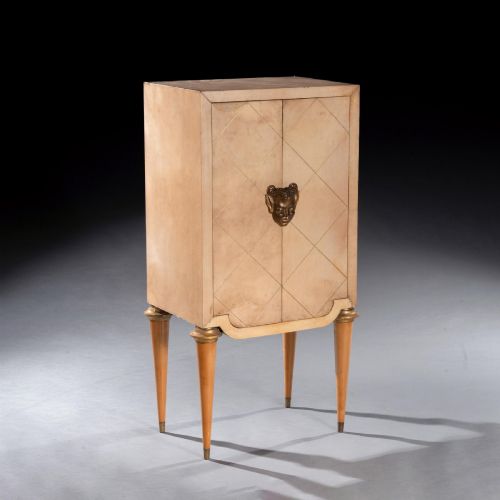
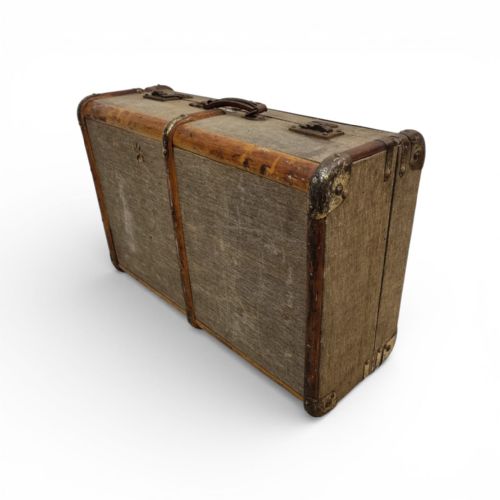
Construction techniques combined traditional joinery with modern veneer applications, creating smooth carcases and flush drawer alignments. Certain items incorporate unusual surface treatments, such as parchment-covered drawers or mirrored glass panels fitted to the exterior. Travel trunks and luggage relied on reinforced edges and robust metal fastenings to withstand transit.
1930s Storage Chest Retail Price Guide 2026
Typical asking prices for 1930s storage chest among the pieces listed under this phrase on Sellingantiques today, from the lower quarter to the upper quarter. They describe what is for sale here now, not the wider market.
Interwar watchmakers and travellers kept their tiny tools and garments safe in everything from spice cabinets to massive Louis Vuitton trunks.
Distinctions in Standard
The hierarchy of quality rests primarily on the choice of surface timber and the complexity of the veneer work, where highly figured burr walnut or exotic woods distinguish finer cabinetmaking from standard utility pieces. Mastery in handling difficult materials, such as parchment inlays or mirrored glass, separates standard production from ambitious workshop commissions.
Structural integrity and the retention of original elements, including handles and fitted interiors, dictate the standing of a piece within its type. Proportion and form also play a role, as custom designs or unusual vertical formats demonstrate greater ambition than mass-produced interwar commercial chests.
Hille·Betty Joel·Heal's·Louis Vuitton·Everwear
The 1930s Storage Chest Glossary
- Tallboy
- A tall chest of drawers, often combining a wardrobe cabinet top with lower drawers, designed to maximise vertical storage space.
- Commode
- A low chest of drawers or cabinet, frequently associated with French design traditions of the period.
- Veneer
- A thin layer of figured timber applied over a secondary wood base to create decorative patterns across large surfaces.
- Bakelite
- An early synthetic plastic utilised for handles and decorative trims on interwar furniture and cabinets.
- Limed oak
- Timber treated with a specialised finish that leaves a white pigment in the open grain, popular during the interwar decades.
1930s Storage Chest: Frequently Asked Questions
What defines a 1930s storage chest?
These pieces are defined by interwar manufacturing methods and the prevalent Art Deco style, which favored symmetrical wood grains and streamlined geometric silhouettes. They include tallboys, commodes, and blanket chests built primarily in oak, walnut, and various exotic veneers.
Craftsmanship during this decade combined traditional cabinetry with innovative surface treatments like mirrored glass and parchment, creating functional storage with a distinct decorative presence.
How do tallboys differ from standard chests?
Tallboys provide increased vertical storage capacity by stacking cupboards or additional compartments above a standard chest of drawers base. This layout allowed households to store a greater volume of garments while occupying a smaller floor footprint.
They appear frequently in walnut and oak across interwar listings, serving as principal bedroom furniture pieces.
How do I care for walnut veneer surfaces?
Walnut veneer surfaces require gentle cleaning with a dry or barely damp cloth to preserve the natural oils and the integrity of the thin wood layer. Avoid placing them in direct sunlight or near heat sources, which can cause the timber to dry and the veneer to lift.
Regular polishing with a suitable wax helps maintain the lustre of the figured grain without building up heavy chemical residues.
Were these chests made for travel or home?
The inventory includes both domestic bedroom furniture and heavy-duty travel luggage, such as wardrobe trunks designed for transit. Domestic chests remained stationary in rooms, while travel pieces incorporated robust brass hardware and reinforced edges for mobility.
Both categories utilise interwar materials like oak, metal, and walnut, but their internal fittings reflect their original purpose.