


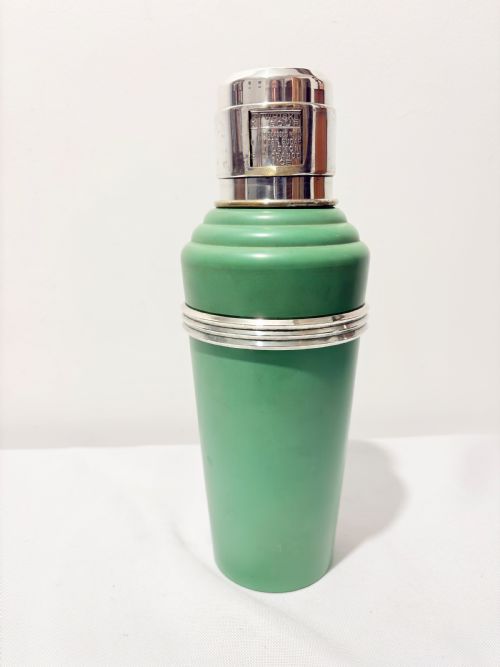


1930s Silver Shaker
When you handle a 1930s silver shaker, you are holding the definitive barware of the cocktail age, prized for its sleek geometry and social utility.
1930s Silver Shaker
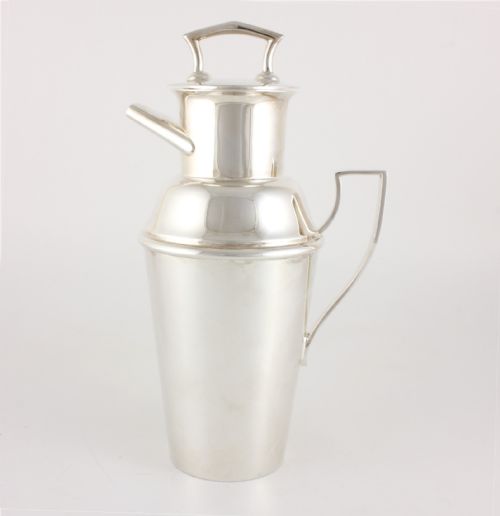
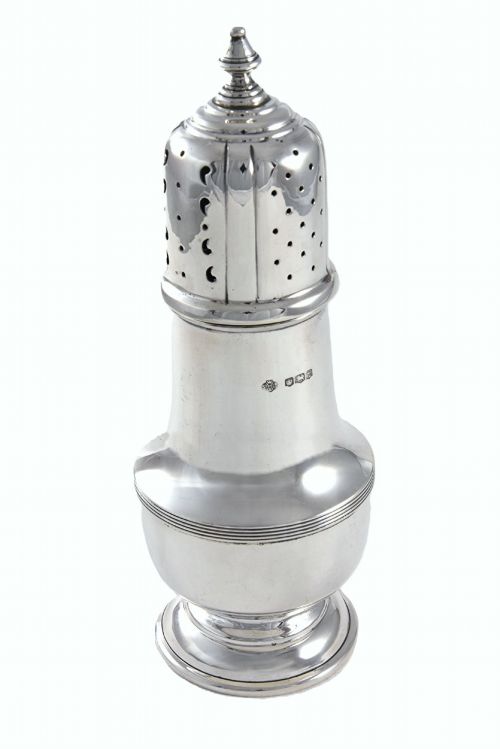
A 1930s silver shaker encompasses a broad range of barware and table vessels designed for mixing drinks or dispensing condiments during the interwar period. The selections here are dominated by cocktail shakers alongside sugar casters, pepper pots, and salt cellars.
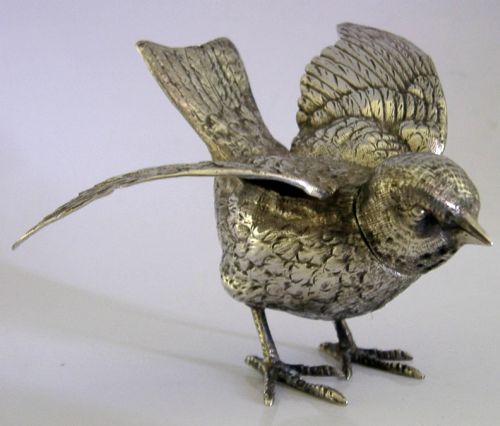
Most examples lean heavily into the geometric vocabulary of the Art Deco movement, though occasional Georgian Revival sugar shakers and novelty animal pepper pots appear. Origins span English, French, German, Norwegian, and Dutch workshops.
Cocktail vessels frequently incorporate functional additions like integral lemon squeezers, ice breakers, or etched recipes, while table casters rely on sterling silver or silver plate bodies.
Materials and construction methods
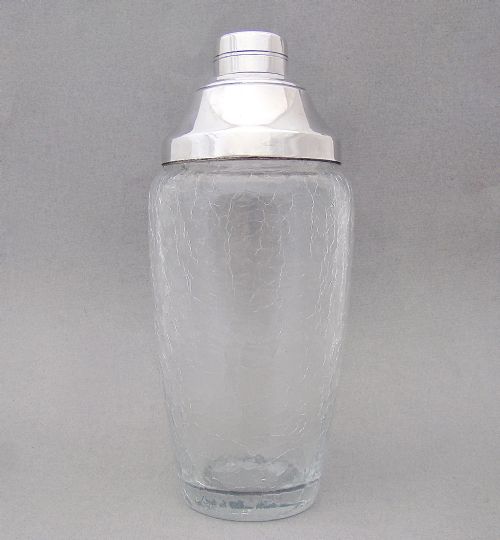
Makers utilised a mixture of sterling silver, electroplated nickel silver, and standard silver plate over base metals, often combining metal with crackle glass, green Bakelite, or colourful enamel highlights.
Vessels were shaped through spinning, stamping, or hammering, with polygon sides and stepped profiles forming the characteristic silhouette. Engine turning added precise geometric surface patterns to the metal bodies.
Several cocktail shakers feature built-in lemon squeezers so enthusiastic hosts could juice citrus directly into the mixing chamber.
Evaluating craftsmanship and design
Quality rests on the weight of the metal, the crispness of the stamping or engine turning, and the integrity of internal fittings like screw threads and built-in reamers. Maker attribution elevates a piece significantly.
Makers such as Mappin & Webb, Asprey, and William Suckling applied superior finishing to joints and surfaces compared to anonymous workshop output, creating heavier and more durable vessels.
Asprey and Co·Barker Brothers·Roberts and Belk·William Suckling·C S Green and Co·Adie Brothers·Maison Barra·Carl Deffner·William Hutton·Mappin and Webb·St Medard·Elkington·Walker and Hall·James Dixon and Sons
The 1930s Silver Shaker Glossary
- EPNS
- Electroplated Nickel Silver. This designates a base metal core of nickel alloy coated with a layer of pure silver.
- Engine turned
- A mechanical decoration technique. It produces intricate, precise geometric patterns cut directly into the metal surface.
- Sugar caster
- A tabletop vessel with a pierced dome top. It is utilised for dusting sugar onto food rather than mixing cocktails.
- Bakelite
- An early synthetic plastic. It provides colourful, durable insulation for handles and accents on cocktail pieces.
1930s Silver Shaker: Frequently Asked Questions
What is a 1930s silver shaker used for?
These vessels served two distinct domestic functions during the interwar period. Cocktail versions mixed spirits and ice behind the bar, while smaller casters and pots dispensed sugar or pepper at the dining table.
Barware examples frequently included built-in strainers, reamers, and recipe markings to assist hosts. Tableware pieces focused purely on decorative dispensing through pierced lids.
How do I identify Art Deco style?
Art Deco design relies on symmetry, clean lines, and geometric motifs such as stepped polygons, chevrons, and engine-turned banding. It broke away from ornate Victorian floral decoration.
On shakers, this translates to cylindrical or faceted bodies with stark, architectural handles and streamlined lids. Materials like Bakelite and enamel added bold contrast.
Are these pieces made of solid silver?
Most surviving examples are silver plated over a base metal rather than cast in solid sterling silver. Manufacturers utilised electroplated nickel silver to provide the appearance of precious metal at a lower cost.
Solid silver pieces do exist, particularly among smaller condiment pots and sugar casters bearing traditional town hallmarks. Plated versions usually carry manufacturer marks indicating the plating quality instead.
How should I clean my shaker?
Silver and silver plate require gentle cleaning with a specialised non-abrasive polish to remove tarnish without wearing away the thin metal layer. Harsh scrubbing will damage engraved patterns and engine turning.
Glass and Bakelite components should be washed separately with mild soapy water. Ensure threaded metal caps are dried thoroughly to prevent corrosion.