

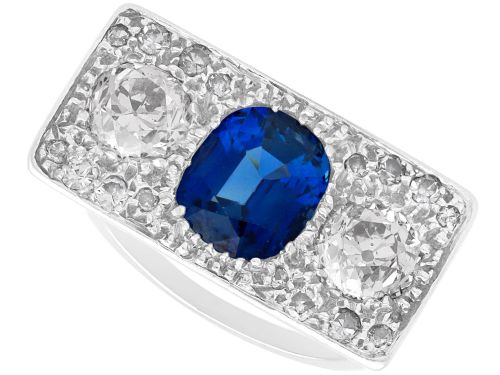


1930s Sapphire Cocktail Ring
A 1930s sapphire cocktail ring brings bold Art Deco geometry and vibrant stone weight to the hand.
1930s Sapphire Cocktail Ring
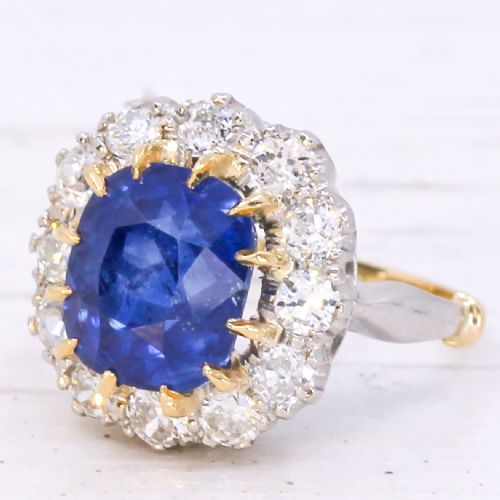
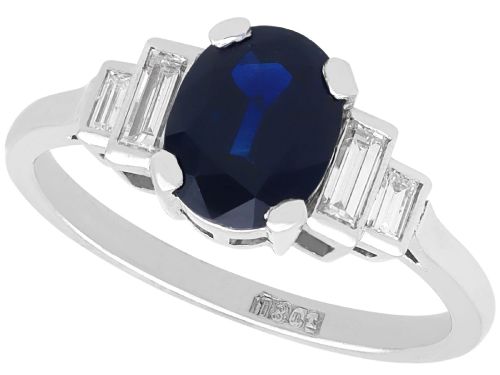
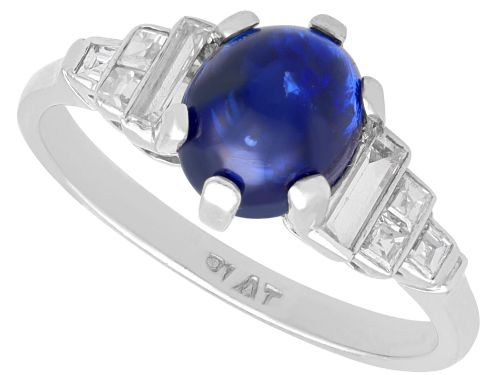
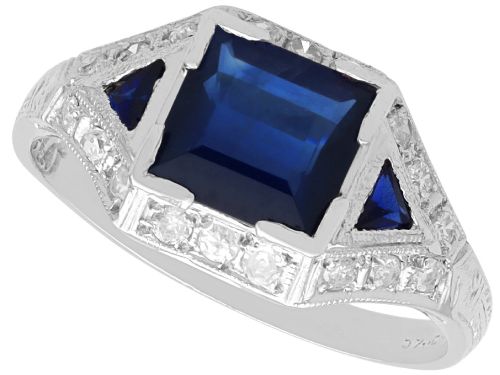
A 1930s sapphire cocktail ring is a statement jewel designed for evening wear during the interwar years, predominantly appearing in distinct Art Deco configurations. These pieces showcase large central stones supported by intricate geometric settings and surrounding diamond work.
The dominant forms seen in these listings are rings and dress rings, spanning the decades around the nineteen-thirties with occasional examples from the nineteen-twenties and nineteen-forties. These jewels utilise substantial centre gems, including both blue and fancy coloured sapphires.
Buyers encounter variations featuring heavy carat weights, such as large Ceylon sapphires and yellow sapphires, paired with brilliant or single-cut diamonds. The overarching aesthetic remains tied to the architectural lines and linear symmetry of the period.
Materials and construction
These rings rely heavily on platinum and white gold as primary mounting materials, chosen for their strength and bright finish that complements diamond clusters. Yellow gold and 18ct white gold also appear, providing warmer backdrops for yellow sapphires.
1930s Sapphire Cocktail Ring Retail Price Guide 2026
Typical asking prices for 1930s sapphire cocktail ring among the pieces listed under this phrase on Sellingantiques today, from the lower quarter to the upper quarter. They describe what is for sale here now, not the wider market.
Current listings feature platinum, 18ct white gold, 9ct gold, and yellow gold paired with natural and synthetic sapphires.
Distinctions in quality
Quality in these rings rests upon the origin and optical characteristics of the sapphire, particularly where Ceylon stones command attention for their saturation and clarity. The presence of significant diamond carat weight and balanced proportion relative to the central stone elevates a piece.
The integrity of the platinum or gold fabrication, including crisp millegrain edges and well-preserved geometric mounts, dictates the standard of execution. Pieces that maintain structural crispness without excessive wear to the prongs represent superior craftsmanship.
The 1930s Sapphire Cocktail Ring Glossary
- Art Deco
- A design style characterised by sleek geometric shapes, stylised motifs, and linear symmetry. It dominated decorative arts and jewellery during the nineteen-twenties and nineteen-thirties.
- Cabochon
- A gemstone cut with a smooth, rounded convex top rather than faceted planes. This shape highlights the deep colour and internal characteristics of stones like large sapphires.
- Millegrain
- A jewellery technique creating a decorative border of tiny, raised metal beads along the edges of a setting. It adds a refined texture to platinum and gold mounts.
- Ceylon Sapphire
- A sapphire originating from Sri Lanka, historically noted for its bright and vivid colour saturation. These stones frequently appear in high-carat configurations.
- Synthetic Sapphire
- A gemstone created in a laboratory that shares the chemical and physical properties of a natural sapphire. These materials were utilised in period jewellery to achieve specific vibrant hues.
1930s Sapphire Cocktail Ring: Frequently Asked Questions
What defines a 1930s sapphire cocktail ring?
These rings are characterised by prominent central sapphires framed by diamonds within geometric Art Deco mountings. They were created for evening social wear and emphasise bold scale.
Platinum and white gold serve as the predominant framing metals, supporting substantial stone weights designed to catch the eye under artificial light.
How do I care for a platinum cocktail ring?
Platinum is a durable metal that withstands daily wear well, but the intricate settings and diamond pavé require gentle handling. Professional cleaning helps maintain the brightness of the metal and secures the smaller stones.
Store the ring separately from other jewellery to prevent scratching softer gold components or chipping the central sapphire.
Are synthetic sapphires common in period rings?
Laboratory-created stones appear in period pieces alongside natural gems to achieve specific intense colours, such as bright orange hues. These stones possess the same mineral composition as mined sapphires.
Documentation or certification often specifies whether a sapphire is natural or synthetic, guiding collectors who prefer untouched earth-mined stones.
What is the significance of Ceylon sapphires?
Ceylon sapphires originate from Sri Lanka and are prized for their high transparency and luminous, open colour profiles. They often reach significant carat weights in dress rings.
Gemological reports frequently accompany these particular stones to verify their geographic origin and treatment status.