

1930s Office Desk
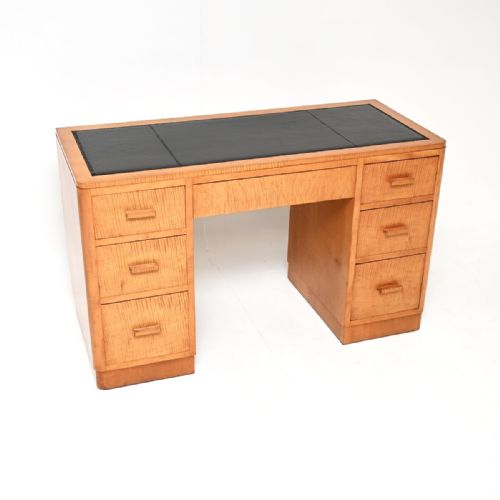
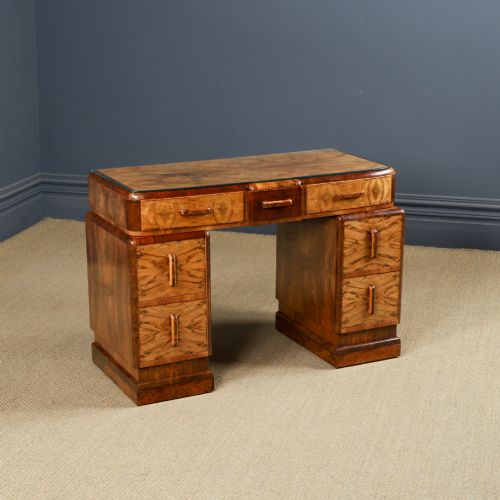
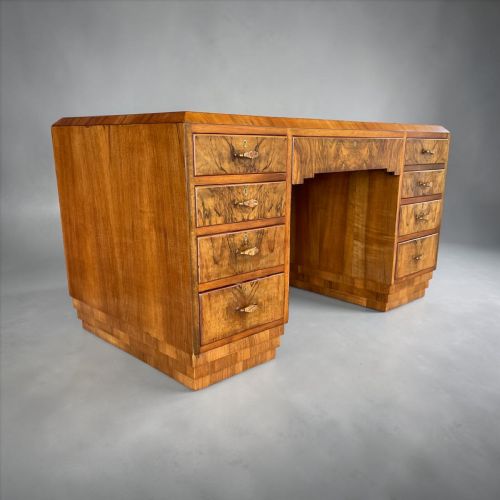
A 1930s office desk brings striking architectural presence and practical workspace utility into a modern room.
1930s Office Desk
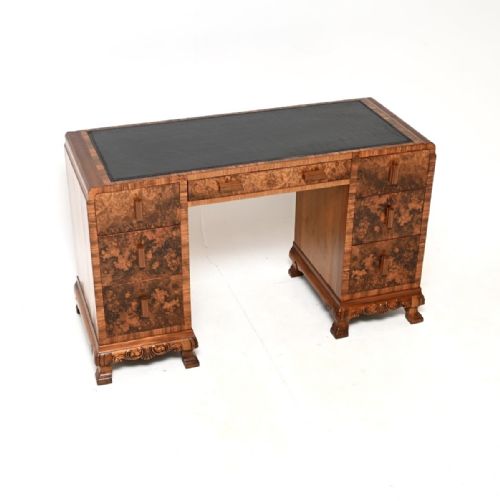
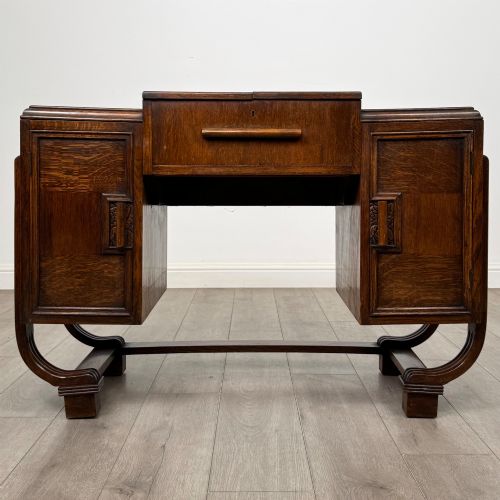
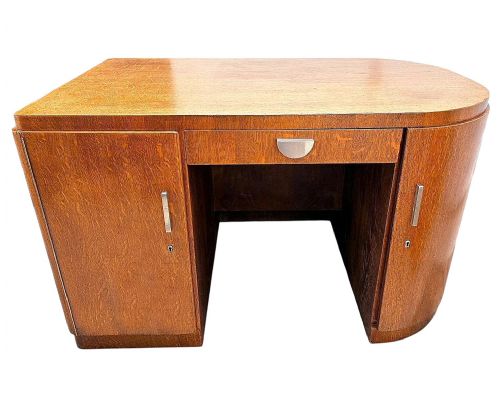
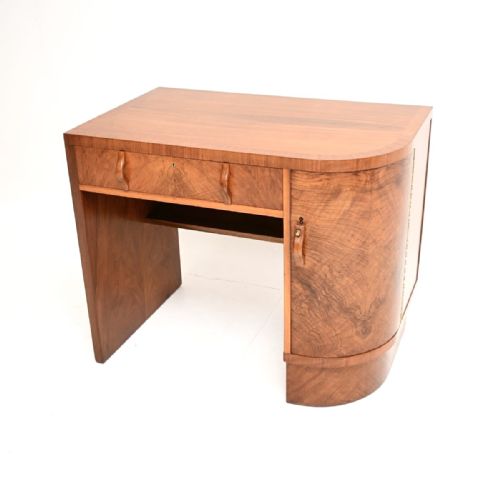
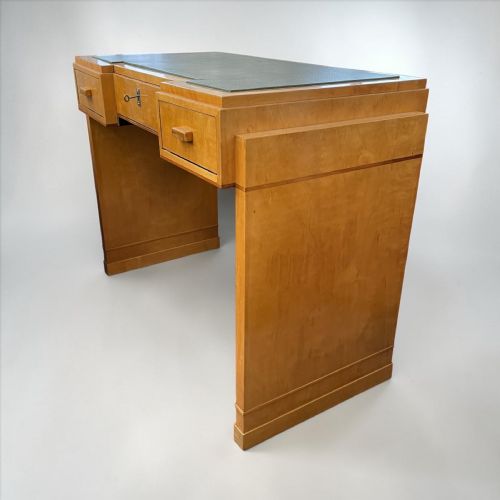
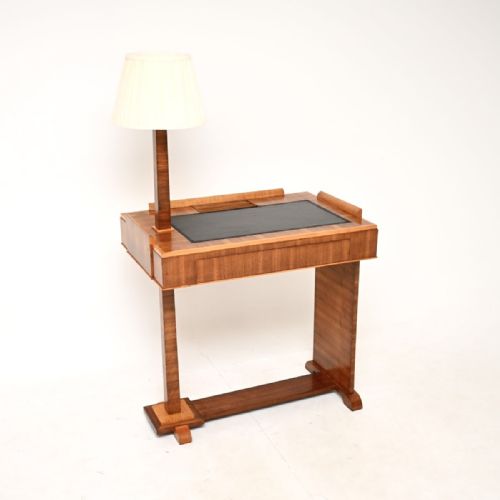
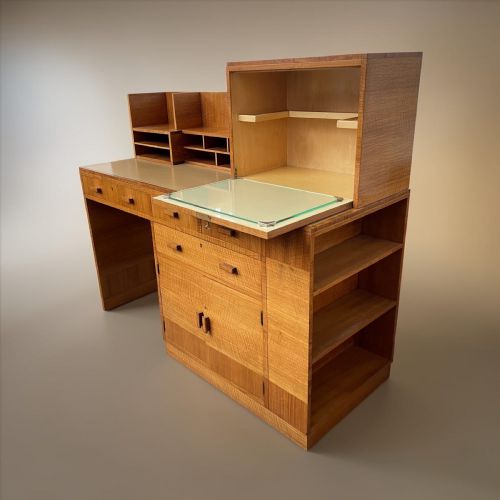
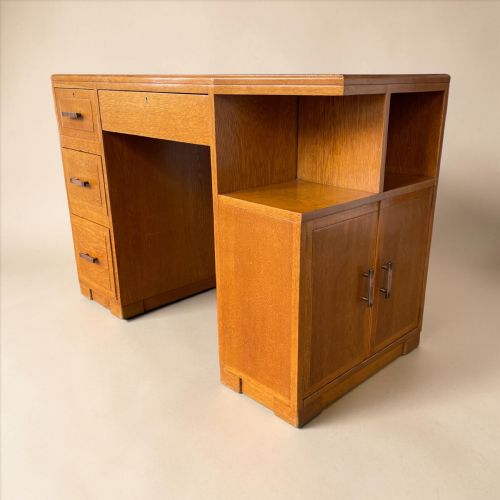
When searching for a 1930s office desk, buyers encounter heavy geometric silhouettes, pedestal writing tables, and streamlined forms associated with the Art Deco and Machine Age styles. Walnut, burr walnut, oak, and satin birch dominate the wooden furniture, often paired with leather writing surfaces or glass elements.
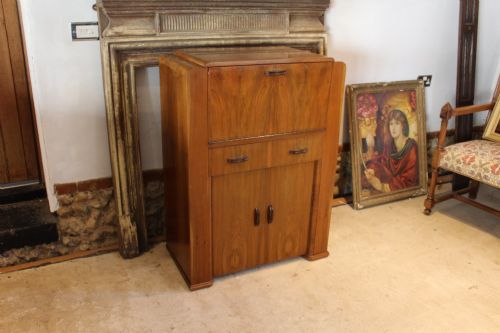
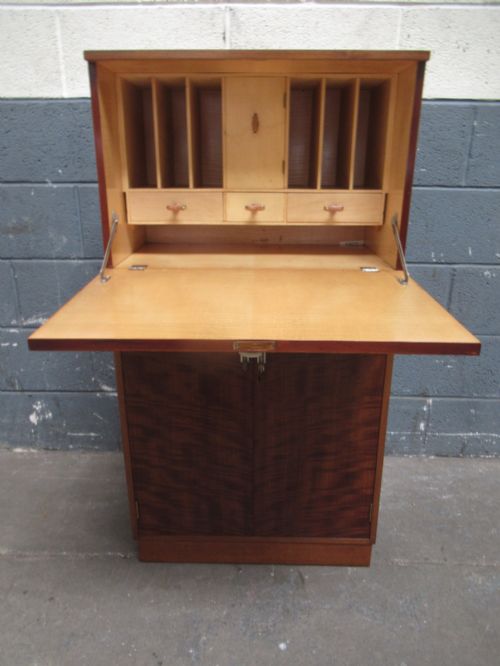
Pedestal desks and bureau bookcases represent the primary forms seen in this selection, accompanied by matching chairs, desk lamps, and accessories such as clocks and calendars. Pieces span the 1930 period alongside related examples from the 1920s, Edwardian era, and 1940.
The typical desk from this era balances bold decorative veneers with clean structural lines, frequently incorporating integrated lighting or dual-sided configurations. Buyers find both compact writing tables and large executive pedestal desks built for serious daily use.
Materials and construction methods
Cabinet makers utilised choice veneers including burr walnut, figured walnut, and satin birch over sturdy timber carcasses to achieve rich surface patterns. Glass and polished leather inserts were frequently integrated into the tops of pedestal writing desks.
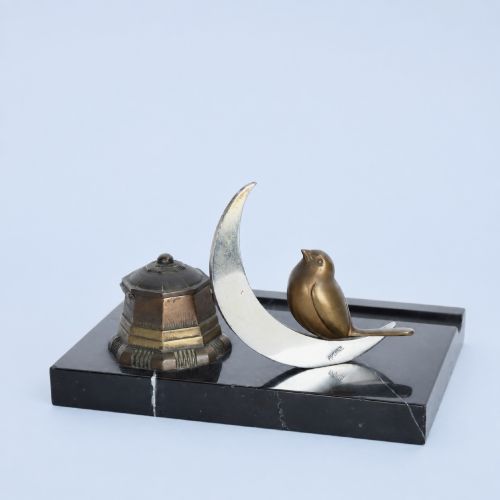
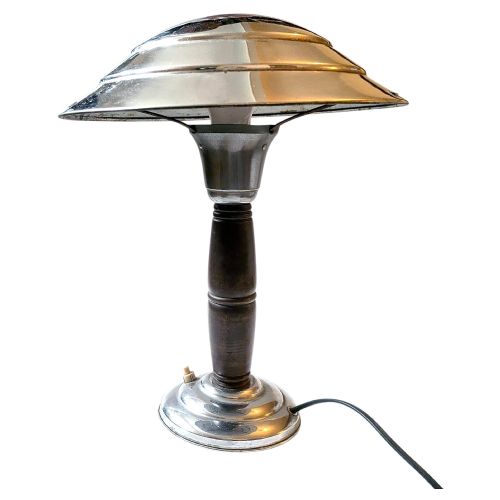
Metal components such as chrome, brass, and bronze appeared on structural desk frames, handles, and adjustable task lighting. Bakelite and catalin plastics were moulded into modern desk accessories, clocks, and lamp bases during this technological shift.
Distinguishing quality across examples
The grade of timber veneer and the symmetry of its grain matching dictate much of the visual hierarchy among these desks. Superior items display carefully selected burr walnut or satin birch wrapping continuously across drawers and pedestals.
Hardware execution and metal detailing separate standard production from finer pieces, especially where chrome plating, bronze casting, or integrated electrical fittings are involved. Maker attribution and original branded labels further distinguish workshop output from anonymous commercial manufacture.
F.H. Marshall & Co·Heal's·Betty Joel·Herbert Terry·Eileen Grey·Étienne Kohlmann·Maurice Adams·Mappin & Webb·E. Cole·Pirouette
The 1930s Office Desk Glossary
- Art Deco
- A design style spanning the 1920s and 1930s characterised by sleek geometric shapes, stylised motifs, and modern industrial materials. It replaced heavy Victorian ornamentation with streamlined elegance.
- Pedestal desk
- A freestanding writing table supported by two vertical banks of drawers or cupboards flanking a central kneehole. This form provides substantial storage alongside a dedicated work surface.
- Burr walnut
- A highly prized wood timber taken from the burls or growths of walnut trees, yielding swirling, knotty grain patterns. Cabinet makers used it to create dramatic decorative surfaces on high-end furniture.
- Machine Age
- An early twentieth-century aesthetic celebrating industrial progress, mass production, and new materials like chrome, steel, and plastics. Furniture and lighting from this movement emphasised functional mechanical efficiency.
- Bakelite
- An early thermosetting plastic invented in the early twentieth century, widely moulded into dark, durable desk lamps, inkwells, and calendar frames. Its resilience made it a staple of modern office accessories.
1930s Office Desk: Frequently Asked Questions
What materials define a 1930s office desk?
These desks rely heavily on figured wood veneers such as walnut, burr walnut, and satin birch, often combined with leather writing inserts.
Metal elements like chrome and brass appear on handles, frames, and integrated desk lamps, alongside glass tops and moulded Bakelite accessories.
How do I identify Art Deco style?
Art Deco pieces feature clean geometric lines, symmetrical forms, and streamlined profiles that break away from traditional historic ornament.
The style embraces luxury through exotic wood grains, polished chrome plating, and stark architectural silhouettes.
Were desk lamps built into these desks?
Some period writing tables incorporated integrated lighting directly into the wooden superstructure to illuminate the work surface.
Adjustable chrome and Bakelite task lamps from makers like Herbert Terry and Eileen Grey were also designed specifically for use on these desks.
How do pedestal desks differ from writing tables?
A pedestal desk incorporates two built-in stacks of drawers that support the desktop, offering substantial enclosed storage beneath.
Standard writing tables rely on open legs or simpler apron frames without flanking drawer pedestals.